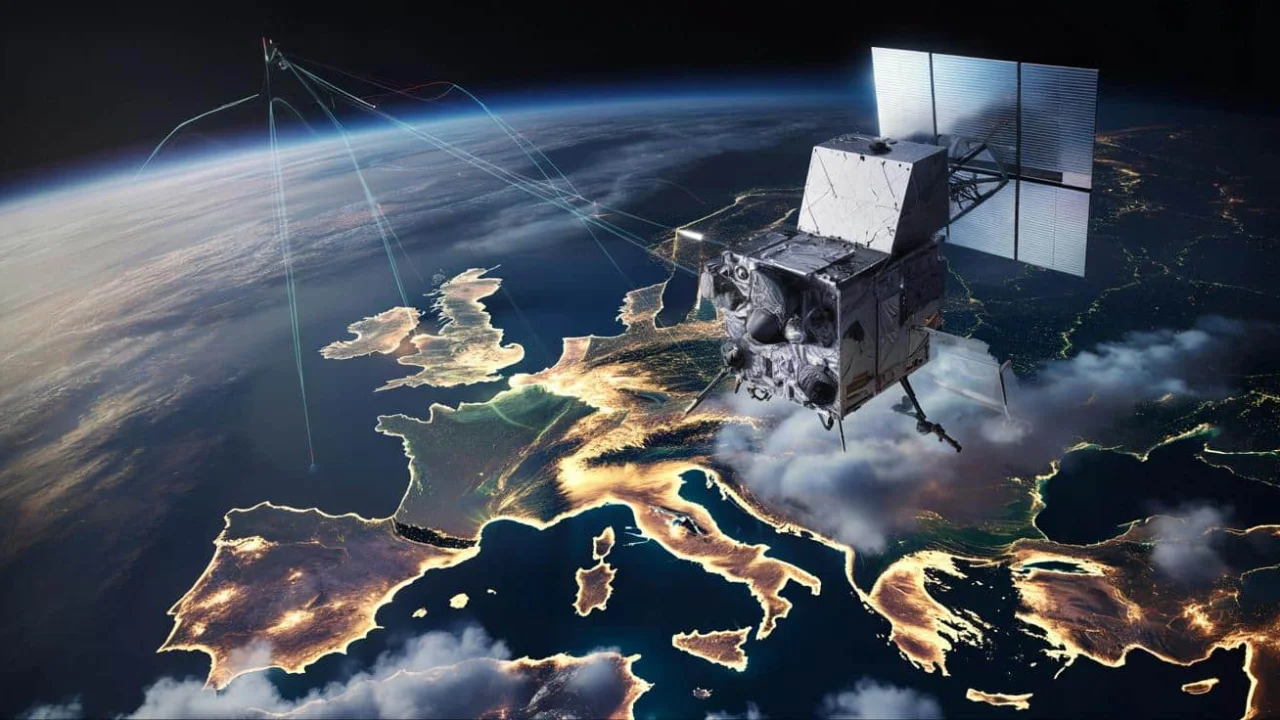
Captain Marie Dubois had been staring at the same cloudy satellite image for hours, trying to make out suspicious movements near a contested border. The optical satellite had captured crystal-clear photos during the day, but thick storm clouds now blocked any useful intelligence gathering. “If only we had radar imaging,” she muttered, knowing her German colleagues could see right through those clouds with their advanced SAR satellites.

That frustration, shared by countless French military analysts, is about to change. France is finally building its own radar imaging satellite through an ambitious project that could reshape European space intelligence forever.
This isn’t just another satellite launch. It’s France betting its strategic future on a technology that can peer through clouds, darkness, and bad weather to deliver intelligence when it matters most.
Why France is going all-in on space radar
The DESIR project represents France’s boldest move yet to achieve true space independence. Short for “Démonstrateur des Éléments Souverains en Imagerie Radar,” this radar imaging satellite program emerged from years of strategic dependence on allies whose priorities don’t always align with French interests.
France’s 2024–2030 military programming law allocated €6 billion for space capabilities, but the DESIR project stands out as something special. Unlike previous collaborative efforts, this satellite will be 100% French-controlled, offering Paris the intelligence autonomy it has craved for decades.

“We’ve learned that relying on partners for critical intelligence can leave you blind at the worst possible moment,” explains a senior French defense official familiar with the project.
The timing isn’t coincidental. As geopolitical tensions rise and traditional alliances face new pressures, France wants its own eyes in the sky that can’t be switched off by foreign governments or compromised by shifting diplomatic relationships.

Breaking down the DESIR project details
The technical specifications and timeline for the DESIR project reveal France’s serious commitment to radar imaging capabilities:
- Launch timeline: Expected deployment by 2028-2029
- Funding sources: Joint investment from France’s defense procurement agency (DGA) and national space agency (CNES)
- Primary mission: All-weather, day-night surveillance capabilities
- Coverage area: Global reach with priority focus on strategic European and African regions
- Technology type: Synthetic Aperture Radar (SAR) imaging system

The satellite will fill a crucial gap in France’s current space-based intelligence portfolio. While the CSO optical satellite constellation provides excellent daylight imagery, radar satellites can penetrate cloud cover, operate at night, and detect objects that optical sensors might miss.
| Capability | Current French Satellites | DESIR Project |
|---|---|---|
| Weather dependency | Clear skies required | All-weather operation |
| Night operations | Limited effectiveness | 24/7 surveillance |
| Cloud penetration | Blocked by clouds | Sees through clouds |
| Strategic control | Some EU partnership | 100% French control |
“This isn’t just about having another satellite in space,” notes a space industry analyst. “It’s about France ensuring it never has to ask permission to see what it needs to see.”
The DESIR project also serves as a technology demonstrator, testing advanced radar techniques that could eventually support a full constellation of French radar satellites by the mid-2030s.
What this means for European defense and beyond
The implications of France’s DESIR project extend far beyond French borders. This satellite could fundamentally alter the balance of space-based intelligence sharing within NATO and the European Union.
Currently, Germany dominates European radar imaging through its SAR-Lupe and SARah satellite systems, while Italy contributes through the COSMO-SkyMed constellation. France’s entry into this exclusive club creates new possibilities for intelligence cooperation—or competition.
For ordinary Europeans, the DESIR project means their governments will have better tools to monitor potential threats, track illegal activities, and respond to natural disasters. Radar satellites excel at detecting ship movements, monitoring border crossings, and assessing damage from floods or earthquakes.
The project also signals France’s growing confidence in its domestic space industry. Companies like Thales Alenia Space and Airbus Defence and Space will likely play major roles in developing and manufacturing the satellite, strengthening France’s position in the global space market.
“France is essentially declaring its intention to be a space power that doesn’t need to ask anyone else for permission,” observes a European defense policy expert.
The timing coincides with increased European focus on strategic autonomy, especially as the United States pivots toward Asia-Pacific concerns and traditional trans-Atlantic partnerships face new strains.
For French military planners, the DESIR project represents the difference between dependence and independence. Instead of waiting for allies to share radar imagery—which may come with delays, conditions, or gaps—France will control its own intelligence gathering timeline and priorities.
The satellite will also support French interests in Africa, where Paris maintains significant military commitments and economic relationships. Having independent radar surveillance capabilities could prove crucial for monitoring vast, sparsely populated regions where traditional intelligence gathering proves challenging.
FAQs
What does DESIR stand for?
DESIR is short for “Démonstrateur des Éléments Souverains en Imagerie Radar,” which translates to “Demonstrator of Sovereign Elements in Radar Imaging.”
When will the DESIR project satellite launch?
The satellite is expected to be deployed between 2028 and 2029, pending final development and testing phases.
How much is France spending on the DESIR project?
While specific DESIR funding isn’t disclosed, it’s part of France’s €6 billion space defense budget allocated through 2030.
What advantages does radar imaging have over optical satellites?
Radar satellites can operate in all weather conditions, see through clouds, work at night, and detect objects that optical sensors might miss.
Will other countries have access to DESIR satellite data?
The project emphasizes French sovereignty, suggesting limited sharing compared to current collaborative European satellite programs.
How does DESIR compare to existing European radar satellites?
While Germany and Italy already operate radar satellites, DESIR will give France independent control over its radar imaging intelligence for the first time.
About the Author