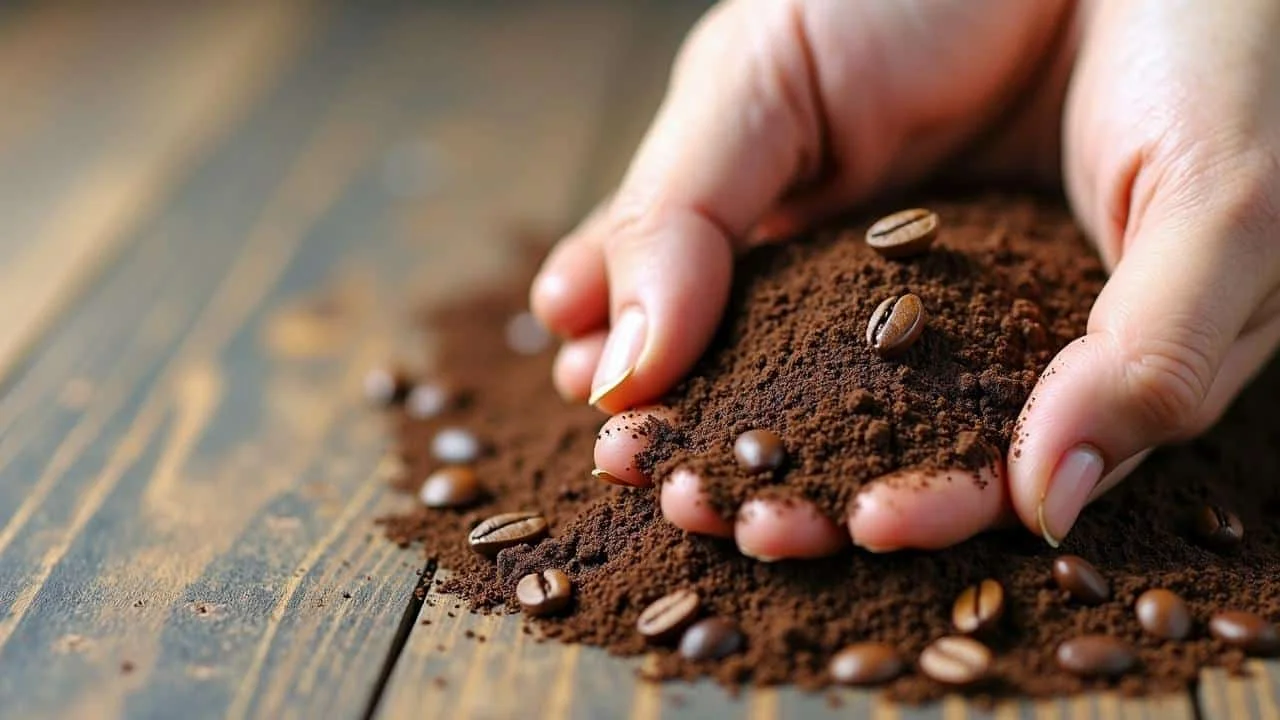
Maria stares at the soggy coffee filter in her kitchen sink, the dark grounds clinging to the paper like wet sand. Every morning, the same ritual—brew, drink, toss. She estimates her household alone throws away maybe twenty pounds of coffee waste each year. Multiply that by millions of coffee drinkers worldwide, and you’re looking at mountains of grounds heading straight to landfills.
What Maria doesn’t know is that those discarded grounds she rinses down the drain could one day help build the apartment complex going up across the street. Scientists have discovered that coffee grounds, when processed correctly, can create concrete that’s actually stronger than the traditional mix.
Your morning waste might become tomorrow’s foundation.
When Your Daily Grind Meets Construction Science
Researchers at the Royal Melbourne Institute of Technology stumbled onto something remarkable while trying to solve two problems at once. The world generates over 10 billion kilograms of coffee waste annually, most of which ends up rotting in landfills and releasing methane. Meanwhile, the construction industry devours 50 billion tons of sand each year, strip-mining rivers and beaches to feed our concrete addiction.
“We kept asking ourselves why we’re throwing away a carbon-rich material while simultaneously destroying ecosystems to extract sand,” explains Dr. Shannon Kilmartin-Lynch, who led the RMIT research team. “It seemed like the most obvious mismatch.”

The breakthrough came when they stopped trying to use raw coffee grounds and started treating them with heat. Through a process called biocharring, they transform the grounds into a stable, carbon-rich material that can partially replace sand in concrete mixes.
The results surprised everyone. Coffee grounds concrete isn’t just environmentally friendly—it’s actually stronger. Tests showed strength improvements of up to 30% when the mixture was properly calibrated. The biochar particles create tiny pockets that help the concrete cure more evenly and resist cracking under pressure.

The Numbers That Matter
The technical details reveal just how promising this discovery could be. Here’s what makes coffee grounds concrete so compelling:
| Property | Traditional Concrete | Coffee Grounds Concrete |
|---|---|---|
| Compressive Strength | Standard baseline | Up to 30% stronger |
| Sand Usage | 100% virgin sand | 15-20% replaced with biochar |
| Carbon Impact | High CO2 emissions | Captures and stores carbon |
| Waste Diverted | None | Significant coffee waste reduction |
The process itself is surprisingly straightforward:
- Collect used coffee grounds from cafés and processing facilities
- Dry the grounds completely to remove all moisture
- Heat them at 350°C in a low-oxygen environment (biocharring)
- Grind the resulting biochar into fine particles
- Mix with cement, aggregate, and water in precise ratios
“The beauty is in the simplicity,” notes construction engineer James Rodriguez. “We’re not inventing new chemistry here. We’re just being smarter about what we throw away and what we dig up.”
Early testing shows that buildings using coffee grounds concrete perform just as well as traditional structures, but with a significantly smaller environmental footprint. Each cubic meter of the modified concrete can incorporate waste that would otherwise generate methane in landfills while reducing the need for environmentally destructive sand mining.
Real Buildings, Real Impact
The implications stretch far beyond laboratory benches. Australia alone generates 75,000 tons of coffee waste annually—enough to partially supply concrete for thousands of housing units. Scale that globally, and you’re looking at a genuine shift in how we think about construction materials.
Several construction companies are already running pilot projects. In Melbourne, a small residential building is being constructed using coffee grounds concrete for its foundation and structural elements. Early results show the material performing exactly as predicted, curing properly and meeting all safety standards.
“The tenants have no idea they’re living above recycled espresso,” laughs project manager Sarah Chen. “And that’s exactly the point. Good sustainability should be invisible to the end user.”
The technology could be particularly transformative in urban areas with high coffee consumption and ongoing construction booms. Cities like Seattle, New York, and London generate enormous amounts of coffee waste while simultaneously building new infrastructure. Local sourcing of coffee grounds could reduce transportation costs and create closed-loop systems where today’s latte becomes tomorrow’s sidewalk.
The environmental math is compelling. Traditional concrete production accounts for about 8% of global CO2 emissions. Any technology that reduces that footprint while dealing with organic waste could have massive climate benefits.
But perhaps the most exciting aspect is how achievable this feels. Unlike many green technologies that require massive infrastructure investments, coffee grounds concrete works within existing systems. Construction companies don’t need to retrain workers or buy exotic equipment. They just need to source their materials a bit differently.
“This isn’t about revolutionizing the construction industry overnight,” explains Dr. Kilmartin-Lynch. “It’s about proving that small changes in how we source materials can have big impacts on sustainability.”
The next phase involves scaling up collection and processing systems. Researchers are working with café chains and coffee roasters to establish reliable supply chains for used grounds. They’re also refining the biocharring process to make it more energy-efficient and cost-effective.
Within five years, coffee grounds concrete could move from experimental curiosity to mainstream building material. Your morning ritual might literally help build the world around you—one cup at a time.
FAQs
Does coffee grounds concrete smell like coffee?
No, the biocharring process eliminates any coffee odor, leaving behind odorless carbon material.
Is coffee grounds concrete actually stronger than regular concrete?
Yes, tests show up to 30% strength improvements when the mixture is properly calibrated with biochar from coffee grounds.
How much coffee waste could realistically be recycled this way?
Potentially millions of tons annually, significantly reducing landfill waste while supplying construction projects worldwide.
Would this make construction more expensive?
Initial costs might be slightly higher, but local sourcing of coffee waste could reduce material transportation expenses over time.
Can I make coffee grounds concrete at home?
The biocharring process requires specialized equipment and precise temperature control, making it unsuitable for DIY projects.
When will coffee grounds concrete be widely available?
Researchers expect commercial availability within five years as pilot projects prove the technology’s viability.
About the Author