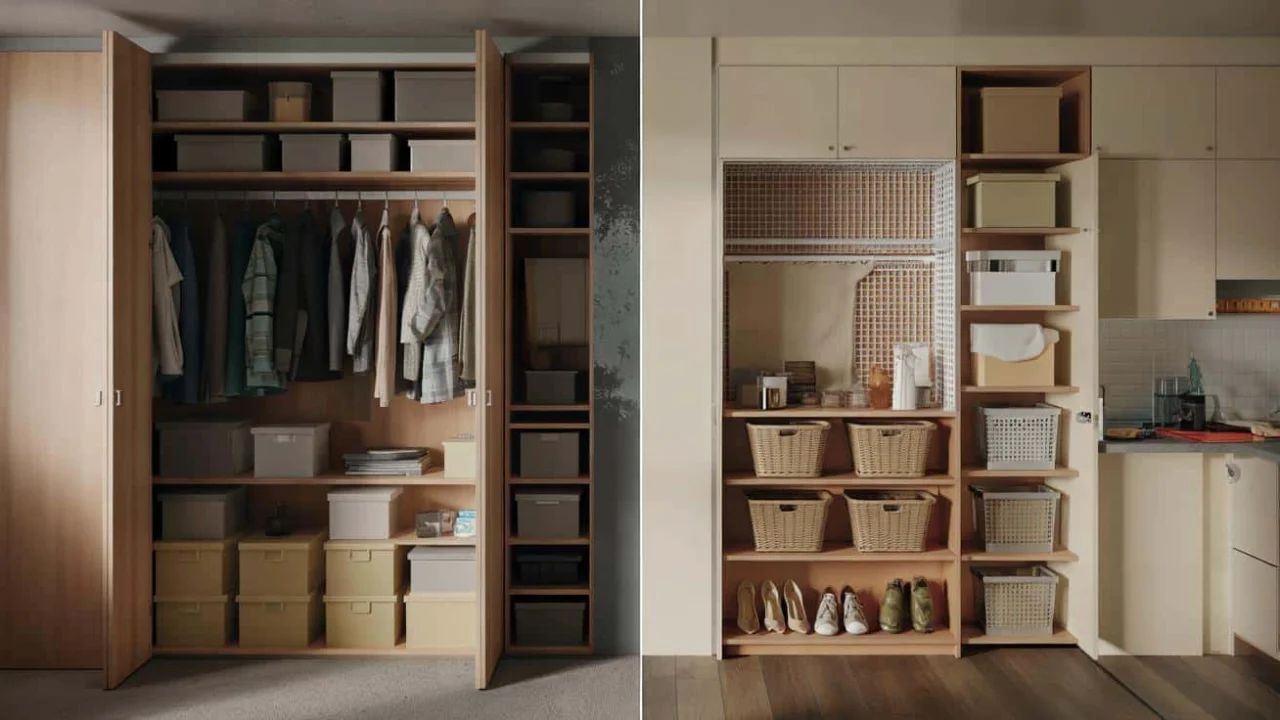
Sarah pulled open her bedroom closet on a humid August morning, expecting to grab her work blazer. Instead, she was hit with a musty smell that made her step back. Her leather handbag felt slightly damp to the touch, and there were small dark spots forming along the back wall where her storage boxes sat flush against each other.

She’d been so proud of her organization system. Every shelf maximized, vacuum-sealed bags stacked perfectly, plastic containers lined up like puzzle pieces. It looked like something from a home magazine. But that morning, she realized her “perfect” storage setup had created the ideal breeding ground for moisture problems.
The culprit wasn’t poor cleaning or a leaky pipe. It was something far more common: the way she stored her belongings was actually trapping humidity inside her closet with nowhere to escape.

Why your organized closet is working against you
Closet moisture issues don’t announce themselves with dramatic flooding or obvious leaks. They sneak in through everyday activities. Steam from your morning shower drifts down the hallway. You hang up a slightly damp coat after a drizzly commute. Your dishwasher releases warm, humid air during its cycle.
All that moisture needs somewhere to go, and tightly packed storage spaces become perfect traps. When you fill every inch of shelf space and pack items together without gaps, you eliminate the air circulation that would naturally dry out these areas.

“Most people think organization means using every square inch of space, but that’s exactly what creates moisture problems,” says Maria Rodriguez, a home organization consultant with 15 years of experience. “Air needs to move freely, or you’re basically creating a humidity box.”
The early warning signs are subtle. Cardboard boxes feel softer than they should. Metal items develop a slight film. Wooden shelves start to feel tacky to the touch. By the time you notice that telltale musty smell or see visible mold, the problem has been building for weeks or months.
The simple storage fix that changes everything
The solution isn’t complicated, but it does require rethinking how you approach storage. Instead of packing items tightly together, you need to create intentional gaps that allow air to circulate freely throughout your closet and cabinet spaces.
Here’s what this looks like in practice:

- Leave at least 2-3 inches between storage boxes and containers
- Keep items 4-6 inches away from walls, especially exterior walls
- Use wire shelving instead of solid wood or plastic when possible
- Store clothes with breathing room between hangers
- Elevate storage boxes on small platforms or blocks
- Choose breathable storage materials like canvas or woven baskets over sealed plastic
“The biggest mistake I see is people treating their closets like Tetris games,” explains David Chen, a building science specialist. “Every piece has to fit perfectly with no wasted space. But that ‘wasted’ space is actually functional air circulation.”
This approach requires a mental shift from maximizing storage to optimizing storage. You might fit fewer items in the same space, but the items you do store will stay in better condition longer.
| Storage Method | Moisture Risk | Air Circulation | Best For |
|---|---|---|---|
| Tightly packed plastic bins | High | None | Dry, climate-controlled areas only |
| Spaced containers with gaps | Low | Good | Most closets and cabinets |
| Wire shelving systems | Very Low | Excellent | Humid environments, basements |
| Breathable fabric storage | Low | Good | Seasonal clothing, linens |
What this means for your daily life
Making this storage change affects more than just preventing mold. When moisture gets trapped in your storage spaces, it damages everything from important documents to seasonal clothing. Leather goods crack and warp. Metal items rust. Fabrics develop permanent odors that are nearly impossible to remove.
The financial impact adds up quickly. Replacing a moldy winter coat, throwing out water-damaged photo albums, or dealing with rust damage to tools and equipment costs far more than the slight reduction in storage capacity.
“I had a client who lost about $800 worth of winter clothing because she stored everything in sealed bins pushed against an exterior wall,” notes Rodriguez. “The moisture condensed against the cold wall and had nowhere to go. Everything in those bins had to be thrown out.”
Beyond the financial cost, there’s the frustration of reaching for something you need only to find it damaged or smelly. That favorite sweater becomes unwearable. Important papers become illegible. The stress of constantly replacing damaged items adds up over time.
The good news is that preventing these problems doesn’t require expensive equipment or major renovations. It’s about being strategic with the space you already have.
Start by pulling everything out of one problem area – usually the deepest, most enclosed closet or cabinet in your home. Clean the space thoroughly, then put items back with intentional gaps between them. You’ll immediately notice better air movement when you open the door.
Some people worry that leaving gaps makes their storage look messy or unorganized. But there’s a difference between cluttered chaos and purposeful spacing. The key is maintaining neat arrangements while respecting the need for air circulation.
“Think of it like arranging furniture in a room,” suggests Chen. “You wouldn’t push every piece against the wall with no walking space. Storage works the same way – everything needs room to breathe.”
For areas with persistent moisture problems, consider adding a small moisture absorber or ensuring better ventilation to the room itself. But in most cases, simply changing how you arrange your stored items will solve the problem without any additional products.
The change might feel awkward at first, especially if you’re used to maximizing every inch of space. But once you see how much better your belongings hold up over time, the trade-off becomes obvious. A slightly less packed closet that keeps everything in good condition beats a stuffed storage space that ruins half of what you put in it.
FAQs
How much space should I leave between storage items?
Leave at least 2-3 inches between boxes and containers, and 4-6 inches between storage items and walls.
Will this storage method work in small apartments?
Yes, even small gaps make a significant difference in air circulation, and you’ll actually save money by not having to replace damaged items.
What if I don’t have room for spacing between items?
Consider using wire shelving, breathable storage containers, or storing fewer items in better condition rather than cramming everything in.
How do I know if my current storage setup has moisture problems?
Look for musty smells, cardboard that feels soft, metal items with film, or wooden surfaces that feel tacky to the touch.
Are plastic storage bins always bad for moisture control?
Not always, but they should be used with proper spacing and in areas with good air circulation, not packed tightly together.
How long does it take to see improvement after changing storage methods?
You should notice better air circulation immediately, with musty odors clearing up within a few weeks in most cases.
About the Author