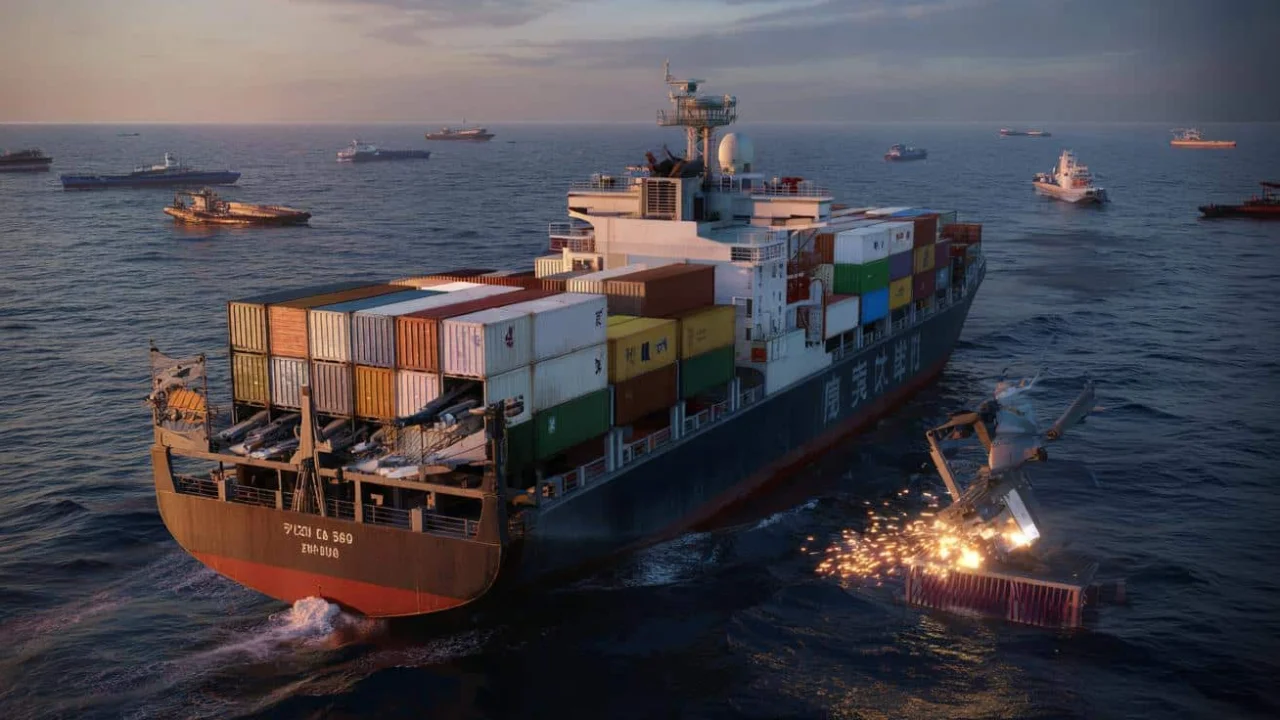
Picture this: you’re standing on the deck of a naval vessel in the South China Sea, scanning the horizon through binoculars. You spot what looks like an ordinary cargo ship heading toward port, stacked with containers like thousands of others that pass through these waters daily. But hidden beneath those innocent-looking boxes sits enough firepower to sink your ship.

That scenario isn’t science fiction anymore. Recent satellite imagery and defense intelligence reports suggest China has quietly transformed at least one civilian cargo vessel into something far more dangerous – a floating missile platform that could reshape how naval warfare is conducted.
The implications are staggering. If you can’t tell the difference between a harmless merchant ship and a weapons platform until it’s too late, how do you protect your fleet?
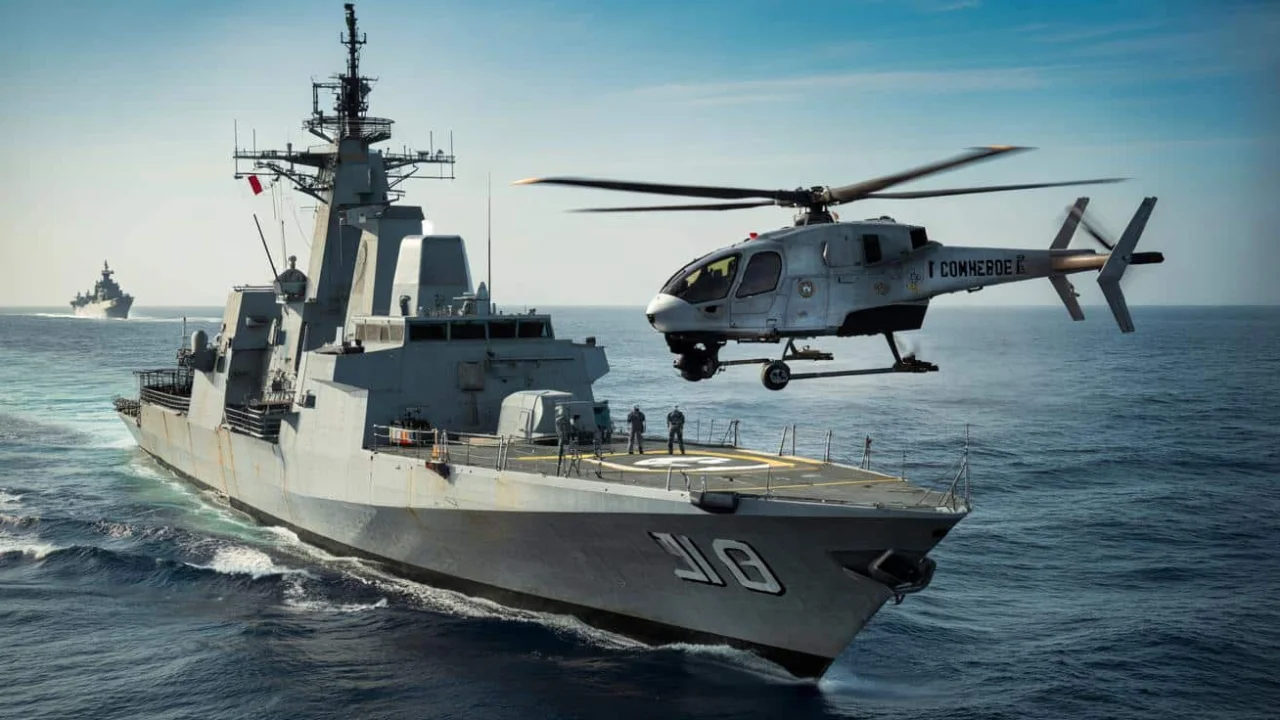
When Cargo Ships Become Weapons of War
The vessel at the center of this transformation is the ZHONG DA 79, a modest 97-meter coastal container ship that once carried mundane commercial cargo. Fresh intelligence imagery shows it’s undergone radical modifications that have defense analysts around the world taking notice.
What makes this Chinese navy arsenal vessel so concerning isn’t just its firepower – it’s how ordinary it looks from the outside. The ship maintains its civilian appearance while concealing an estimated 60 vertical launch missile cells beneath container-shaped modules.

“This represents a fundamental shift in naval thinking,” explains maritime security analyst Dr. Rebecca Chen. “When any cargo ship could potentially be a missile platform, it changes everything about how navies operate.”
The concept builds on China’s growing military doctrine of using civilian infrastructure for defense purposes. By converting commercial vessels, the Chinese navy can deploy significant firepower while maintaining plausible deniability about their military intentions.

Breaking Down the Arsenal Ship Concept
The transformation of civilian vessels into military platforms isn’t entirely new, but the scale and sophistication of this Chinese navy arsenal vessel represents something different. Here’s what we know about the conversion:
| Original Specifications | Modified Capabilities |
|---|---|
| 97-meter coastal container ship | Estimated 60 vertical launch cells |
| Standard cargo capacity | Anti-ship and land-attack missiles |
| Civilian crew and operations | Military-grade targeting systems |
| Commercial shipping routes | Strategic positioning capability |
The missile systems appear to be housed in modules designed to look exactly like shipping containers. This means the vessel can load and unload these weapons systems at ports, potentially changing its configuration based on mission requirements.
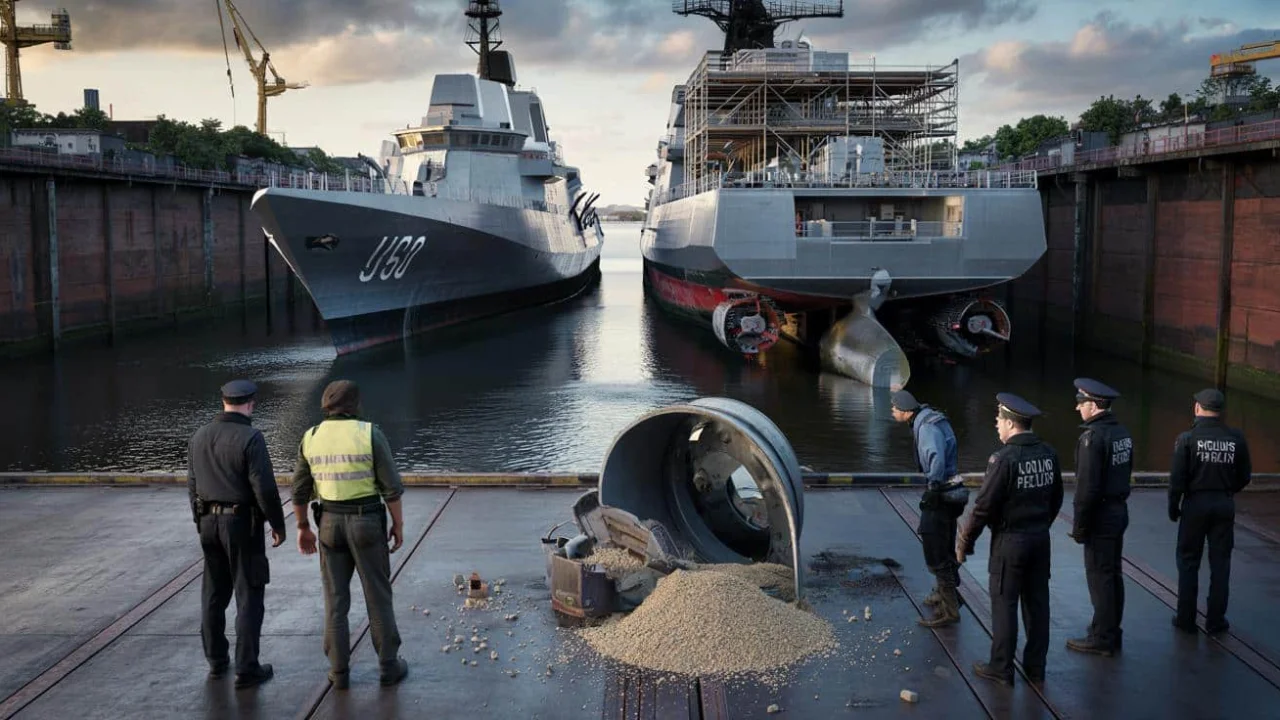
Key features of the conversion include:
- Modular weapon systems that maintain civilian appearance
- Advanced radar and targeting equipment disguised within the superstructure
- Enhanced communication systems for military coordination
- Reinforced hull sections to handle missile launch stresses
- Dual-purpose design allowing return to civilian operations
“The genius of this approach is its flexibility,” notes former naval intelligence officer Commander James Rodriguez. “These ships can operate as merchants most of the time, then quickly transform into combat platforms when needed.”
The missile loadout reportedly includes a mix of anti-ship and land-attack weapons, giving the vessel the ability to threaten both naval and shore targets at considerable range.
What This Means for Global Maritime Security
The emergence of this Chinese navy arsenal vessel has serious implications that extend far beyond military circles. Commercial shipping companies, naval forces, and port authorities worldwide are grappling with new security challenges.
For commercial shipping, the biggest concern is guilt by association. If naval forces can’t easily distinguish between legitimate cargo vessels and disguised weapons platforms, all merchant ships become potential targets during conflicts.
“Insurance rates for commercial vessels operating in contested waters could skyrocket,” warns maritime economist Dr. Sarah Kim. “Who wants to risk their cargo ship being mistaken for a military threat?”
Naval forces face even more complex challenges. Traditional rules of engagement assume you can identify military versus civilian vessels. When that distinction disappears, commanders must make life-or-death decisions with incomplete information.
The strategic implications are equally significant:
- Port security becomes more critical as potential weapons platforms dock regularly
- Naval patrol patterns must account for threats from unexpected sources
- International shipping lanes require enhanced monitoring
- Allied navies need new protocols for identifying disguised military vessels
Regional tensions in the South China Sea could escalate if other nations begin viewing Chinese merchant vessels with suspicion. The psychological impact alone changes the dynamics of naval encounters.
“It’s a form of military camouflage taken to the extreme,” explains defense strategist Colonel Mark Thompson (Ret.). “Every cargo ship becomes a question mark rather than a known quantity.”
The conversion also raises questions about international maritime law. At what point does a civilian vessel become a legitimate military target? How do you verify the nature of container contents without boarding and searching?
Some experts worry this could trigger an arms race in disguised naval platforms. If China can hide missiles in cargo containers, what’s stopping other nations from developing similar capabilities? The proliferation of such weapons systems could make maritime trade routes significantly more dangerous.
The economic impact extends beyond shipping. Ports may need to invest in advanced scanning equipment capable of detecting weapons systems. Coastal nations might require enhanced radar coverage to track vessels that look civilian but behave militarily.
For now, the ZHONG DA 79 appears to be a prototype or proof-of-concept vessel. But if successful, this Chinese navy arsenal vessel could be the first of many, fundamentally altering how naval power is projected and perceived across the world’s oceans.
FAQs
How many missiles can this Chinese arsenal vessel actually carry?
Intelligence estimates suggest up to 60 vertical launch cells, comparable to a modern frigate’s firepower.
Can other countries legally stop and search these vessels?
International maritime law is complex, but generally ships in international waters have protection from boarding without clear evidence of wrongdoing.
How do you tell a converted arsenal ship from a regular cargo vessel?
That’s the main problem – they’re designed to look identical to civilian ships, making identification extremely difficult without detailed intelligence.
Are other countries developing similar capabilities?
While not publicly confirmed, defense analysts believe several nations are exploring concepts for disguised military vessels.
What happens to commercial shipping if this becomes widespread?
Insurance costs would likely increase, and merchant vessels might face more scrutiny and potential delays at security checkpoints.
Is this legal under international law?
The legality depends on how and where the vessels operate, but using civilian disguises for military platforms raises significant questions about maritime law compliance.
About the Author
