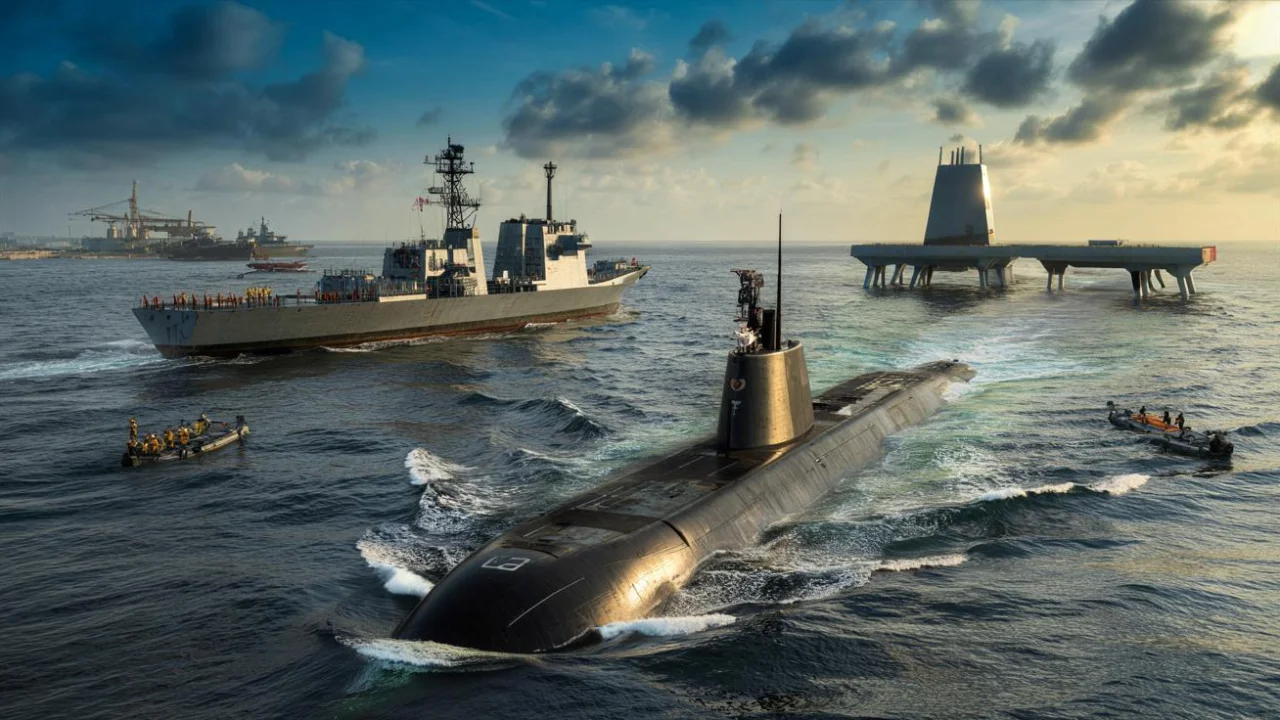
The fishing captain squinted at his radar screen off the coast of Hainan Island, watching a strange blip disappear beneath the waves. What he couldn’t know was that he’d just witnessed a piece of China’s most ambitious naval transformation in decades—one that would reshape the balance of power across the Pacific.
That submarine represented just one thread in a vast military tapestry being woven in shipyards from Dalian to Guangzhou. While the world focused on trade wars and diplomatic summits in 2025, China’s navy quietly underwent its most significant evolution since the 1980s.
The Chinese navy annual review reveals a force that’s no longer content to patrol coastal waters. Instead, it’s building the capability to project power thousands of miles from home, with new submarines, advanced surface ships, and bases designed for global operations.
The Submarine Revolution Happening in Plain Sight
Deep inside the Bohai Shipyard in Huludao, workers are assembling the future of underwater warfare. This facility, China’s only nuclear submarine producer since the 1950s, has transformed into a sprawling industrial complex that satellite analysts struggle to fully comprehend.
The star of the show is the Type 09IIIB guided-missile nuclear submarine. Unlike the diesel-electric boats that once dominated China’s submarine fleet, these nuclear-powered vessels can stay submerged for months and strike targets thousands of miles away.
“We’re seeing a production rate that nobody predicted five years ago,” says a former U.S. Navy intelligence officer who tracks Chinese shipbuilding. “They’re not just building submarines—they’re building an entirely new underwater capability.”
The numbers tell the story. Intelligence estimates suggest at least seven Type 09IIIB submarines were completed by late 2025, with evidence pointing to a steady production rate of two boats per year. But the real capacity might be higher, hidden beneath the covered halls that now dominate the Huludao facility.
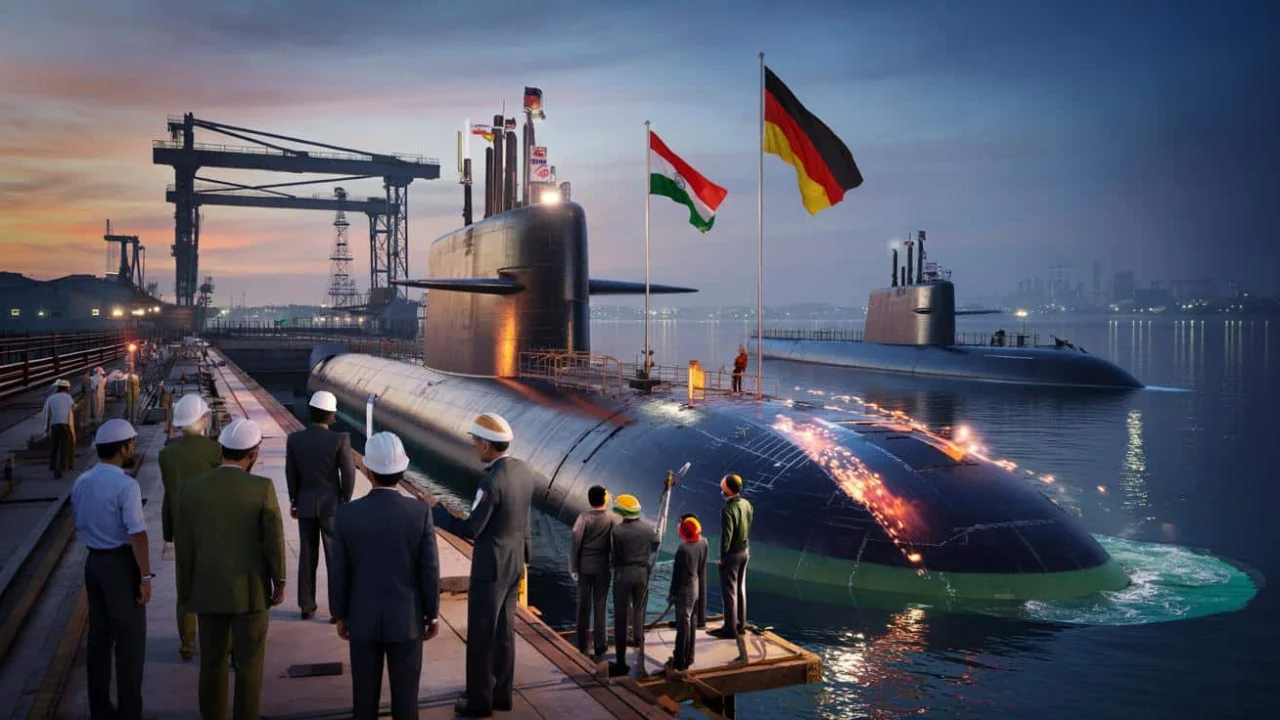
What makes these submarines particularly concerning for rival navies is their missile payload. Each boat can carry dozens of land-attack cruise missiles, turning them into underwater artillery platforms capable of striking targets across the Western Pacific.
Beyond Submarines: The Full Picture of Naval Expansion
The Chinese navy annual review shows submarine production is just one piece of a much larger puzzle. China’s naval modernization touches every aspect of maritime warfare, from aircraft carriers to support vessels.
Here’s what stood out in 2025:
- Aircraft Carrier Operations: The Shandong carrier group conducted extended deployments, practicing complex air operations far from Chinese shores
- Destroyer Production: Three new Type 055 destroyers entered service, each equipped with advanced radar and missile systems
- Amphibious Capabilities: New landing ships and experimental invasion barges suggest serious attention to amphibious warfare
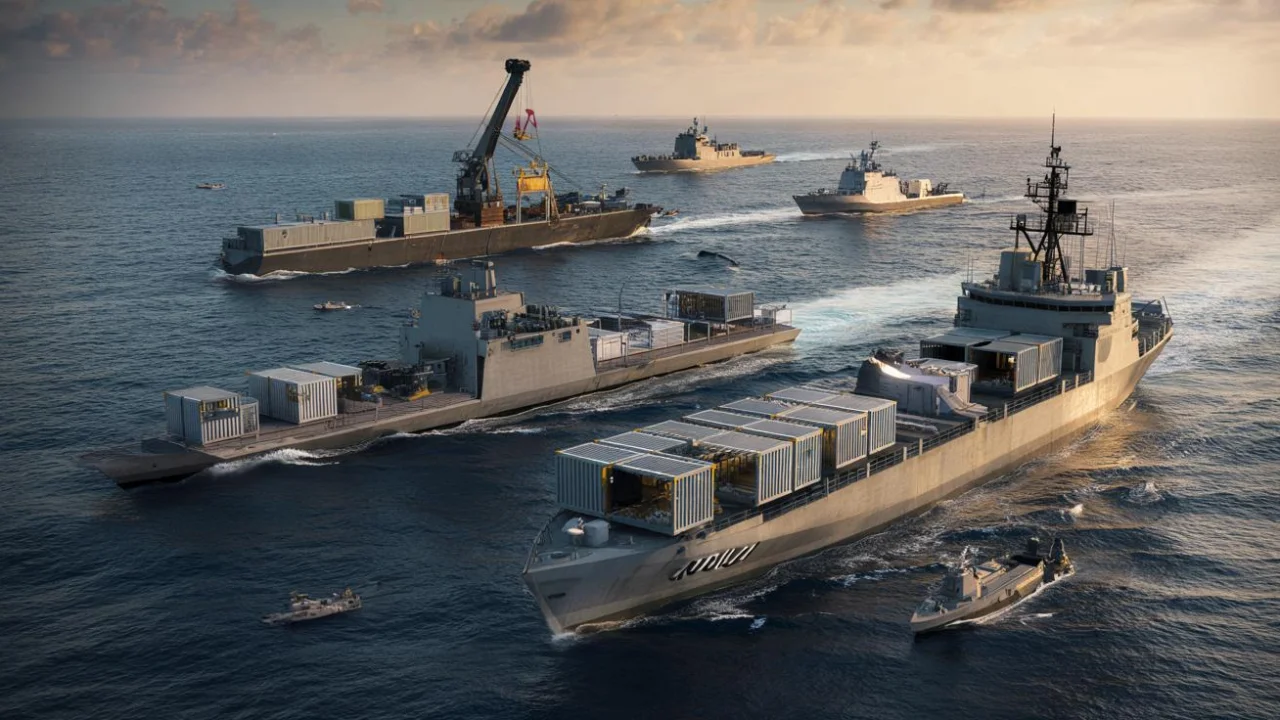
- Support Fleet Growth: More replenishment ships allow the fleet to operate at greater distances for longer periods
- Drone Technology: Unmanned surface vessels appeared in exercises, hinting at autonomous naval warfare capabilities
The logistics revolution might be the most important development. Modern naval warfare isn’t just about firepower—it’s about staying supplied and operational thousands of miles from home. China’s investment in replenishment ships, floating dry docks, and overseas bases shows they understand this reality.
| Ship Type | New Additions in 2025 | Strategic Significance |
|---|---|---|
| Nuclear Submarines | 2-3 vessels | Extended underwater operations, land-attack capability |
| Type 055 Destroyers | 3 vessels | Air defense, long-range strike missions |
| Replenishment Ships | 4 vessels | Extended operations far from Chinese bases |
| Landing Ships | 6 vessels | Amphibious assault capabilities |
“The Chinese are building a navy that can operate globally, not just regionally,” explains a maritime security analyst in Singapore. “That changes everything about how we think about naval balance in the Indo-Pacific.”
What This Means for the Rest of the World
The implications of China’s naval expansion ripple far beyond military circles. For commercial shipping companies, fishing fleets, and coastal nations across the Pacific, these changes represent a fundamental shift in maritime dynamics.
Taiwan finds itself at the center of these concerns. The new amphibious capabilities and submarine force create what military planners call “multiple dilemmas”—forcing defenders to prepare for attacks from above, below, and across the water simultaneously.
For the United States and its allies, the Chinese navy annual review presents strategic challenges that will require massive investments and new thinking. American submarines that once operated with impunity in the Western Pacific now face increasingly sophisticated opposition.
“We’re not talking about a regional navy anymore,” warns a retired Australian admiral. “This is a force designed to challenge American naval dominance globally, and they’re making faster progress than most people realize.”
The economic implications are equally significant. China’s growing naval reach could affect everything from trade routes to fishing rights across the Pacific. Nations that once operated without considering Chinese naval power must now factor it into their strategic planning.
Commercial shipping companies are already adjusting routes and security protocols. Insurance rates for vessels operating in disputed waters have increased, reflecting the heightened tensions that come with competing naval forces.
The transformation isn’t complete—China still faces significant challenges in areas like submarine quieting, long-range logistics, and combat experience. But the trajectory is unmistakable. The Chinese navy of 2025 looks nothing like the coastal defense force of just a decade ago.
As that fishing captain learned during his unexpected encounter, the seas around China are no longer what they used to be. The Chinese navy annual review makes clear that this transformation will define maritime security for decades to come.
FAQs
How many nuclear submarines does China have now?
Intelligence estimates suggest China operates approximately 12-15 nuclear submarines as of late 2025, with more under construction at Huludao shipyard.
What makes the Type 09IIIB submarine special?
Unlike earlier Chinese submarines, the Type 09IIIB carries dozens of land-attack cruise missiles and can operate submerged for months, giving China long-range strike capability from underwater platforms.
How does China’s navy compare to the U.S. Navy in 2025?
While the U.S. Navy remains larger and more experienced, China has closed the gap significantly in ship numbers and technology, particularly in submarines and destroyers designed for regional operations.
What are China’s main naval bases outside its territory?
China operates a naval base in Djibouti and has established port facilities in Pakistan, Sri Lanka, and Myanmar, though most serve dual civilian-military purposes.
Why does submarine production matter so much?
Submarines can operate undetected for long periods and strike targets far inland, making them among the most strategically important naval platforms for power projection and deterrence.
What should other countries expect from China’s navy in coming years?
Expect continued expansion of submarine forces, more overseas deployments, and growing emphasis on amphibious warfare capabilities, particularly regarding Taiwan contingencies.
About the Author