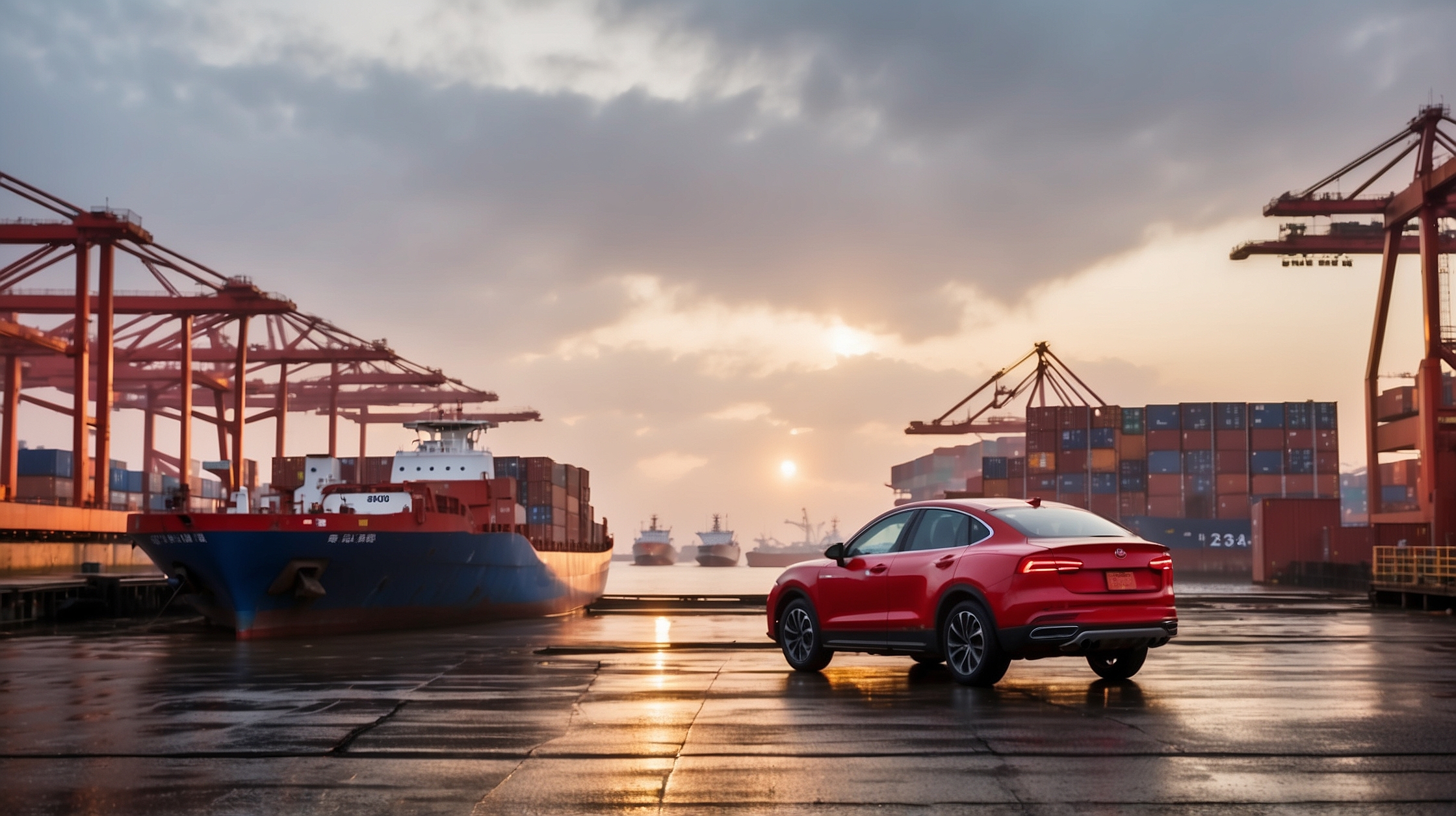

As China cements its position as a global automotive export powerhouse, the nation’s regulators are taking a significant step to bolster the reputation of its electric vehicle (EV) exports. Amid a growing international spotlight on the quality and reliability of China-made cars, the Ministry of Commerce is drafting measures to ban the export of low-quality vehicles. The move, while aimed at protecting the image of China’s burgeoning EV industry, might create ripples across markets heavily reliant on affordable Chinese car imports.

This proactive stance is strategically timed. China overtook Japan as the world’s largest auto exporter in 2023, propelled largely by the global demand for electric vehicles manufactured by companies such as BYD and Geely. However, some Chinese vehicles, particularly those targeting emerging markets, have come under scrutiny for their performance, safety, and adherence to international vehicle standards. With this high-volume growth threatening to outpace quality assurance, China aims to reshape global perception by imposing stricter controls on what leaves its ports.
Overview of China’s Export Quality Initiative
| Key Initiative | Ban on exporting low-quality and non-compliant vehicles |
|---|---|
| Oversight Body | Ministry of Commerce (MOFCOM) |
| Main Goal | Enhance global reputation and prevent backlash against Chinese EVs |
| Target Segments | Low-end vehicles, especially exported to developing markets |
| Implementation Timeline | Regulations expected to be formalized in late 2024 |
| Market Impact | Likely reduction in export volume but improved brand credibility |
Why China’s EV exports are under scrutiny
Chinese automakers have been expanding rapidly, riding on domestic subsidies, lower manufacturing costs, and cutting-edge battery technology. However, analysts say that speed has come at a cost—namely inconsistent quality across different vehicle classes. While top-tier exports like BYD’s Atto 3 or NIO’s ES6 have received international praise, cheaper sub-brands and entry-level EVs have found their way into global markets with questionable safety ratings and durability issues.

The flood of affordable Chinese EVs into Latin America, Southeast Asia, and Africa has been both a blessing and a challenge. While these vehicles offer mobility solutions at lower prices, concerns have emerged around varying emission standards, lack of spare parts, and compliance with local regulations. Some local governments have already called for stricter import inspections, prompting China’s internal review of its automotive export strategy.
What will change for exporters and foreign buyers
Should the proposed export ban be implemented, automakers will face new regulatory hurdles before being allowed to ship vehicles overseas. This could include mandatory quality assessments, certifications from nationally approved testing centers, and audits of manufacturing processes. Vehicles that fall short—whether due to poor build quality, lack of safety features, or incomplete documentation—would be barred from export channels.

For buyers in affected countries, this could mean fewer but better-quality Chinese cars entering their markets. While this may elevate prices somewhat, the benefits in terms of safety, reliability, and longevity could outweigh short-term cost increases. It’s a calculated trade China is willing to make to position itself not just as the world’s largest automotive exporter—but the most respected one.
Countries and companies that will feel the impact
Certain regions and companies will feel the brunt of this policy shift more than others. Low-income nations that have heavily relied on low-cost Chinese cars to meet mobility needs may face shortages or price hikes. Similarly, small to mid-sized Chinese carmakers—often operating in Tier 3 cities—might find themselves sidelined from the export market if they fail to meet the new standards.

In contrast, high-end Chinese EV makers such as BYD, XPENG, and Geely stand to gain. With stricter standards eliminating low-end competitors, these firms could broaden their market presence internationally through trust and reliability.
Winners and losers from the export crackdown
| Winners | Losers |
|---|---|
| Premium Chinese EV makers (e.g., BYD, Geely, NIO) | Budget Chinese automakers with low compliance rates |
| International buyers seeking quality and warranty | Importers in developing nations reliant on cheap cars |
| Governments prioritizing safety and emissions standards | Grey market exporters and uncertified dealerships |
| Chinese automotive brand equity | Low-tech Chinese component suppliers |
How this fits into China’s long-term EV strategy
This policy aligns closely with China’s broader economic aim to transition from a quantity-driven export model to a quality-focused one. The same playbook has worked in electronics, where former low-cost brands like Huawei have evolved into premium global contenders. A similar trajectory is envisioned for the automotive sector, particularly as EVs become central to China’s climate and industrial ambitions.
Additionally, boosting international confidence in Chinese EVs supports Beijing’s strategic ambitions under the “Belt and Road Initiative,” where infrastructure, trade, and technology exports are blueprint components. Clean transportation, anchored by high-quality EV exports, directly supports both environmental and economic diplomacy goals.
Domestic reactions and industry response
While many high-end Chinese car manufacturers have welcomed the move as a way to clean up the country’s automotive brand image, others are more hesitant. Small-scale exporters fear being pushed out of the market due to costly upgrades and compliance requirements. Some have called for transitional policies or financial support to help meet the new standards.
“It’s a necessary step if we want to compete with German or Japanese cars on a level playing field.”
— Zhang Wei, Head of International Strategy at BYD
“We need a fair ramp-up period. Not every company can pivot overnight.”
— Liu Ming, CEO of Chaoqun Motors
The Ministry of Commerce has hinted that the final version of the regulations may include phased implementations or specific exemptions for partners in low-income regions where cost sensitivity remains critical. Still, the overarching message is clear: Chinese automotive exports must rise in quality if they are to enjoy sustainable global growth.
Expectations for the global auto market
This policy is likely to act as an international signal: China is ready to compete not only in volume but also in quality assurance. This might raise the bar for global competition across the EV segment, placing increased pressure on manufacturers in India, Southeast Asia, and Latin America, whose own production standards may not yet match the new Chinese benchmarks.
Furthermore, global regulators may view this step as evidence of China’s commitment to collaborative governance on emissions, safety, and product integrity. This could soften political resistance against increasing imports of Chinese vehicles in high-regulation markets such as Europe and Australia.
Short FAQs on China’s low-quality car export ban
Why is China banning the export of low-quality cars?
China aims to protect and enhance the international brand reputation of its electric vehicles by ensuring exported units meet global safety and quality standards.
When will the new export regulations take effect?
The Ministry of Commerce is expected to finalize the rules later in 2024, with an implementation window likely starting in early 2025.
How will this affect car prices?
Prices of Chinese cars in foreign markets may rise slightly due to higher compliance costs, but overall vehicle quality and longevity will improve.
Which companies will benefit from the new rules?
Premium EV manufacturers like BYD, Geely, and XPENG are expected to gain market share as low-end competitors are phased out.
Will developing countries still receive Chinese vehicles?
Yes, but only those meeting the new quality benchmarks. Some exemptions or phased timelines may be introduced for specific regions.
Do these changes apply to all vehicles or only EVs?
The focus is particularly on electric vehicles, but internal combustion cars exported from China will also require minimum quality standards.
Are export inspections a new requirement?
Chinese vehicles destined for export have undergone some inspection, but the new rules will standardize and intensify this process across the board.
What does this mean for global EV competition?
It increases the quality expectations for all EV exporters, pushing global competition toward performance, safety, and sustainability over low-cost production.
About the Author
