Maria Petrov still remembers the day her grandfather handed her a clump of soil from their family farm in southern Ukraine. She was eight years old, visiting from her home in Canada, and couldn’t understand why the old man was so excited about dirt.

“Hold it,” he whispered, pressing the dark, crumbly earth into her small palms. “Feel how soft it is. Smell it.” The soil was unlike anything she’d touched before – rich, almost sweet-smelling, and so black it looked like crushed charcoal mixed with velvet.
Years later, when Maria became an agricultural scientist, she finally understood what her grandfather was trying to show her. That wasn’t just any soil. It was chernozem black soil, the most fertile earth on the planet, and her family had been farming it for generations.

The Secret Behind Earth’s Most Precious Soil
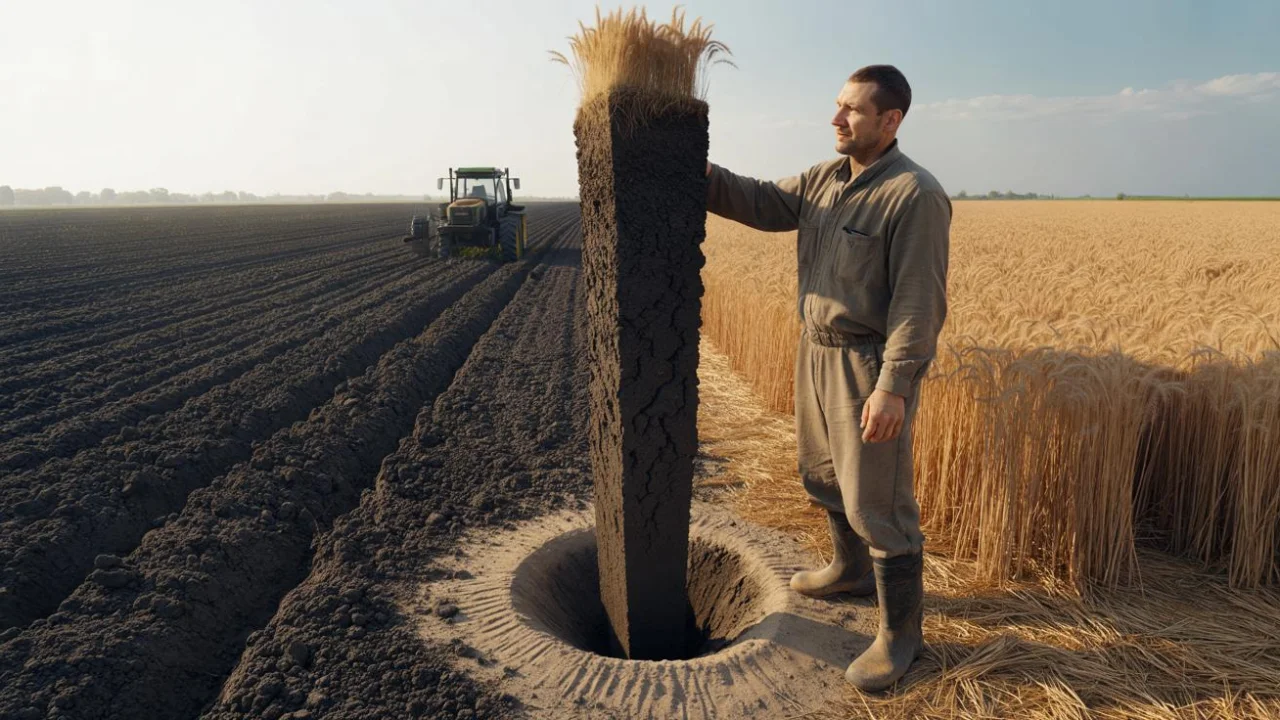
Chernozem black soil doesn’t look like the brown dirt most of us are familiar with. When you dig into a field of true chernozem, you’ll find layers of deep black earth that can stretch down a full meter – sometimes even deeper. The color comes from thousands of years of decomposed grassland vegetation, creating soil so rich in organic matter that it’s almost unbelievable.
“I’ve seen farmers from other countries literally get emotional when they first touch chernozem,” says Dr. Alexander Kozlov, a soil scientist from Moscow State University. “They know immediately they’re looking at something extraordinary.”

What makes this black soil so special isn’t just its color. The texture feels different in your hands – soft and crumbly, but not loose. When it rains, chernozem doesn’t turn into mud or form a hard crust like many soils do. Instead, it absorbs water like a sponge and releases it slowly to plant roots over time.
The chemistry is equally impressive. Chernozem contains up to 15% organic matter in some areas, compared to just 1-3% in average farmland soil. This organic richness means the soil is naturally loaded with nitrogen, phosphorus, and other nutrients that plants desperately need to grow.

Where You’ll Find This Agricultural Treasure
Chernozem black soil covers massive areas across Eastern Europe and Central Asia, but three countries hit the jackpot. Ukraine has about 28 million hectares of chernozem – roughly the size of Italy. Russia claims even more, with chernozem stretching across its southern regions from the Black Sea to Siberia. Kazakhstan rounds out the trio with huge expanses of this fertile earth across its northern plains.
Here’s what makes these chernozem regions so productive:

- Water retention: The soil structure holds moisture perfectly, reducing the need for irrigation
- Natural fertility: Built-in nutrients mean less fertilizer needed compared to other farming regions
- Deep root zones: Plants can send roots down through the soft, nutrient-rich layers
- Climate match: The temperate continental climate provides ideal growing seasons
| Country | Chernozem Area | Main Crops | Global Grain Export Rank |
|---|---|---|---|
| Ukraine | 28 million hectares | Wheat, corn, sunflower | 5th largest wheat exporter |
| Russia | 45 million hectares | Wheat, barley, oats | 1st largest wheat exporter |
| Kazakhstan | 25 million hectares | Wheat, barley | 9th largest wheat exporter |
“These three countries together control about 30% of global wheat exports,” explains Elena Vasquez, an agricultural economist at the International Grain Council. “Remove their chernozem soils from the equation, and world food prices would look very different.”
Why This Soil Shapes Global Food Security
The impact of chernozem black soil reaches far beyond the farms where it’s found. When harvests are good in Ukraine, Russia, and Kazakhstan, bread prices stay stable in countries across Africa and the Middle East. When drought or conflict disrupts farming in these chernozem regions, the effects ripple across global markets.
During the 2022 conflict in Ukraine, wheat prices spiked worldwide partly because traders knew that millions of hectares of prime chernozem farmland were suddenly out of production. Countries that depend on grain imports – from Egypt to Bangladesh – felt the impact at their dinner tables.
The efficiency of chernozem is staggering. Farmers working this black soil can often produce twice as much grain per hectare compared to average farmland, using less water and fertilizer. In good years, a single hectare of chernozem in Ukraine can yield 8-10 tons of wheat. On regular soil, farmers celebrate if they hit 4-5 tons per hectare.
“It’s not fair, really,” jokes Dmitri Volkov, a wheat farmer from Russia’s Rostov region. “My neighbors in other countries work twice as hard and get half the yield. But this is what we inherited from nature.”
Climate change adds another layer of complexity to the chernozem story. Scientists worry that shifting weather patterns could alter the delicate balance that created this soil over millennia. Longer droughts or heavier rainfall could change the soil structure and reduce its legendary fertility.
For now, though, chernozem black soil remains one of humanity’s most valuable natural resources. It feeds hundreds of millions of people who may never see these black fields, and it continues to shape everything from global grain prices to geopolitical relationships.
The next time you bite into a slice of bread, there’s a good chance you’re tasting the results of this extraordinary soil – the black gold that turned vast grasslands into the world’s breadbasket.
FAQs
How deep does chernozem black soil actually go?
Chernozem typically extends 60-100 centimeters deep, though some areas have black soil layers reaching up to 1.5 meters below the surface.
Can chernozem be created artificially?
No, chernozem forms naturally over thousands of years through specific climate and vegetation conditions that can’t be replicated quickly.
Why is chernozem only found in certain regions?
Chernozem requires a specific combination of temperate continental climate, grassland vegetation, and particular rainfall patterns that only exist in parts of Eastern Europe and Central Asia.
How much of the world’s farmland is chernozem?
Chernozem covers about 230 million hectares globally, representing roughly 1.8% of the world’s land surface but producing a disproportionate share of global grain.
Is chernozem soil at risk from climate change?
Yes, scientists are concerned that changing precipitation patterns and rising temperatures could gradually alter chernozem’s structure and fertility over time.
What crops grow best in chernozem?
Wheat, corn, sunflower, and barley thrive particularly well in chernozem, which is why these crops dominate exports from Ukraine, Russia, and Kazakhstan.
About the Author