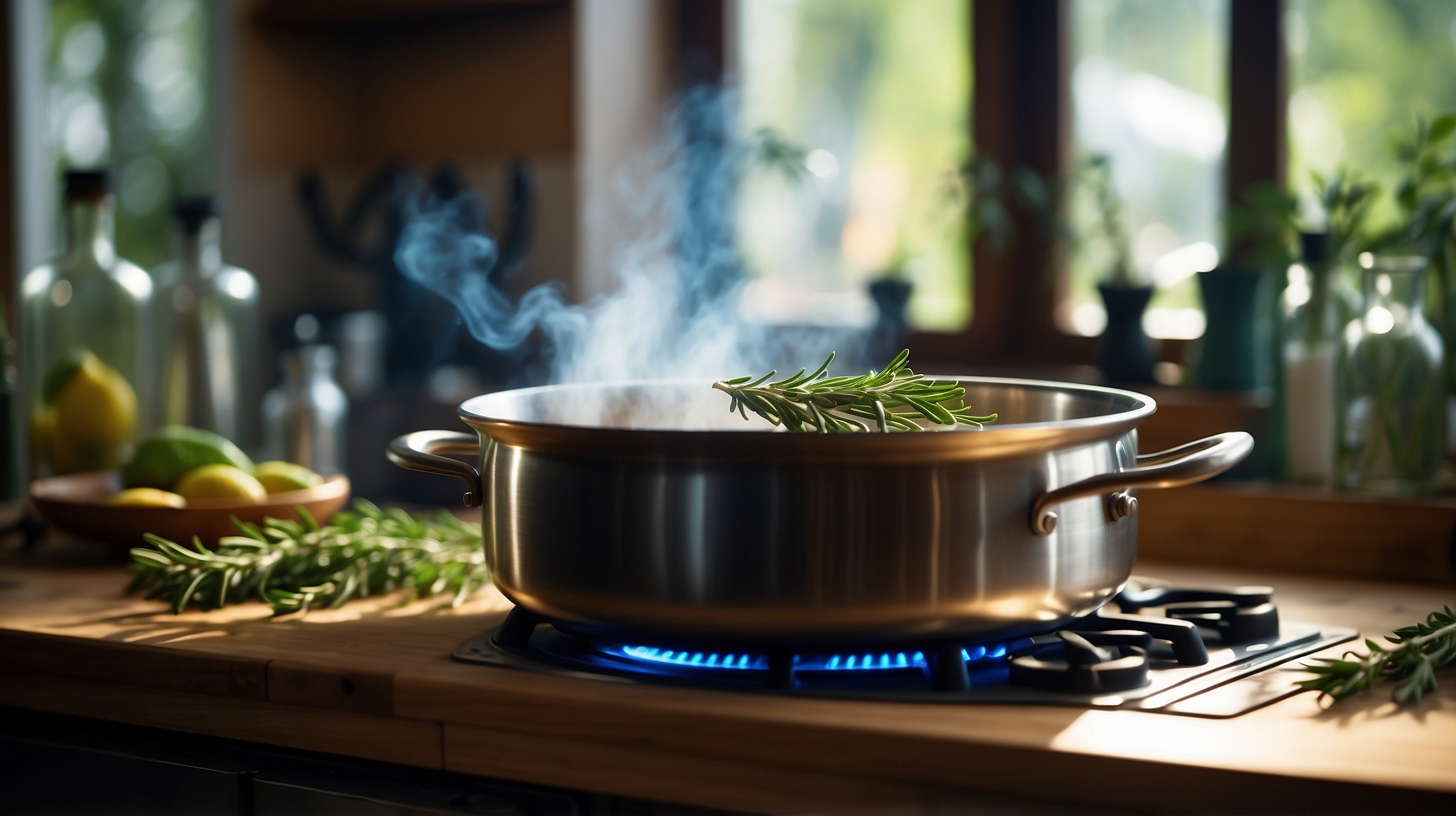

There’s something instantly soothing about the scent of rosemary wafting through your home — and it turns out that you don’t need expensive diffusers or artificial air fresheners to achieve it. A simple sprig of this fragrant herb, gently boiled on the stove, can transform your space into a serene, spa-like oasis. Whether you’re trying to eliminate the lingering smell of dinner or want to freshen up the air after a deep clean, **boiling rosemary on the stove** is a surprisingly effective, natural way to purify and uplift your living environment.

Aromatic herbs like rosemary have been used for centuries in both culinary and medicinal traditions. But what many people don’t realize is how easily and effectively they can enhance their surroundings. Boiling rosemary releases its natural oils into the air, carrying not just its signature scent but also potential health benefits — from improved concentration to reduced stress levels. This simple, all-natural method has become a favorite among holistic wellness advocates, green cleaning enthusiasts, and anyone looking to create a warm, welcoming atmosphere at home.
Boiling rosemary to refresh your home — key facts at a glance
| What it is | Boiling fresh or dried rosemary in water to release its natural aroma into your home |
| Benefits | Refreshes air, neutralizes odors, promotes relaxation, supports focus |
| Tools needed | Saucepan or pot, water, fresh or dried rosemary |
| Duration | Simmer for 10–60 minutes, as desired |
| Ideal times to use | After cooking, during cleaning, before guests arrive, or while practicing self-care |
| Additional ingredients | Lemon, lavender, cinnamon sticks (optional for enhanced aroma) |
Simple steps to start using rosemary for a fresher home
You don’t need to be a trained aromatherapist or master herbalist to use rosemary as a natural air freshener. The process is incredibly straightforward and doesn’t require any technical skills or hard-to-find equipment.

Step 1: Choose your rosemary
Both **fresh and dried rosemary** can be used for boiling. Fresh sprigs will deliver a more potent scent and can often be found in grocery produce sections or grown at home. If using dried rosemary from your spice rack, start with a small amount — roughly two tablespoons — as it is more concentrated than fresh sprigs.
Step 2: Prepare your simmer pot
Fill a saucepan or small pot with 2–3 cups of water. Add your rosemary to the pot and place it on the stove over medium heat. Once it begins to boil, reduce the heat to low and let it **simmer gently**. As the water heats, the rosemary’s essential oils are released into the air.

Step 3: Add other ingredients for a custom aroma
While rosemary on its own offers a crisp, herbal scent, you can personalize your simmer pot by adding slices of **lemon for brightness**, **lavender for calm**, or **cinnamon sticks** for warmth. These combinations not only smell amazing but can also provide additional therapeutic effects.
Step 4: Monitor water levels
As with any simmering pot, be sure to watch the water level. Refill with additional water as needed to prevent burning or drying out. A simmering rosemary pot can safely be enjoyed for up to an hour — enough time to freshen the air in most rooms of your home.

Why rosemary is more than just a fragrant herb
Rosemary is praised not only for its culinary use but also for its functional role in well-being. Studies have shown that the scent of rosemary may support **enhanced memory function**, increased alertness, and reduced levels of cortisol — the body’s stress hormone. In fact, **rosemary essential oil** is a favorite ingredient in many commercial air fresheners and wellness products.
Boiling rosemary taps directly into these benefits without added chemicals, making it ideal for people with sensitivities or those who are reducing their exposure to synthetic products. One of its most compelling attributes is how **multi-sensory** its impact is: it smells wonderful, contributes positively to mental alertness, and even adds a comforting visual element as it simmers gently on the stove.
“When rosemary is used in the home, whether as an essential oil or simply simmered on the stove, it supports relaxation and psychological clarity.”
— Dr. Elaine Morgan, Certified Aromatherapist
The science behind rosemary’s uplifting aroma
So why does rosemary have such a positive effect on our mood and environment? It all comes down to its chemical composition. Rosemary contains several influential naturally occurring compounds, including **cineole, camphor**, and **pinene**. These not only contribute to its distinctive smell but are known to have **antimicrobial, anti-inflammatory, and anxiolytic properties**.
When inhaled through boiling or diffusion, these compounds can influence the limbic system, the part of the brain that governs emotion, memory, and behavior. For this reason, rosemary has long been linked with **mental clarity and emotional grounding** — making it ideal for environments where focus and calm are needed, such as home offices, study areas, or bedrooms.
When to use this aromatic technique
There’s no wrong time to improve the air quality and mood of your home, but some moments are particularly perfect for this simple method:
- After deep-cleaning your space to add a finishing, fragrant flourish
- Before entertaining guests to make your home more welcoming
- During meditation, journaling, or yoga practice for added serenity
- While working or studying to enhance mental clarity and focus
- After cooking to neutralize strong food odors
Alternative herbs and ingredients to experiment with
While rosemary is a standout on its own, don’t hesitate to get creative. Many other **herbs, fruits, and spices** can be mixed and matched to suit your taste and needs. Try pairing rosemary with:
- Orange peels for a citrusy lift
- Cloves for a cozy, spiced scent in cooler months
- Mint for a sharp, clean tone especially appreciated in spring
- Vanilla extract for a warm and inviting base
This experimentation allows you to design customized fragrance blends that reflect your mood, preferences, and seasons — all without artificial chemicals.
Environmentally friendly and wallet-conscious
Perhaps one of the best aspects of the **rosemary simmer pot method** is how accessible and affordable it is. With food prices and household expenses rising, this form of natural freshening is budget-friendly, reducing the need for commercial candles or sprays. It’s also environmentally safe, with no artificial aerosol or plastic waste — just pure plants and water.
Winners and Losers of ditching artificial air fresheners
| Winners | Losers |
|---|---|
| People sensitive to chemicals or scents | Manufacturers of synthetic air fresheners |
| Homes with children or pets | Single-use plastic product makers |
| Eco-conscious households | Non-recyclable packaging industries |
Common questions about boiling rosemary to freshen up your home
Can I reuse boiled rosemary?
You can reuse the rosemary once or twice by refrigerating it in water between uses, but it will lose potency after the first boil.
How long will the scent last after boiling?
The fragrance typically lingers for several hours, depending on ventilation and room size.
Is this safe around children and pets?
Yes, rosemary is generally safe. Just ensure pots are supervised and out of reach to avoid burns or spills.
Can I use rosemary oil instead of the herb?
You can, but use only 2–3 drops in boiling water since the oil is highly concentrated and potent.
Will this remove odors or just mask them?
Boiling rosemary can help neutralize mild odors by infusing the air with natural aroma compounds.
What other herbs can I boil for a similar effect?
Try sage, thyme, eucalyptus, or lavender — each offers unique benefits and scents.
Do I need to dry out rosemary before using it?
No, fresh rosemary is ideal. You can use dried rosemary, but it will offer a different scent profile.
How often can I boil rosemary?
As often as you’d like. It’s safe to use daily or whenever your home needs a subtle refresh.
About the Author