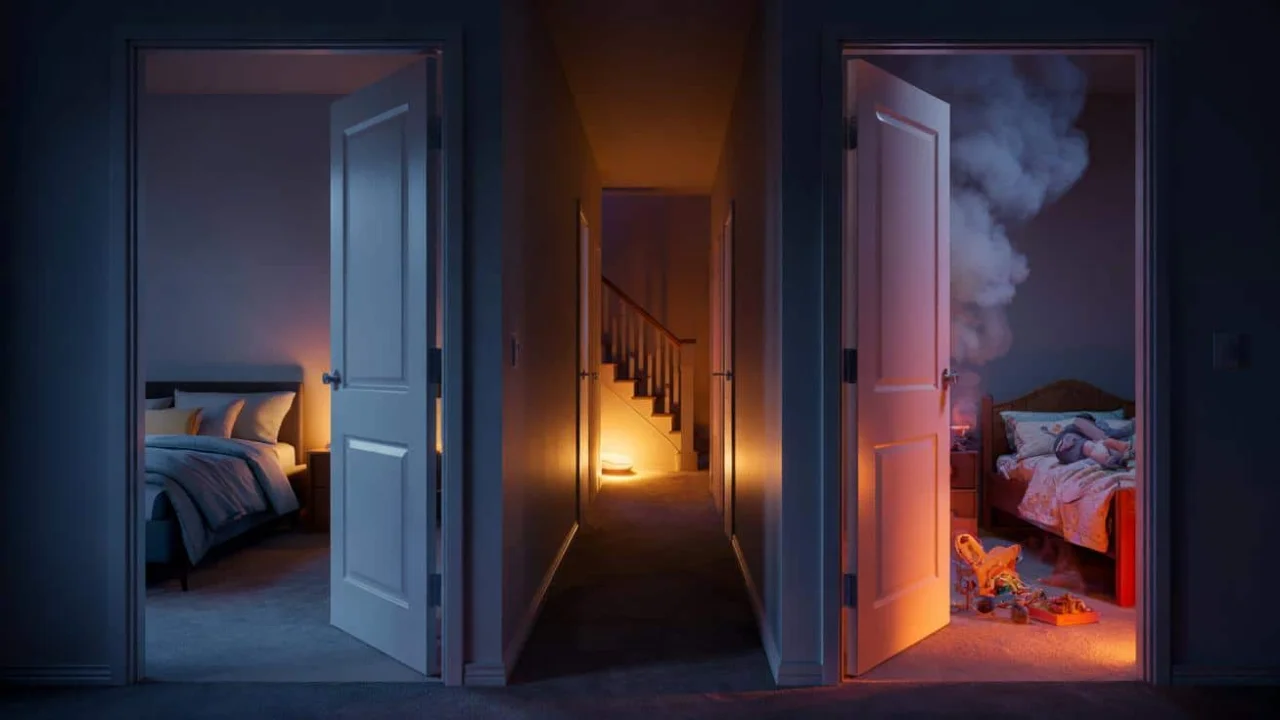
Sarah never thought twice about leaving her bedroom door wide open each night. She liked the feeling of connection to the rest of her house, the way moonlight could drift through from the hallway windows. That changed forever on a February evening when her neighbor’s house caught fire at 3am.
While the family next door escaped safely, Sarah learned something that shook her to the core. The fire chief explained how their closed bedroom doors had bought them crucial extra minutes to wake up and get out. “If those doors had been open,” he told her, “we might be having a very different conversation right now.”
That conversation sparked Sarah’s research into bedroom door safety, and what she discovered changed not just her nighttime routine, but her entire understanding of home safety. The simple act of closing a bedroom door transforms your sleeping space into a potential lifesaver.
Why Your Bedroom Door Could Save Your Life
When most people think about home security, they focus on deadbolts, alarm systems, and outdoor lighting. But fire safety experts have identified something far simpler that could mean the difference between life and death: bedroom door safety during nighttime hours.
Modern house fires behave differently than they did decades ago. Today’s furniture, carpets, and household items contain synthetic materials that burn hotter and faster, producing deadly toxic smoke within minutes. When fire breaks out at night, it’s not usually flames that reach sleeping occupants first—it’s superheated air and poisonous gases.
“A closed bedroom door acts like a shield against heat, smoke, and toxic gases,” explains Fire Captain Mike Rodriguez, who has responded to hundreds of residential fires. “We’ve seen rooms where the temperature difference between a closed room and the hallway was over 900 degrees Fahrenheit.”
Research conducted by fire safety organizations reveals startling differences in survivability. In controlled tests, bedrooms with closed doors maintained temperatures around 100 degrees Fahrenheit while adjacent hallways reached over 1,000 degrees. The closed rooms also had significantly clearer air, giving occupants precious time to escape.
Understanding the Science Behind Bedroom Door Safety
The physics of fire spread explains why bedroom door safety matters so much during nighttime emergencies. Fire naturally moves upward and outward, seeking oxygen and new fuel sources. An open doorway creates a perfect pathway for this deadly combination.
Here’s what happens during a typical nighttime house fire:

- Fire starts in a common area like the kitchen or living room
- Superheated gases rise and spread through open doorways and hallways
- Toxic smoke fills connected spaces within 2-3 minutes
- Temperatures can exceed 1,000 degrees in open areas
- Oxygen levels drop rapidly in spaces connected to the fire
- Carbon monoxide and other deadly gases accumulate quickly
The difference a closed door makes becomes clear when you examine survival statistics. Fire departments report that closed doors can reduce heat transfer by up to 900 degrees and significantly slow smoke infiltration.
| Room Condition | Temperature After 10 Minutes | Visibility | Survival Time |
|---|---|---|---|
| Open Door | 1,000°F+ | Zero visibility | Less than 2 minutes |
| Closed Door | 100-200°F | Clear to hazy | 15+ minutes |
“The data doesn’t lie,” says Dr. Jennifer Walsh, a fire safety researcher. “Closed doors create a protective barrier that can extend survival time from minutes to potentially hours, depending on the fire’s location and intensity.”
Beyond Fire Safety: Other Benefits of Closing Your Bedroom Door
While fire protection represents the most critical reason for bedroom door safety, closing your door at night offers additional benefits that impact your daily life and well-being.
Sleep quality improves dramatically with a closed bedroom door. The barrier reduces noise from other parts of the house, street traffic, and household appliances. Sleep specialists note that even small sounds can disrupt sleep cycles, leading to fatigue and reduced cognitive function.
Privacy and security also increase with a closed door. While it won’t stop a determined intruder, a closed bedroom door creates an additional barrier and can provide early warning if someone enters your home. The sound of a door opening or footsteps in the hallway often wakes people naturally.
Temperature control becomes more manageable with bedroom door safety practices in place. Closed doors help maintain consistent bedroom temperatures, reducing energy costs and improving comfort. This becomes especially valuable during extreme weather when heating or cooling bills spike.
Home security experts emphasize another often-overlooked benefit. “A closed bedroom door buys you time to assess threats, call for help, or prepare to defend yourself,” explains security consultant James Martinez. “Those extra seconds or minutes can be crucial during a break-in.”
Many parents worry about hearing their children at night with bedroom doors closed. However, baby monitors and modern home intercom systems easily solve this concern while maintaining bedroom door safety protocols.
The psychological benefits also matter. Many people report feeling more secure and sleeping more soundly with their bedroom door closed. This improved sleep quality leads to better physical health, mental clarity, and emotional stability during waking hours.
Air quality control represents another advantage. Closed doors help contain allergens, pet dander, and household odors within specific areas. People with asthma or allergies often notice improvements when they maintain proper bedroom door safety habits.
Emergency preparedness extends beyond fire safety when bedroom doors remain closed. Natural disasters, gas leaks, and other emergencies become more manageable when you have a secure space to retreat to and assess the situation safely.
Making Bedroom Door Safety Part of Your Routine
Implementing bedroom door safety requires minimal effort but maximum consistency. Start by making door-closing part of your bedtime routine, just like brushing teeth or setting an alarm clock.
Address common concerns that prevent people from closing bedroom doors at night. Install door sweeps or adjust door frames if gaps seem too large. Consider upgrading to solid-core doors for better fire resistance and sound dampening.
For families with young children, establish clear bedroom door safety rules while ensuring parents can still monitor their kids effectively. Modern technology offers solutions like wireless monitors and smart home systems that maintain connectivity without compromising safety.
Pet owners often struggle with bedroom door safety when cats or dogs want access throughout the night. Pet gates or automatic feeders can help maintain routines while keeping bedroom doors closed for safety.
“The hardest part is remembering to do it consistently,” admits homeowner Lisa Chen, who adopted bedroom door safety practices after attending a local fire safety seminar. “But now it’s as automatic as turning off the lights. My whole family sleeps better knowing we’re safer.”
FAQs
Will closing my bedroom door make the room too stuffy or hot?
Modern homes have adequate ventilation to maintain air quality in closed bedrooms. If stuffiness is a concern, check your home’s HVAC system or consider a small air purifier.
How can I hear my baby or young children with the bedroom door closed?
Baby monitors, intercom systems, or smart home devices easily solve this problem while maintaining bedroom door safety. Many modern monitors offer video and two-way communication.
What if there’s a fire and I can’t get out through my bedroom door?
Always have a secondary escape plan, typically through a bedroom window. Keep escape ladders on upper floors and ensure windows open easily. The closed door buys you time to use these alternative exits.
Should I close interior doors throughout my house at night?
Focus primarily on bedroom doors where people sleep. Closing other interior doors can also help contain fires, but bedroom door safety takes priority since that’s where people are most vulnerable.
Will my pets be okay if I close my bedroom door?
Pets adapt quickly to closed doors. Provide comfortable sleeping areas for pets outside bedrooms, along with access to water and litter boxes. Their safety also improves with proper bedroom door safety practices.
How much does bedroom door safety really matter in newer homes with smoke detectors?
Smoke detectors are crucial but work best in combination with closed doors. Modern building materials burn faster and hotter than older materials, making bedroom door safety even more critical in newer homes.
About the Author
