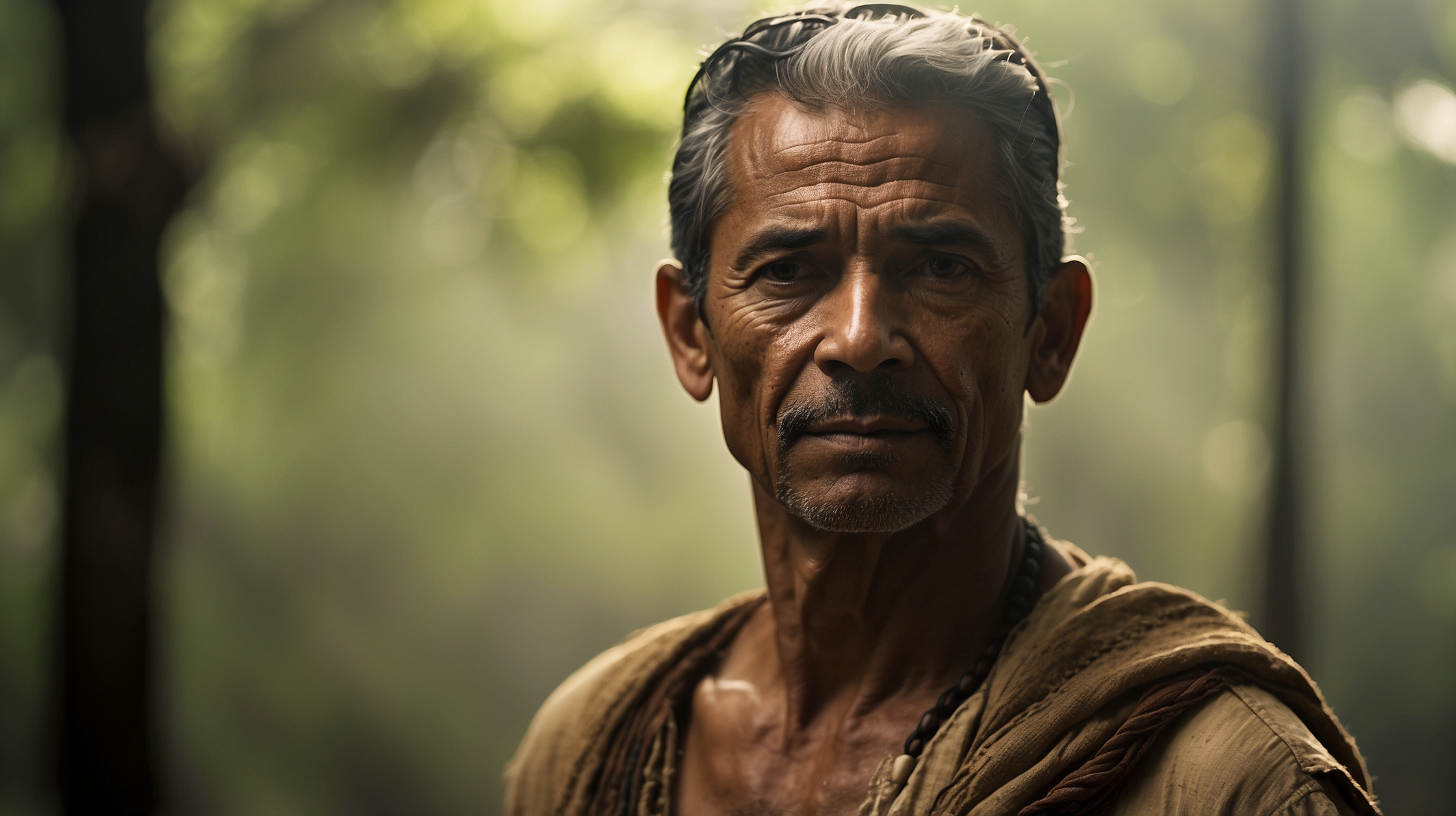

Gerardo Taracena, the acclaimed Mexican actor best known for his formidable role in Mel Gibson’s 2006 epic Apocalypto, has tragically passed away at the age of 55. News of his sudden death has resonated across the Latin American entertainment industry and beyond, leaving fans and colleagues stunned. A multi-talented interpreter of indigenous, national, and international roles, Taracena’s impact on modern Mexican cinema and theater cannot be overstated. Sources close to the actor confirmed that he suffered complications from a previously undisclosed illness, with further details still forthcoming.

Known for his intense screen presence and commanding portrayals of complex characters, Taracena’s acting style bridged tradition and contemporary narratives. His career not only helped raise the profile of Mexican talent in Hollywood but also brought indigenous and Latinx stories to a global audience. Through his work, particularly in films like Apocalypto and Sin Nombre, he became a cultural conduit, embodying roles that challenged stereotypes and revealed deeper layers of history and identity. As tributes pour in from across the industry, many are reflecting on the legacy he leaves behind and the impact of his blazing, yet tragically short, career.
Gerardo Taracena’s life and career at a glance
| Full Name | Gerardo Taracena |
| Age at Time of Death | 55 |
| Date of Death | Recently (Exact date not publicly disclosed) |
| Notable Roles | Apocalypto, Sin Nombre, Man on Fire, The Mexican |
| Cause of Death | Complications from illness (yet to be confirmed) |
| Nationality | Mexican |
| Years Active | 1994 – 2024 |
Why Gerardo Taracena mattered in global cinema
In an industry dominated by a handful of international marquee names, Gerardo Taracena stood as a rare example of authentic Mexican storytelling on a commercial platform. His ability to command attention with a single glance or gesture set him apart, both in large-scale Hollywood productions and indie Latin American films. His breakout performance as the brutal yet human antagonist “Middle Eye” in Apocalypto introduced him to a global audience. More than a menacing villain, Taracena infused his character with layers of pathos, making the performance unforgettable.

But Taracena’s gift extended far beyond the confines of Hollywood. He was a stalwart of Mexico’s deeply rooted theatrical tradition. A founding member of the Teatro Mythos ensemble and a regular collaborator with Danza Contemporánea de Cuba, he excelled in deeply physical, existential roles that explored themes of history, memory, and identity. His training in contemporary dance further sharpened his unique acting style, something he often cited as the core of his technique.
A versatile career educated in art, forged in struggle
Born in Mexico City, Taracena studied dramatic art at the National Autonomous University of Mexico (UNAM), one of Latin America’s most prestigious institutions. From there, his path took him through experimental theater circuits, fringe festivals, and eventually to international film sets. His devotion to authenticity was unwavering, often opting for roles that were physically and emotionally demanding.

“Gerardo was never after fame. He was after truth. He lived and breathed each character as if he were honoring an ancestor. That’s what made him unforgettable.”
— Maria López, Cultural Critic and Theater Historian

His work ranged widely. From gritty urban dramas like Sin Nombre to psychological thrillers and even fantasy shorts, Taracena was as comfortable in a period costume as he was in the stylized realism of contemporary cinema. His portrayal of law enforcement, revolutionaries, tribal leaders, and even political adversaries added texture to national stories long underserved by mainstream platforms.
The legacy left in Mexican and Latinx representation
Representation in modern media is more than just visibility; it’s about substance, narrative control, and diversity of roles. Taracena was a forerunner in this evolving landscape. He brought gravitas, depth, and cultural nuance to every project, refusing to let Mexican characters be defined by tropes or one-dimensional portrayals. He portrayed Indigenous, mestizo, and urban Mexican characters with equal commitment—proof that identity is too layered to be boxed into stereotypes.
His work paved the way for actors like Tenoch Huerta and Yalitza Aparicio, who now navigate similar spaces of cultural visibility and responsibility. His standards of storytelling, where indigenous languages were spoken with precision and ancient rituals honored respectfully, elevated these portrayals beyond entertainment into cultural preservation.
Sparking conversations in international film circles
His death has reverberated particularly deeply among independent filmmakers and cultural producers who saw him as a bridge between regions often disconnected in global discourse. His collaborations extended into South America and even Europe, breaking language barriers with performances in Spanish, Nahuatl, and beyond. According to those who worked with him, Taracena brought with him not just skill, but a sensibility toward inclusive storytelling.
“We lost not only an actor but a cultural interpreter. He made us believe that our heritage is something global audiences can—and should—understand.”
— Santiago Meza, Independent Filmmaker
Who remembers and celebrates his work today
Multiple filmmakers, producers, and actors have issued heartfelt tributes on social media and through press releases. His longtime collaborators at Teatro Mythos have announced plans for a commemorative festival showcasing his theatrical legacy. Additionally, the Mexican Academy of Film Arts and Sciences (AMACC) is reportedly planning a special tribute at their annual awards ceremony.
The larger public, too, has taken to honor him through unofficial film marathons, social tributes using hashtags like #GerardoTaracena and #ÉxitoEterno, and even traditional ceremonies in his hometown areas. Given his spiritual and historical ties to indigenous narratives, some communities have chosen to honor his passing through pre-Hispanic rituals—marking not just a life ended, but one fully lived in service of ancestral memory.
What comes next in remembering Gerardo Taracena
Though no official museum exhibition or large-scale film retrospective has been announced yet, interest is already growing among academics and institutions. Scholars at UNAM have proposed archiving his writings, performances, and interviews into a public collection. Streaming platforms are noting an uptick in searches involving his name, particularly for films like Apocalypto and Sin Nombre. These upticks speak to a renewed curiosity—and, perhaps, a long-overdue appreciation—for the actors who craft the cultural soul of cinema.
| Winners | Losers |
|---|---|
| Independent Mexican Cinema | Global Audiences Losing an Iconic Talent |
| Cultural Institutions Promoting Legacy | Ongoing Projects Halted Due to His Passing |
| Upcoming Generations of Latinx Actors | Loss of a Mentor and Role Model |
Frequently Asked Questions about Gerardo Taracena
What was Gerardo Taracena best known for?
He gained international recognition for his role as “Middle Eye” in Mel Gibson’s film Apocalypto, a performance that showcased his intense commitment to character and authenticity.
How did Gerardo Taracena die?
Official details remain scarce, but sources close to the actor confirm that complications from an illness led to his untimely passing at age 55.
Was Taracena involved in theater as well as cinema?
Yes, Taracena was deeply involved in Mexican theater and was a founding member of the influential Teatro Mythos group. He was also trained in contemporary dance and arts.
Did he influence younger generations of actors?
Absolutely. His nuanced portrayals and advocacy for accurate indigenous and cultural representation made him a mentor figure for many emerging Latinx talents.
What is happening to preserve his legacy?
Tributes, cultural festivals, and proposals for academic archives are underway to honor and protect his diverse body of work for future generations.
Where can fans see his most notable performances?
His acclaimed roles can be found in Apocalypto, Sin Nombre, Man on Fire, and The Mexican, most of which are now available on major streaming platforms or DVD collections.
Did he receive any awards during his lifetime?
While he may have been under-recognized by major Hollywood award shows, Taracena was celebrated in many Latin American circles and received critical acclaim throughout his career.
How did he impact Mexican cinema?
By choosing roles that honored Mexican heritage and fought against typecasting, Taracena became a central figure in elevating the national film narrative on an international stage.
About the Author