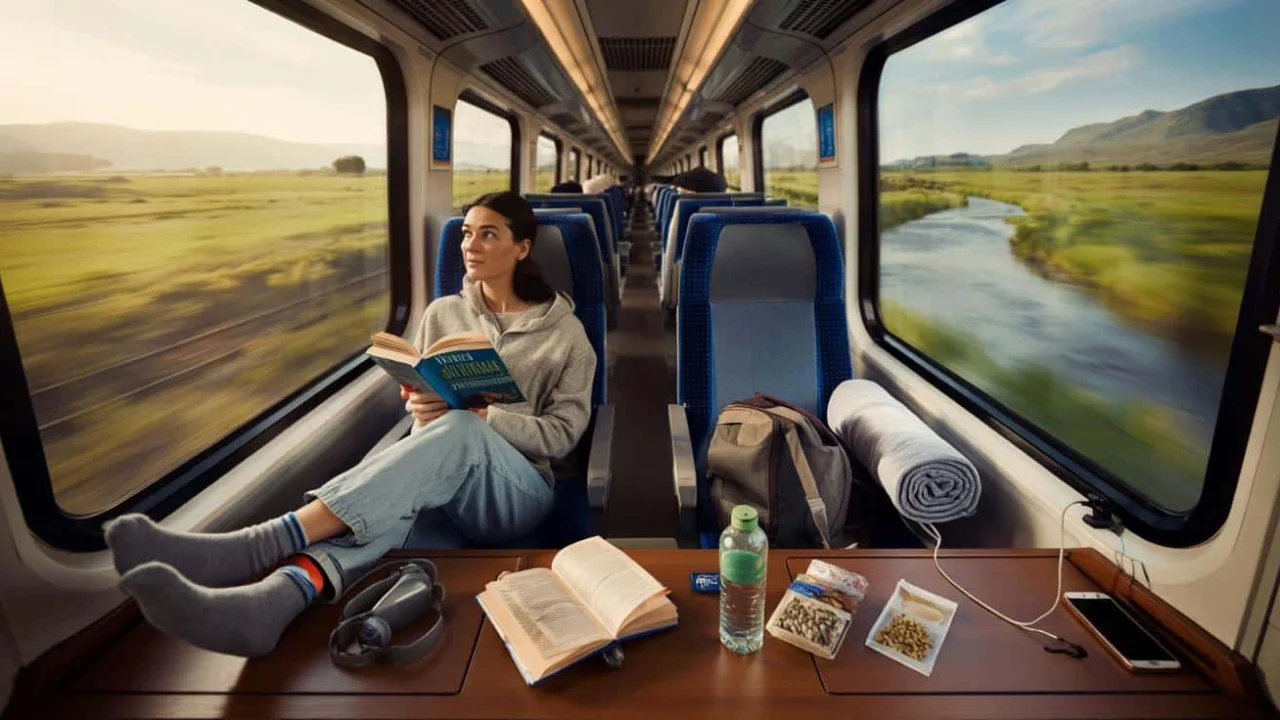
The first time I boarded an overnight Amtrak, I hauled my overstuffed suitcase down the platform like I was moving houses. The air smelled like diesel and cold metal, and people were doing that nervous half-walk, half-jog you only see in train stations. A conductor shouted “All aboard!” in a voice that made me feel like I’d stepped into an old movie.

By the time we rolled out of the city and into the dark, my seatmate was asleep, the Wi-Fi was already acting shy, and my bag full of “essentials” was wedged somewhere under three other people’s stuff. Hours later, somewhere between states, I realized: long-distance train travel is its own little universe, and it runs on different rules than planes or road trips.
That’s when the real learning started.

Why Long-Distance Train Travel Requires Different Strategies
After logging countless miles on routes like the California Zephyr, Empire Builder, and Coast Starlight, I’ve learned that successful Amtrak travel isn’t about rushing or cramming your trip into airline-style thinking. It’s about settling into a slower rhythm and preparing for a journey that’s part transportation, part social experiment, part meditation.
“The biggest mistake first-time riders make is treating the train like a bus with beds,” says Sarah Chen, a frequent cross-country traveler. “Once you embrace the pace and the community aspect, everything clicks.”

Long Amtrak rides can stretch 20 to 50 hours, crossing multiple time zones and weather patterns. You’ll share spaces with strangers, navigate meal times in a dining car, and watch America unfold at 79 mph. These experiences demand their own set of Amtrak travel tips.
The Essential Amtrak Travel Tips That Actually Matter
Here are the practical strategies that will transform your first long-distance train experience from overwhelming to genuinely enjoyable:

- Pack like you’re staying in a tiny hotel room – Bring layers, comfortable clothes for sleeping, and a small bag you can easily access from your seat
- Download entertainment before you board – Wi-Fi works sporadically, so offline movies, podcasts, and books are essential
- Claim your space early – Store larger bags quickly, set up your seat area, and establish your routine before the train gets crowded
- Bring your own pillow and blanket – Even in sleeper cars, familiar comfort items make a huge difference for actual sleep
- Pack snacks and water – Cafe car prices are high, and meal times don’t always align with your hunger schedule
| Route | Duration | Best Features | Packing Priority |
|---|---|---|---|
| California Zephyr | 51 hours | Rocky Mountain views | Camera, warm clothes |
| Coast Starlight | 35 hours | Pacific Ocean scenery | Layers, entertainment |
| Empire Builder | 46 hours | Glacier National Park | Blanket, snacks |
| Southwest Chief | 40 hours | Desert landscapes | Water, sun protection |
- Master the observation car timing – Early morning and late afternoon offer the best views and fewest crowds
- Embrace the dining car experience – You’ll be seated with strangers, and these conversations often become trip highlights
- Understand sleeper car etiquette – Keep noise low after 10 PM, and always knock before entering shared spaces
- Plan for delays – Freight trains have priority, so build buffer time into your arrival plans
- Bring cash for tips – Sleeping car attendants work hard to make your journey comfortable

“The train teaches you patience in the best way,” explains Mark Rodriguez, who’s taken over 50 long-distance Amtrak trips. “You can’t control the schedule, but you can control how much you enjoy the ride.”
What Changes When You Get These Amtrak Travel Tips Right
When you approach long-distance train travel with the right mindset and preparation, something magical happens. Instead of counting hours until arrival, you start noticing the subtle changes in landscape. You have genuine conversations with fellow passengers over shared meals. You watch entire weather systems roll across the horizon.
First-time riders who follow these Amtrak travel tips report feeling less anxious about the journey and more present for the experience. They sleep better, eat more comfortably, and arrive at their destination feeling like they’ve actually traveled somewhere, not just been transported.
“I used to dread the long stretches,” says Jennifer Walsh, a business traveler who now chooses trains over flights when possible. “Now I look forward to that forced downtime. It’s become my favorite way to reset.”
The practical benefits extend beyond comfort. Passengers who prepare properly spend less money on overpriced train food, avoid the stress of fighting for luggage space, and don’t waste time trying to work with unreliable internet.
More importantly, they become part of the train’s temporary community instead of just enduring it. They chat with the couple celebrating their anniversary in the next roomette. They share snacks with families struggling with cranky kids. They wake up early to catch sunrise over the Colorado Rockies because someone told them it was worth it.
These connections and moments don’t happen by accident. They’re the natural result of approaching train travel as its own unique adventure, complete with its own rules, rhythms, and rewards.
Long-distance Amtrak travel isn’t for everyone, but for those who embrace it with proper preparation and realistic expectations, it offers something increasingly rare in modern travel: time to think, space to breathe, and genuine human connection in an analog world.
FAQs
How early should I arrive at the station for a long-distance Amtrak trip?
Arrive 30-45 minutes before departure to handle check-in, find your car, and settle in without rushing.
Can I bring my own food on long Amtrak rides?
Yes, you can bring your own food and drinks, including alcohol for private consumption in sleeper cars only.
What’s the difference between coach and sleeper car comfort?
Coach seats are larger than airline seats but you’ll sleep sitting up, while sleeper cars provide private rooms with beds and included meals.
How reliable is Amtrak Wi-Fi on long-distance routes?
Wi-Fi is available but often slow and intermittent, especially in remote areas, so download content before traveling.
Should I tip Amtrak sleeping car attendants?
Yes, $10-20 per night is standard for good service, and they handle everything from bed setup to wake-up calls.
What happens if my Amtrak train is significantly delayed?
Amtrak provides updates and may offer meal vouchers for long delays, but always build buffer time into connecting travel plans.
About the Author