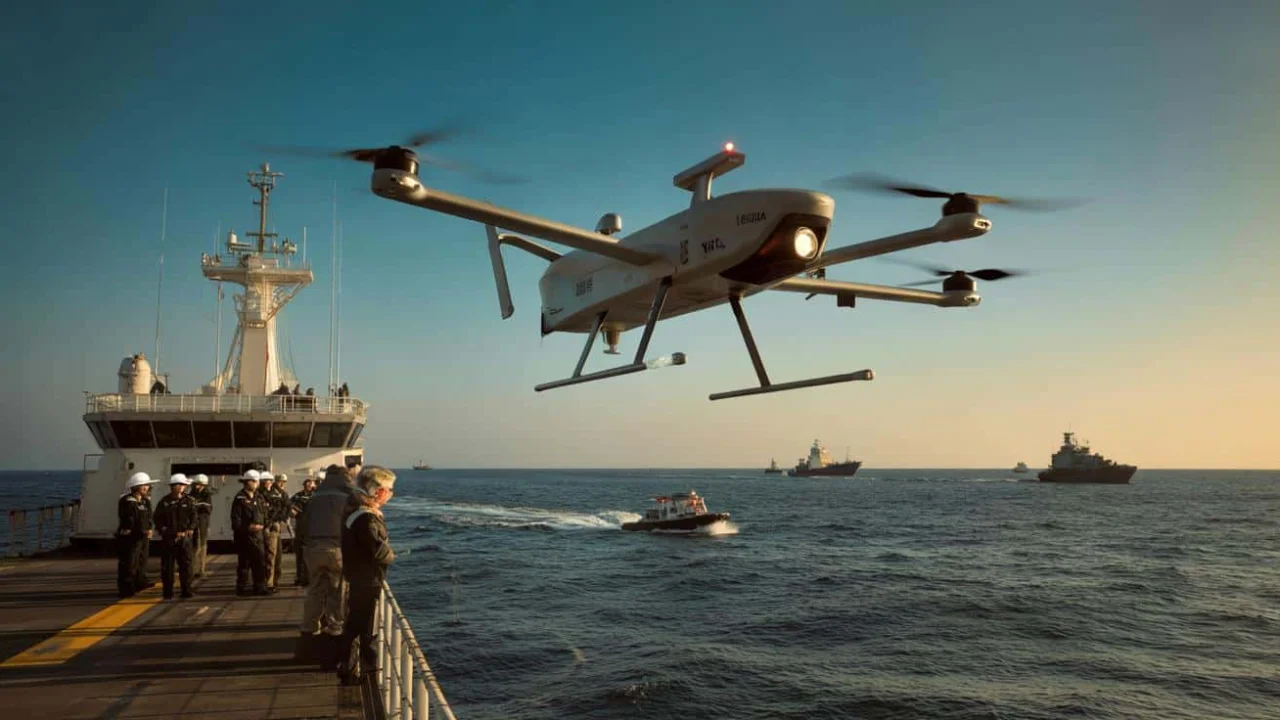
Picture this: you’re standing on the deck of a French naval vessel somewhere in the Mediterranean. The sea is choppy, the wind is howling, and visibility is dropping fast. Twenty years ago, launching a small surveillance drone in these conditions would have been nearly impossible without specialized equipment and perfect timing.
Today, a sailor simply sets down what looks like a compact aircraft on the deck, presses a button, and watches it lift straight up into the stormy sky. Within minutes, it’s transmitting crystal-clear images of suspicious vessels 50 miles away.
This isn’t science fiction anymore. The French Navy is about to become the world’s first military force to deploy the Airbus Aliaca Vertical UAS, and it’s going to change everything about how ships keep watch over the seas.
France leads the world with game-changing naval drone technology
The Airbus Aliaca Vertical UAS represents a breakthrough that naval experts have been waiting for. Unlike traditional drones that need runways or complex launch systems, this aircraft can take off and land vertically like a helicopter, then transition to efficient forward flight like a conventional plane.
Airbus confirmed that deliveries to the French Navy will begin in May 2026, making France the first nation to operationally deploy this advanced unmanned aircraft system. The rollout follows an intensive qualification process led by France’s defense procurement agency, the Direction générale de l’armement (DGA).
“This technology eliminates the biggest headache we’ve had with shipboard drones,” explains a senior naval aviation specialist. “No more worrying about catapults, recovery nets, or perfect weather conditions. The aircraft just goes up when we need it to.”
The Aliaca Vertical is part of France’s SMDM program – “Systèmes de Mini-Drones aériens embarqués de la Marine” – which translates to onboard mini aerial drone systems for naval vessels. Since 2022, the DGA has ordered 34 Aliaca systems for the Navy, initially in conventional fixed-wing configuration.
Technical capabilities that matter in real operations
The Airbus Aliaca Vertical UAS isn’t just about convenience – it’s about expanding what smaller naval vessels can accomplish. Here’s what makes this system stand out:
| Feature | Benefit |
|---|---|
| Vertical Take-Off/Landing | No launch equipment needed |
| Transition to Forward Flight | Long endurance and range |
| Compact Design | Fits on smaller vessels |
| All-Weather Operation | Works in rough conditions |
| Real-Time Data Link | Instant intelligence sharing |
Key operational advantages include:
- Launch and recovery in sea states that would ground conventional drones
- Deployment from vessels without dedicated drone facilities
- Reduced crew training requirements compared to catapult systems
- Lower maintenance needs without complex recovery gear
- Extended mission flexibility in confined or crowded waters
The system maintains the same mission performance as its fixed-wing predecessor while adding the vertical capability that naval operators have been demanding. Flight endurance remains sufficient for extended surveillance missions, while the aircraft’s sensors can track surface vessels and provide real-time intelligence to fleet commanders.
“We’re seeing range and endurance figures that match traditional mini-drones, but with the operational flexibility of a helicopter,” notes a defense technology analyst. “That combination opens up mission profiles that simply weren’t possible before.”
Real-world impact for naval operations and maritime security
The deployment of the Airbus Aliaca Vertical UAS will reshape how the French Navy approaches several critical missions. Search and rescue operations will benefit immediately, as ships can launch surveillance drones regardless of sea conditions to locate survivors or guide rescue vessels to the scene.
Anti-piracy patrols in congested shipping lanes will become more effective. Instead of relying solely on shipboard radars and occasional helicopter flights, naval vessels can maintain persistent aerial surveillance using drones that cost a fraction of what helicopter operations require.
Border security missions will see dramatic improvements. Patrol vessels operating near busy ports or in shallow coastal waters – areas where traditional launch systems struggle – can now deploy aerial assets without restriction.
The technology’s impact extends beyond the French Navy. Other maritime forces are watching this deployment closely, and several NATO allies have already expressed interest in similar capabilities. Commercial applications are also emerging, with coast guards and maritime law enforcement agencies evaluating how VTOL drones could enhance their operations.
“This isn’t just about France getting new toys,” explains a maritime security expert. “This represents a fundamental shift in how we think about naval aviation. Smaller ships can now do jobs that used to require aircraft carriers or shore-based assets.”
The economic implications are significant too. Traditional naval aviation requires massive infrastructure investments – specialized ships, trained crews, and expensive aircraft. The Aliaca Vertical approach allows navies to achieve similar surveillance capabilities at a fraction of the cost.
Environmental benefits shouldn’t be overlooked either. VTOL drones consume far less fuel than helicopters while providing comparable surveillance capabilities. For navies under pressure to reduce their carbon footprints, this technology offers a clear path forward.
Looking ahead, the success of France’s deployment will likely accelerate adoption by other naval forces. The technology addresses long-standing operational challenges that have limited drone deployment on smaller vessels, potentially democratizing advanced naval surveillance capabilities across allied fleets.
FAQs
What makes the Airbus Aliaca Vertical UAS different from regular naval drones?
It can take off and land vertically like a helicopter but flies like a conventional aircraft, eliminating the need for catapults or recovery equipment that most naval drones require.
When will the French Navy start using these drones?
Deliveries are scheduled to begin in May 2026, following completion of qualification testing by France’s defense procurement agency.
How many of these systems has France ordered?
The French Navy has ordered 34 Aliaca systems as part of their SMDM program for onboard mini aerial drone systems.
Can smaller naval vessels use this drone system?
Yes, that’s one of the main advantages – the vertical take-off capability means even smaller ships without specialized launch equipment can operate these drones.
Will other countries adopt similar drone technology?
Several NATO allies are already showing interest, and the technology addresses common challenges faced by naval forces worldwide, making broader adoption likely.
What missions will these drones perform?
They’ll handle surveillance, search and rescue, anti-piracy operations, border security, and maritime patrol missions that previously required helicopters or shore-based aircraft.
About the Author