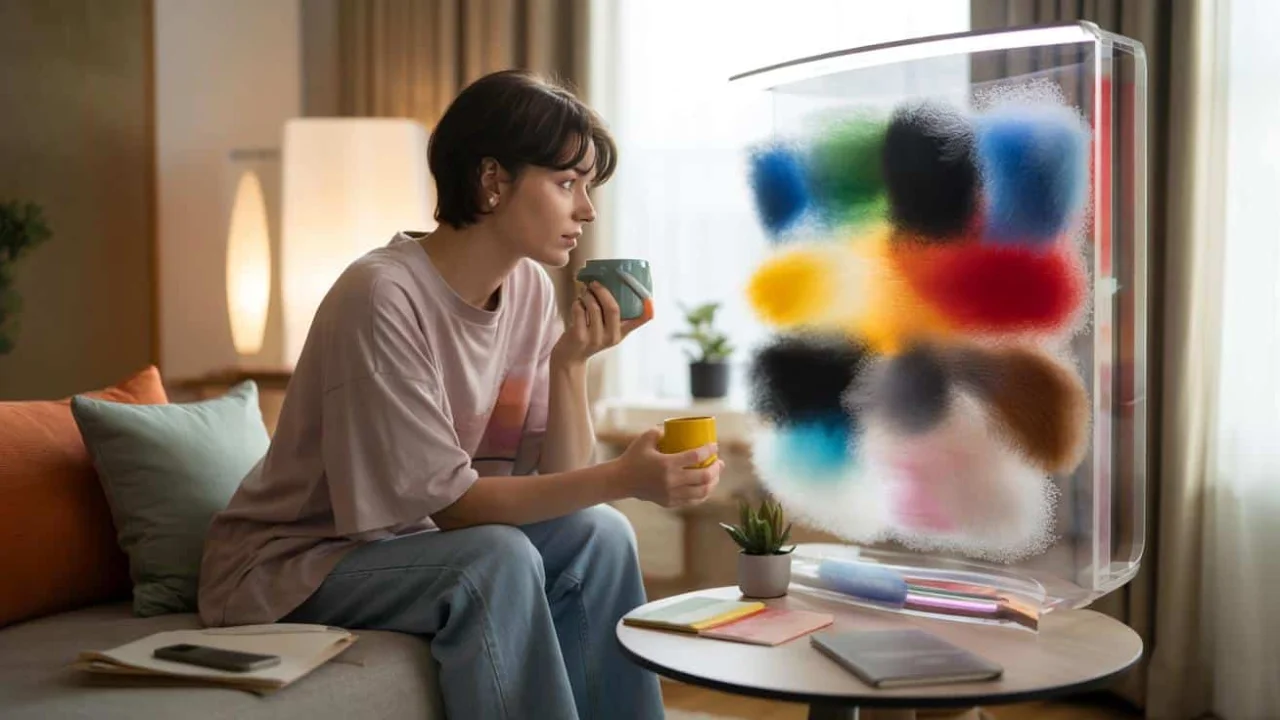
Sarah stared at her closet, realizing every single shirt was some shade of green. Forest green, sage, emerald, olive. She’d never consciously planned it this way, but there it was—an entire wardrobe telling the same story.
When her friend pointed it out during a video call, Sarah laughed it off. “I guess I just like green.” But later that night, she couldn’t stop thinking about it. Was this really just coincidence?
That question led her down a fascinating rabbit hole about colour psychology personality research. What she discovered made her see her green obsession—and herself—in a completely new light.
The hidden language your favourite colour speaks
Your colour preferences aren’t random choices. They’re psychological fingerprints that reveal deep-seated aspects of your personality, according to decades of research in colour psychology.
Dr. Angela Wright, a leading colour psychologist, explains: “Colour preferences are formed through a combination of personal experiences, cultural influences, and innate psychological responses. They act as a window into our emotional needs and behavioural patterns.”

The connection between colour and personality runs deeper than simple aesthetics. When you gravitate toward certain colours, you’re responding to psychological triggers that align with your inner emotional landscape.
Think about how you feel in different coloured rooms. That calm sensation in a blue space isn’t imaginary—it’s your nervous system responding to wavelengths of light that naturally lower your heart rate and blood pressure.

What each colour reveals about who you are
Colour psychology personality traits follow remarkably consistent patterns across cultures and age groups. Here’s what researchers have discovered about the most popular colour preferences:
| Colour | Personality Traits | What You Seek |
| Blue | Loyal, trustworthy, calm, analytical | Stability, peace, reliability |
| Red | Passionate, confident, energetic, competitive | Excitement, power, attention |
| Green | Balanced, growth-oriented, harmonious, practical | Security, nature, renewal |
| Yellow | Creative, optimistic, cheerful, spontaneous | Joy, inspiration, mental stimulation |
| Purple | Imaginative, spiritual, mysterious, artistic | Uniqueness, luxury, transformation |
| Black | Independent, sophisticated, protective, strong | Control, authority, elegance |
| White | Pure, organized, minimalist, perfectionistic | Clarity, simplicity, new beginnings |
These associations aren’t universal rules, but they represent common psychological patterns that appear across different populations. Your favourite colour often reflects both what you are and what you aspire to become.
“People don’t just like colours randomly,” notes colour therapist Dr. Michael Davidson. “Your brain is constantly seeking environments and stimuli that support your emotional wellbeing. Colour preference is one way that manifests.”
The fascinating part? Your colour preferences can actually influence your behaviour. Studies show that wearing your favourite colour can boost confidence and improve mood, while surrounding yourself with preferred colours enhances productivity and reduces stress.
How colour psychology affects your daily decisions
Your colour psychology personality profile doesn’t just sit quietly in the background—it actively shapes how you navigate the world every single day.
Consider how colour influences these everyday choices:
- Career paths: Blue lovers often gravitate toward healthcare, education, or finance—fields requiring trust and stability
- Relationship dynamics: Red enthusiasts typically seek passionate, high-energy partnerships
- Home decoration: Green fans create harmonious, nature-inspired living spaces
- Fashion choices: Black devotees build wardrobes around sophistication and timeless elegance
- Communication style: Yellow lovers tend to be expressive, optimistic communicators
Even your shopping habits reflect your colour psychology. That purple phone case you chose over the black one? Your subconscious might be expressing a need for creativity and uniqueness in your daily routine.
Dr. Jennifer Walsh, who studies consumer behaviour, observes: “Colour preferences act as a shortcut to understanding someone’s values and motivations. Marketing professionals have known this for decades—we make split-second decisions based on colour before we even process other information.”
This extends beyond personal choices into professional success. Research indicates that people who understand their colour psychology personality profile make more satisfying career decisions and build more authentic personal brands.
The workplace applications are particularly compelling. Teams that consider colour psychology when designing office spaces report higher satisfaction and productivity. Job candidates who align their interview attire with their authentic colour preferences often appear more confident and memorable.
Your favourite colour might even predict how you handle stress. Blue lovers typically seek quiet, methodical solutions. Red fans might prefer direct confrontation or physical activity. Green enthusiasts often turn to nature or balanced lifestyle changes.
Understanding these patterns doesn’t mean you’re trapped by your colour preference. Instead, it offers insight into your natural tendencies and psychological needs, helping you make choices that align with your authentic self.
The next time someone asks about your favourite colour, remember—you’re not just sharing a preference. You’re offering a glimpse into the complex, fascinating psychology that makes you uniquely you.
FAQs
Can your favourite colour change over time?
Yes, colour preferences often shift as you grow and experience life changes. Major life events, personal growth, or changing priorities can influence which colours resonate with you.
What if I like multiple colours equally?
Having several favourite colours usually indicates a well-rounded personality with diverse needs and interests. Most people have 2-3 colours they strongly prefer.
Do cultural backgrounds affect colour psychology?
Cultural influences definitely play a role, but core psychological responses to colour appear consistent across cultures. Personal experiences matter more than cultural background.
Is colour psychology scientifically proven?
While individual responses vary, decades of research support connections between colour preference and personality traits. It’s a legitimate field of psychological study.
Can I use colour psychology to improve my mood?
Absolutely. Incorporating your preferred colours into your environment, clothing, and daily life can positively impact your emotional wellbeing and confidence.
What does it mean if I dislike certain colours?
Colour aversions can be as revealing as preferences. They often indicate personality traits or experiences you want to avoid or move away from.
About the Author
