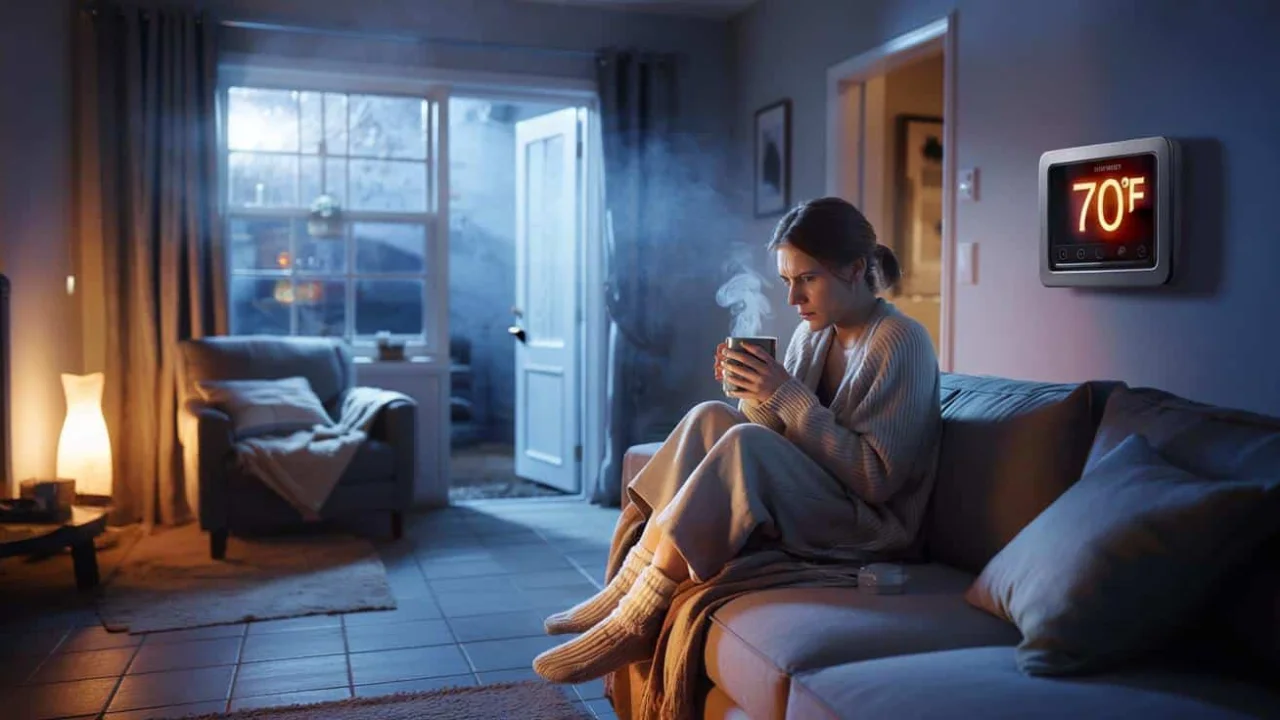
Sarah stood in her kitchen last Tuesday morning, wearing two sweaters and fuzzy socks, staring at her thermostat in complete bewilderment. The digital display cheerfully announced it was 72°F – a perfectly comfortable temperature by any standard. Yet she could see her breath forming little puffs in the air as she exhaled.

She’d been having this argument with her heating system for weeks. The thermostat reading seemed accurate enough when she held her hand near it, but the rest of her 1920s bungalow felt like a refrigerator with mood lighting. Her morning coffee went cold faster than usual, and she found herself gravitating toward the one sunny spot by the living room window like a house cat.
That’s when it hit her: maybe the problem wasn’t her heating bill or her tolerance for cold. Maybe the real issue was trusting a single number to represent the complex reality of how temperature actually feels in a lived-in space.
Why your thermostat might be telling you a beautiful lie
The battle between thermostat reading accuracy and your actual comfort isn’t just in your head. Your thermostat measures temperature at one specific location – usually a hallway or central wall – while your body experiences the combined effect of air temperature, humidity, air movement, and radiant heat from surfaces around you.
“Most people don’t realize that a thermostat is basically taking the temperature of a single spot and assuming that represents their entire home,” explains HVAC specialist Jennifer Martinez, who’s been troubleshooting comfort complaints for over fifteen years. “It’s like judging a book by reading one sentence from the middle.”
Your skin is constantly calculating a much more complex equation. When you feel cold despite a reasonable thermostat reading, you’re experiencing what building scientists call the “mean radiant temperature” – the average temperature of all the surfaces around you. Cold windows, exterior walls, and even that tile floor in the bathroom are all radiating their chill toward your body.
Think of it this way: you can stand in a greenhouse on a winter day where the air temperature is 75°F, but if you’re near a large glass wall, you’ll still feel cold because that glass is sucking heat away from your body through radiation.

The real factors that make your home feel freezing
Understanding why your body and thermostat disagree requires looking at the complete picture of indoor comfort. Here are the key players in this temperature mystery:
- Humidity levels: Dry winter air makes the same temperature feel colder because it increases heat loss from your skin
- Air circulation: Stagnant air creates hot and cold pockets that your thermostat can’t detect
- Insulation quality: Poor insulation means cold surfaces that radiate chill regardless of air temperature
- Window efficiency: Single-pane or poorly sealed windows create cold zones and drafts
- Thermostat placement: Units near heat sources or in sunny spots give falsely high readings

| Temperature Reading | Humidity Level | How It Actually Feels |
|---|---|---|
| 70°F | 60% humidity | Comfortable |
| 70°F | 30% humidity | Feels like 67°F |
| 70°F | 15% humidity | Feels like 64°F |
| 72°F | 10% humidity + drafts | Feels like 66°F or colder |
“I’ve walked into homes where the thermostat read 73°F, but I needed to put on a jacket because of all the cold surfaces and air movement,” says building performance analyst Robert Chen. “The homeowner kept cranking up the heat, wondering why their bills were through the roof.”
When your body wins the temperature debate
Your body is actually a sophisticated environmental sensor that processes dozens of comfort variables simultaneously. While your thermostat measures air temperature, your skin detects radiant temperature, air movement, humidity, and even subtle changes in air pressure.
This is why you might feel perfectly warm in a 65°F room with good insulation and proper humidity, but freezing in a 72°F room with cold walls and dry air. Your body is giving you the real story about thermal comfort – not just temperature, but actual livability.
Millions of homeowners face this disconnect every winter, leading to higher energy bills as they chase comfort by cranking up thermostats that can’t solve the underlying issues. The solution isn’t necessarily more heat; it’s addressing the factors that make heat feel less effective.
Smart homeowners are learning to trust their bodies as the primary comfort gauge while using thermostat readings as just one data point. They’re investing in humidity control, draft sealing, and better insulation instead of just fighting with the temperature dial.
“Your comfort is determined by your entire environment, not just the air temperature,” notes energy auditor Maria Gonzalez. “I tell clients that if you’re cold at 72°F, the answer probably isn’t turning it up to 75°F – it’s figuring out why 72°F doesn’t feel like 72°F.”
The most comfortable homes often have thermostats set lower than you’d expect because they’ve addressed the root causes of thermal discomfort. When your floors aren’t cold, your walls aren’t sucking heat from your body, and the air isn’t bone-dry, a 68°F reading actually feels like a cozy 68°F.
Rather than fighting with your thermostat, consider it a starting point for detective work. If the reading says you should be comfortable but you’re not, your body is telling you there’s more to the story. Listen to that feedback – it’s usually pointing you toward solutions that will make your home genuinely more comfortable while potentially lowering your energy bills.
FAQs
Why does my house feel cold even when the thermostat says it’s 70°F?
Cold walls, floors, and windows radiate chill that your body feels even when the air temperature is comfortable. Low humidity and drafts also make the same temperature feel colder.
Should I trust my thermostat or how I actually feel?
Trust how you feel, but use the thermostat reading as a clue. If you’re cold at a reasonable temperature, there are likely other comfort factors to address beyond just air temperature.
Can the location of my thermostat make it less accurate?
Yes. Thermostats near heat sources, in sunny spots, or in areas with different airflow than the rest of your home can give readings that don’t represent your actual living spaces.
How much can humidity affect how warm or cold I feel?
Very dry air can make 70°F feel like 64°F or colder. Proper humidity levels (30-50%) help the same temperature feel more comfortable.
What’s the best way to make my home feel warmer without raising the thermostat?
Add humidity, seal drafts, use area rugs on cold floors, and consider thermal curtains for windows. These changes can make a lower temperature feel much more comfortable.
Is it normal for different rooms to feel different temperatures?
Yes, especially in older homes or those with poor insulation. Rooms with more exterior walls, windows, or poor airflow will naturally feel colder than the thermostat reading suggests.
About the Author
