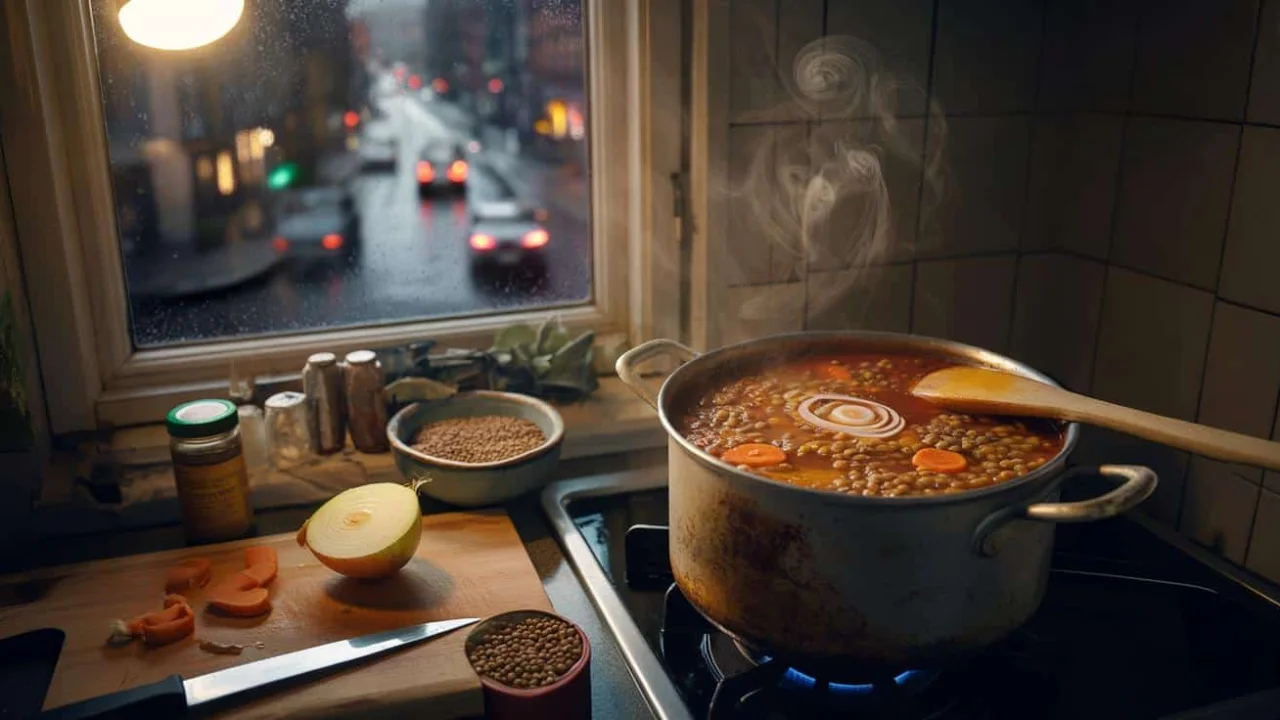
Last Thursday, I found myself standing in my kitchen at 8 PM, still wearing yesterday’s socks and a wrinkled shirt that had seen better days. My phone buzzed with another work email marked “urgent,” the dishwasher was making that grinding noise again, and I’d somehow managed to eat nothing but coffee and a sad desk salad all day.

That’s when I realized I needed to hit pause on everything. Not literally—life doesn’t come with a remote control—but mentally. Emotionally. I needed to create some space between me and the chaos swirling around my head.
So I did what I always do when the world feels like it’s spinning too fast. I pulled out my heaviest pot, grabbed a bag of lentils from the pantry, and started making the one warm comfort dish that never fails to slow everything down.

Why we crave comfort when life moves too fast
There’s something almost magical about the ritual of slow cooking when everything else demands speed. The moment you start chopping onions and hear that first sizzle in the pan, your breathing changes. Your shoulders drop. The noise in your head gets quieter.
“Cooking comfort food isn’t just about feeding our bodies,” says culinary therapist Sarah Martinez. “It’s about creating a sensory experience that grounds us in the present moment. The smells, textures, and rhythms of preparing a warm dish activate our parasympathetic nervous system—literally helping us calm down.”

This warm comfort dish I make is nothing fancy. Red lentils, diced tomatoes, carrots, onions, garlic. Maybe some cumin and paprika if I’m feeling adventurous. A splash of coconut milk at the end to make it creamy. The whole thing takes about forty minutes, but most of that is hands-off simmering time.
What makes it special isn’t the ingredients—it’s the process. The meditative act of stirring. The way steam fogs up the kitchen window. How the whole house starts to smell like someone who has their life together actually lives there.

The essential elements of slow-down cooking
Not all comfort dishes are created equal when it comes to slowing down your day. The best ones share certain characteristics that make them particularly soothing to prepare and eat.
| Element | Why It Helps | Examples |
|---|---|---|
| Low and slow cooking | Forces you to wait, be patient | Braising, simmering, slow roasting |
| Repetitive motions | Meditative, calms the mind | Stirring, chopping, kneading |
| Aromatic ingredients | Engages senses, grounds you | Garlic, onions, herbs, spices |
| Simple ingredients | No stress about shopping or prep | Pantry staples, basic vegetables |
The key ingredients for this particular warm comfort dish are:

- Red or green lentils (they cook faster than other varieties)
- One large onion, diced
- 2-3 carrots, chopped into small pieces
- 3-4 garlic cloves, minced
- One can of diced tomatoes
- Vegetable or chicken broth
- Basic spices: cumin, paprika, salt, pepper
- A splash of cream or coconut milk (optional but recommended)
“The beauty of lentils is that they’re incredibly forgiving,” explains cookbook author David Chen. “You can’t really overcook them into mush like you might with pasta. They just get creamier and more comforting the longer they simmer.”
How comfort cooking changes your evening
The real magic happens about twenty minutes into cooking, when the lentils have absorbed most of the liquid and the whole kitchen smells like someone’s grandmother has been cooking all day. Your phone stops feeling quite so urgent. The to-do list in your head gets quieter.
I’ve made this warm comfort dish on nights when I’ve felt overwhelmed by work deadlines, after difficult conversations, during bouts of seasonal depression, and simply when I needed to feel like I was taking care of myself. It works every time, not because it’s particularly special, but because the act of making it forces you to slow down.
You can’t rush lentils. They take the time they take. While they’re simmering, you have permission to just be present in your kitchen, stirring occasionally, maybe opening a book or calling a friend you haven’t talked to in weeks.
“Comfort food cooking is really about creating a pause in our day,” notes food psychologist Dr. Rebecca Torres. “It’s active meditation. You’re focused on something tactile and sensory, which naturally pulls you out of the mental loop of stress and worry.”
The finished dish serves about four people, which means you’ll have leftovers. And here’s a secret: this warm comfort dish actually tastes better the next day. The flavors have had time to marry and deepen. It’s like getting a hug from yesterday’s calmer self.
I usually eat it with crusty bread or over rice, maybe with a dollop of Greek yogurt on top. Sometimes I add a handful of fresh spinach in the last few minutes of cooking, just because it makes me feel like a responsible adult who eats vegetables.
The whole meal costs maybe five dollars to make and feeds you for days. But the real value isn’t financial—it’s emotional. It’s the forty minutes of stirring and simmering that remind you that some things can’t be rushed, and that’s actually a good thing.
In a world that demands everything instantly, making this warm comfort dish is a small act of rebellion. It’s choosing slow over fast, mindful over mindless, homemade over convenient. And sometimes, that choice is exactly what your frazzled nervous system needs.
FAQs
Can I make this warm comfort dish in a slow cooker?
Absolutely. Add all ingredients except the cream to your slow cooker and cook on low for 4-6 hours. Stir in cream during the last 30 minutes.
What if I don’t have lentils on hand?
You can substitute with split peas, chickpeas, or even small pasta. Cooking times will vary, but the comforting effect remains the same.
How long does this dish keep in the fridge?
It stays fresh for up to 5 days refrigerated and actually improves in flavor overnight. It also freezes well for up to 3 months.
Can I make it vegan?
Yes, use vegetable broth and coconut milk instead of cream. The dish is naturally plant-based and just as satisfying.
What spices work best for this comfort dish?
Cumin and paprika are my go-to choices, but you can experiment with curry powder, thyme, or even a bay leaf while it simmers.
Why does cooking help reduce stress?
The repetitive motions, pleasant aromas, and focus required for cooking naturally activate your body’s relaxation response, helping counter stress hormones.
About the Author
