Picture this: you’re in a quiet coffee shop, trying to finish that important presentation. Your laptop has been working fine, but then it happens – the fan kicks in with that familiar whirring sound that cuts through the peaceful atmosphere. Everyone looks. You feel that familiar pang of embarrassment as your machine sounds like a tiny jet engine preparing for takeoff.

We’ve all been there. That moment when our laptops betray us with their mechanical noise, especially when we need them to stay silent. But what if that annoying fan could disappear completely?
A revolutionary breakthrough in plasma laptop cooling is about to change everything we thought we knew about keeping our computers cool and quiet.

The Silent Revolution That’s Changing Laptop Design
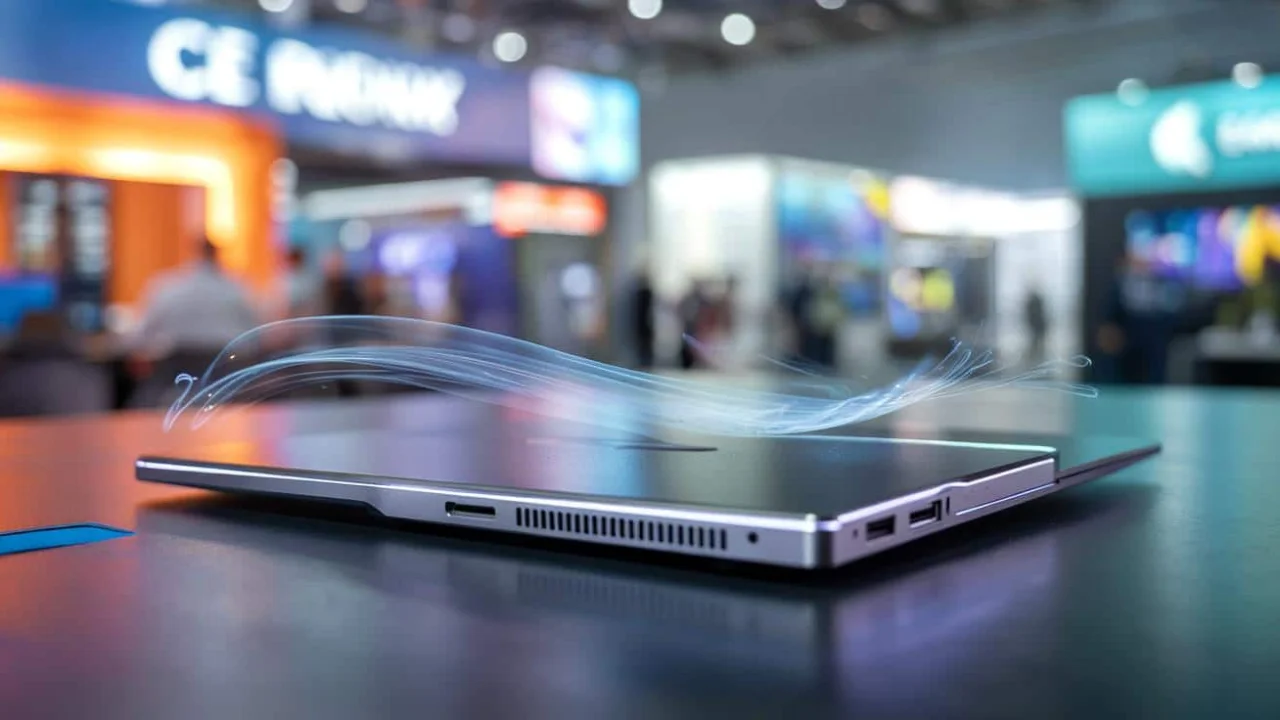
YPlasma, an innovative company with operations in Newark and Madrid, has created what they claim is the world’s first laptop cooled entirely by plasma. No fans. No moving parts. No noise.
This isn’t just another incremental improvement – it’s a complete rethink of how we handle heat in portable computers. The timing couldn’t be better. Modern processors are generating more heat than ever before, especially when running AI applications that push chips to their limits.

“Traditional cooling systems are hitting a wall,” explains a thermal engineering specialist familiar with the technology. “We’re cramming more powerful processors into thinner laptops, but physics hasn’t changed – heat still needs somewhere to go.”
The plasma laptop cooling system works through something called dielectric barrier discharge. Instead of spinning blades pushing air around, this technology creates an electrically excited gas – plasma – that drags air molecules along with it. Think of it as an invisible, silent wind generated by electricity.

Breaking Down the Technology That Makes Silent Cooling Possible
The heart of this plasma cooling system is remarkably simple yet ingenious. YPlasma’s plasma actuator is a flexible film just 200 microns thick – several times thinner than human hair. This ultra-thin component can be attached directly to heat sinks or integrated into laptop chassis.
Here’s how the plasma laptop cooling technology stacks up against traditional systems:

| Feature | Traditional Fan Cooling | Plasma Cooling |
|---|---|---|
| Noise Level | 20-40 decibels | Nearly silent |
| Thickness | 8-15mm | 0.2mm |
| Moving Parts | Motor, blades, bearings | None |
| Dust Accumulation | High | Minimal |
| Power Consumption | 1-3 watts | 0.5-1 watt |
The advantages go beyond just silence. Here are the key benefits this technology brings:
- Zero mechanical failure points – no motors to burn out or blades to break
- Dramatically reduced thickness allows for sleeker laptop designs
- Lower power consumption extends battery life
- No dust buildup means consistent cooling performance over time
- Precise airflow control for targeted cooling
“What excites me most is the reliability aspect,” notes a computer hardware researcher. “Moving parts are always the first thing to fail in laptops. Eliminate them, and you’ve solved a major reliability headache.”
The plasma actuator creates what engineers call an “electroaerodynamic flow.” High voltage applied across insulated electrodes generates cold plasma that essentially becomes an electrical wind. This wind can be directed exactly where cooling is needed most.
What This Means for Your Next Laptop Purchase
This breakthrough in plasma laptop cooling could fundamentally change how we use portable computers. Students cramming for exams in silent libraries won’t have to worry about disturbing others. Business professionals in quiet meetings can run demanding applications without the embarrassment of fan noise.
The technology also opens doors for laptop designs we’ve never seen before. Without the need for fan vents and thick cooling systems, manufacturers can create truly seamless, ultra-thin devices. Imagine a laptop as thin as a smartphone but with the power of today’s high-end machines.
“We’re looking at a future where laptop thickness is limited only by the keyboard and screen, not cooling requirements,” explains a product design engineer who has worked with the technology.
The implications extend beyond consumer laptops. Data centers could benefit from plasma cooling for server applications. Gaming laptops could run more quietly during intense sessions. Even tablets and smartphones might eventually adopt plasma cooling for their most demanding tasks.
However, the technology isn’t without challenges. High voltage systems require careful safety considerations. Manufacturing costs are currently higher than traditional fans. And like any new technology, long-term durability remains to be proven in real-world use.
“The biggest hurdle is scaling up production while keeping costs reasonable,” admits an industry analyst. “But if they can solve that, this could be the beginning of the end for laptop fans.”
YPlasma plans to demonstrate their plasma laptop cooling system at major tech shows, with commercial products expected within the next two years. Early adopters will likely pay a premium, but if the technology delivers on its promises, it could quickly become standard across the industry.
The silent laptop revolution is coming. And it’s powered by something as simple – and as complex – as electrically excited gas.
FAQs
Is plasma cooling safe in laptops?
Yes, the plasma operates at very low temperatures and uses contained electrical systems similar to other laptop components.
Will plasma cooling work as well as traditional fans?
Early tests suggest equivalent or better cooling performance, with the added benefit of precise airflow control.
How much will plasma-cooled laptops cost?
Initial models will likely carry a premium, but costs should decrease as production scales up over the next few years.
Can existing laptops be retrofitted with plasma cooling?
No, the technology requires specific design integration from the manufacturing stage.
What happens if the plasma system fails?
Backup thermal throttling systems would protect the processor, similar to current laptops when fans fail.
Will plasma cooling drain the battery faster?
Actually, it uses less power than traditional fans, potentially extending battery life.
About the Author