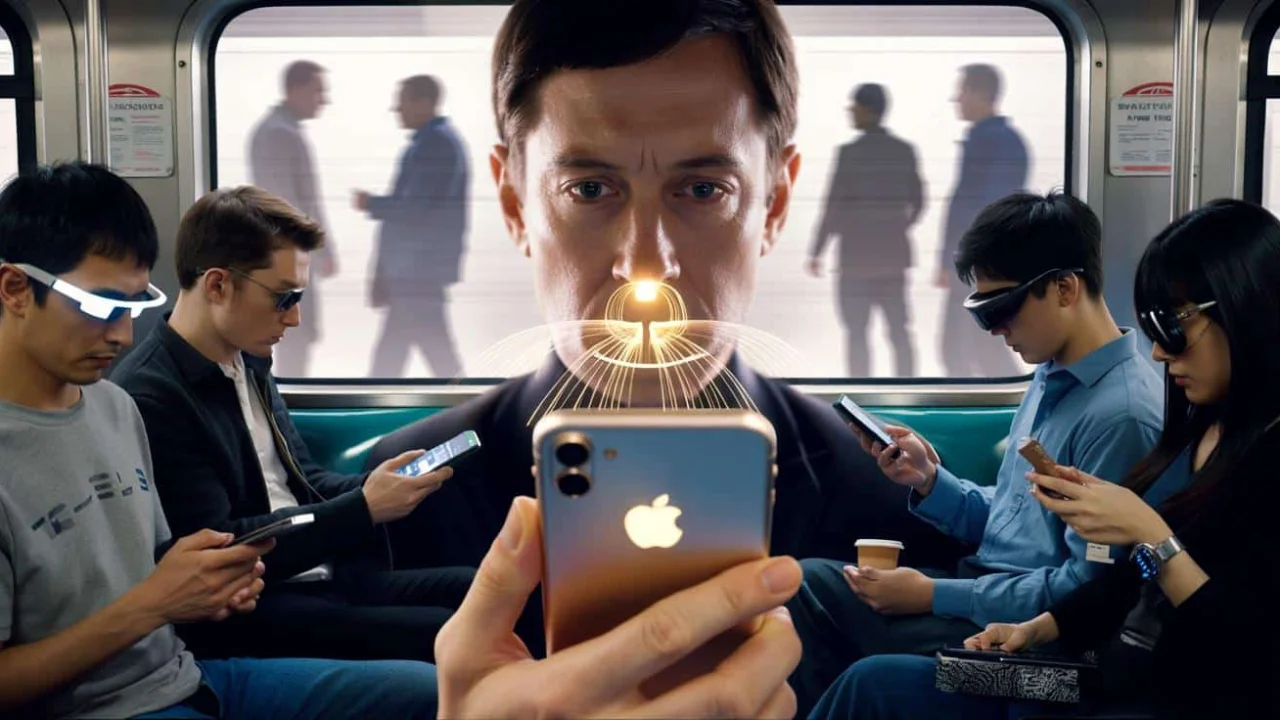
Sarah stares at her cracked iPhone screen in the Starbucks line, wondering if she should finally upgrade. Behind her, a tech blogger livestreams about “the death of smartphones” while literally using his phone to broadcast. At the next table, a college student frantically texts on her device about how AR glasses will replace everything.

The irony hits hard. We’re discussing the smartphone end on the very devices that supposedly won’t exist in five years.
But here’s where it gets interesting. While three of tech’s biggest names declare war on the rectangle in your pocket, Apple’s CEO is doubling down like never before.

The Great Tech Divide: Who’s Really Right About Smartphones?
Elon Musk tweets about Neuralink making phones obsolete. Bill Gates talks up AI agents that float in the cloud. Mark Zuckerberg burns billions on metaverse dreams and smart glasses. These aren’t random predictions from tech bloggers – these are the voices that shaped our digital world.
Then Tim Cook walks on stage, holds up an iPhone, and acts like nothing’s changed.

“The smartphone remains the most personal technology device ever created,” Cook said during Apple’s latest keynote. “We’re not looking to replace it. We’re looking to make it indispensable.”
The battle lines are drawn. On one side: the smartphone end prophets. On the other: Apple, betting everything that your phone isn’t going anywhere.

Musk’s vision sounds like science fiction. Brain chips that let you scroll through X with your thoughts. No more thumbs cramping from endless scrolling. Gates paints a different picture – AI assistants so smart they handle your digital life across every device you touch.
Zuckerberg’s approach feels more immediate. Meta’s Ray-Ban glasses already let you take photos, make calls, and ask AI questions. His bet? We’ll gradually shift from looking down at screens to looking through them.
What Each Tech Giant Actually Wants to Replace Your Phone With
The smartphone end predictions aren’t just wild guesses. Each leader has a specific vision and the money to make it happen.
| Tech Leader | Replacement Vision | Current Investment | Timeline |
|---|---|---|---|
| Elon Musk | Neuralink brain interfaces | $363 million raised | 10-15 years |
| Bill Gates | Cloud-based AI agents | OpenAI partnerships | 3-5 years |
| Mark Zuckerberg | AR glasses & metaverse | $13.7 billion in 2022 | 5-10 years |
| Tim Cook | Enhanced smartphones | $22.6 billion R&D | Ongoing |
Musk’s Neuralink represents the most radical smartphone end scenario. Imagine checking messages by thinking about them. No device, no screen, just pure mental interface with the digital world.
Gates takes a softer approach. He sees AI agents handling complex tasks across multiple devices. Your “assistant” follows you from laptop to TV to car, making individual devices less important.
“We’re moving toward ambient computing,” explains Dr. Jennifer Liu, a technology researcher at Stanford. “The question isn’t whether phones will disappear, but whether the computing will become invisible.”
Zuckerberg’s reality labs have shipped actual products. The Meta Ray-Ban glasses look like regular sunglasses but pack cameras, speakers, and AI. Early adopters report mixed results – cool tech, limited battery life.
- Voice commands work well in quiet environments
- Photo quality surprises most users
- Battery lasts about 4 hours with heavy use
- Social acceptance remains a major hurdle
Apple’s response? Make phones so integrated into daily life that alternatives feel clunky. The iPhone 15 added USB-C, improved cameras, and deeper AI integration. Cook’s message: evolution, not revolution.
Why Apple Thinks Everyone Else Is Wrong About the Smartphone End
Cook isn’t just defending market share. Apple’s research suggests the smartphone end predictions miss something crucial about human behavior.
“People want technology that disappears when they don’t need it and appears instantly when they do,” Cook explained during a recent earnings call. “The smartphone already does this better than any alternative we’ve seen.”
Apple’s argument comes down to three key points:
- Privacy control: Users want to decide when technology accesses their data
- Physical interaction: Touch and gesture controls feel more natural than voice or brain interfaces
- Social norms: Phones are already socially acceptable everywhere
The company points to adoption patterns of previous “phone killers.” Remember when tablets were supposed to replace laptops? Or when smartwatches would eliminate phones? Both found their niche without replacing the original device.
“Every five years, someone predicts the smartphone end,” says Maria Rodriguez, a tech analyst at Forrester Research. “But usage keeps growing. Last year, Americans spent 7 hours daily on their phones – up from 6.5 hours in 2022.”
Apple’s bet makes financial sense. The iPhone generates more revenue than entire Fortune 500 companies. Why abandon that for unproven technologies?
But Cook isn’t ignoring alternatives. Apple’s Vision Pro headset shows they’re developing AR capabilities. The difference? Apple presents it as complementing phones, not replacing them.
Siri improvements suggest Apple takes the AI agent threat seriously. iOS 18 added more natural conversation abilities and cross-app functionality. The approach: make phones smarter, not obsolete.
The health angle matters too. Neuralink requires brain surgery. AR glasses cause eye strain during extended use. Smart contact lenses remain years away from practical deployment.
Phones, meanwhile, just work. Drop one in water? Most survive. Battery dies? Charging takes 30 minutes. Break the screen? Repair shops exist everywhere.
What This Means for Regular People
The smartphone end debate feels abstract until you consider what’s actually changing in your pocket.
If Musk is right, your next “phone upgrade” might happen in an operating room. Neuralink’s early trials focus on helping paralyzed patients, but Musk envisions healthy people getting implants for convenience.
Gates’ AI agent future sounds appealing until you think about data sharing. An assistant that knows everything about you across every device raises obvious privacy questions.
Zuckerberg’s glasses timeline seems most realistic. Meta’s partnership with Ray-Ban proves the concept works. But social acceptance remains tricky. Google Glass failed partly because people felt uncomfortable being recorded.
“I tried the Meta glasses for a week,” says tech reviewer Tom Chen. “They’re impressive but exhausting. After day three, I went back to my iPhone for most tasks.”
Apple’s strategy appeals to people who want gradual improvement, not radical change. iPhone users get new features without learning entirely new interaction models.
The real disruption might come from combination approaches. Imagine AI agents on phones, AR apps that work with glasses and phones, or brain interfaces that enhance rather than replace traditional devices.
Market research suggests consumers aren’t ready for the smartphone end. Surveys show 73% of users plan to buy another phone within two years. Only 12% express interest in brain-computer interfaces.
But technology adoption rarely follows survey predictions. Most people didn’t want touchscreen phones until the iPhone launched. Consumer preferences change when better alternatives actually exist.
FAQs
Are smartphones really going to disappear soon?
Probably not in the next 5-10 years. While tech leaders predict the smartphone end, consumer behavior and technology limitations suggest phones will evolve rather than vanish.
What’s the most realistic alternative to smartphones?
Smart glasses seem closest to mainstream adoption. Meta’s Ray-Ban glasses and Apple’s Vision Pro show promise, but battery life and social acceptance remain challenges.
Why does Apple disagree with other tech companies about phones?
Apple makes most of its money from iPhones and believes smartphones can evolve to stay relevant. They’re investing in complementary technologies rather than replacements.
How long before brain interfaces replace phones?
Elon Musk predicts 10-15 years for healthy people, but medical experts suggest 20+ years before brain-computer interfaces become consumer products.
Should I wait to buy a new phone until alternatives arrive?
No. Current smartphone alternatives are either experimental, expensive, or limited in functionality. Phones will likely remain essential for several more years.
What happens if tech leaders are wrong about the smartphone end?
Companies like Apple continue making money from phone sales. Meanwhile, billions invested in alternative technologies could accelerate innovation in other areas like AI and AR.
About the Author
