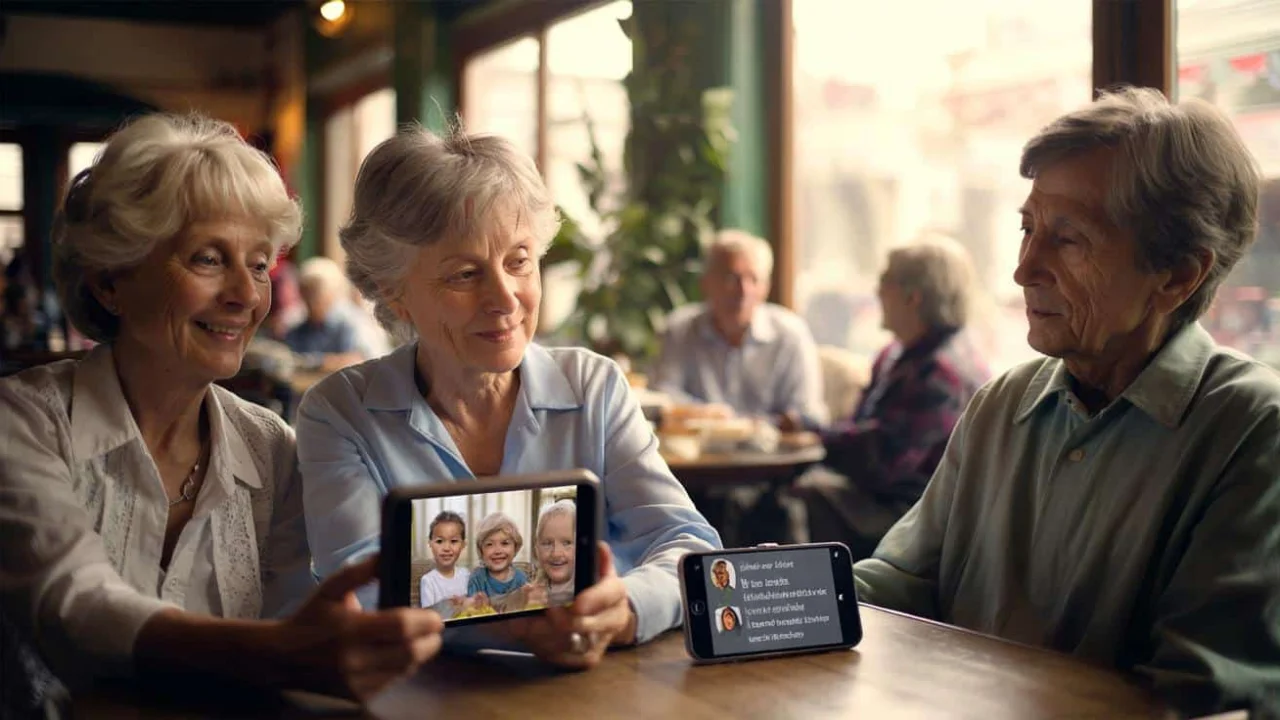
Margaret stares at her phone, scrolling through a group chat filled with complaints about everything from weather to politics. At 64, she realizes she’s been dreading these messages for months. “I used to feel guilty about not responding,” she says, setting the phone face-down on her kitchen counter. “Now I just think, life’s too short for conversations that make me feel worse about the world.”

Her neighbor Carol, 67, nods knowingly. She recently stopped attending her book club after twenty years. Not because of any drama, but because she found herself sitting through discussions that felt hollow. “We weren’t really talking about books anymore,” Carol explains. “We were just going through the motions.”
This quiet revolution is happening in living rooms and coffee shops everywhere. People over 60 are making deliberate choices about their social circles, and psychologists say this shift represents one of the healthiest changes we can make as we age.

The great friendship filter begins
Friendships over 60 undergo a natural transformation that many people don’t expect. What feels like growing apart is actually growing into a clearer sense of what matters. Life events like retirement, health challenges, or losing a spouse create natural breaking points where people reassess their relationships.
“Around 60, people start applying what I call the ‘energy audit’ to their friendships,” explains Dr. Sarah Chen, a behavioral psychologist who studies aging and social connections. “They’re asking themselves: Does this relationship give me energy or drain it? The answer determines whether it continues.”
This process isn’t about becoming antisocial. It’s about becoming more selective. Research shows that adults over 60 typically have smaller social circles than younger people, but their relationships tend to be more meaningful and emotionally satisfying.
The shift happens gradually. You might notice you’re less willing to tolerate friends who only call to complain. Or you find yourself avoiding social events that feel obligatory rather than enjoyable. Some people describe it as taking off glasses they didn’t realize they were wearing – suddenly seeing their relationships more clearly.
What triggers the friendship rethink
Several key factors influence how people over 60 approach their friendships. Understanding these triggers helps explain why this social shift is so common:
- Time awareness: Recognizing that time is finite makes people more protective of how they spend it
- Role changes: Retirement, empty nesting, or widowhood removes social structures that once defined friendships
- Health consciousness: Physical or mental health challenges make people more aware of relationships that cause stress
- Authenticity seeking: Desire to spend time with people who accept their true self, not just their social persona
- Emotional maturity: Better understanding of personal boundaries and what constitutes healthy relationships

“I stopped pretending to enjoy things just to keep the peace,” says Robert, 61, who recently stepped back from his longtime poker group. “When every gathering became a political argument, I realized I was going home stressed instead of relaxed.”
| Age Group | Average Number of Close Friends | Quality Rating of Friendships | Time Spent on Social Obligations |
|---|---|---|---|
| 30-45 | 6-8 | Moderate | High |
| 45-60 | 5-7 | Moderate to High | Moderate |
| 60+ | 3-5 | High | Low |
Why psychologists celebrate this change
Mental health professionals view this friendship evolution as a positive development, not a sign of isolation or depression. The psychological benefits of curating your social circle become more apparent as research continues to explore healthy aging.
“Quality trumps quantity every time when it comes to social connections for older adults,” notes Dr. Michael Torres, who specializes in geriatric psychology. “Having three genuine friends who truly know and support you is infinitely better than having ten acquaintances who drain your emotional resources.”
The health benefits extend beyond emotional wellbeing. Studies show that people with high-quality friendships over 60 experience lower rates of depression, better cognitive function, and even improved physical health outcomes. The stress reduction from eliminating toxic or draining relationships appears to have measurable health benefits.
This friendship filtering also creates space for new, more meaningful connections. Many people find that as they let go of obligatory relationships, they have more energy to invest in friendships that align with their current interests and values.
Linda, 65, discovered this after ending a friendship with someone she’d known since college. “She always made me feel bad about my choices,” Linda recalls. “Once I stopped seeing her, I had time to join a hiking group where I met people who actually enjoyed the same things I do. The conversations are so much better.”
The key difference is intentionality. Rather than maintaining friendships out of habit or guilt, people over 60 increasingly choose relationships based on mutual respect, shared interests, and emotional support. This conscious approach to friendship creates deeper, more satisfying connections.
“We’re finally old enough to know what we want from a friendship and brave enough to seek it out,” explains Dr. Chen. “That’s not selfish – it’s healthy boundary-setting that benefits everyone involved.”
Some people worry that being selective about friendships will lead to loneliness, but research suggests the opposite. When you invest your social energy in relationships that truly nourish you, the quality of your social life improves dramatically. You’re more likely to maintain consistent contact, offer genuine support, and feel genuinely supported in return.
The friendship rethink that happens around 60 isn’t about giving up on human connection. It’s about finally understanding what genuine connection looks like and having the wisdom to pursue it. For many people, this represents not a loss, but a homecoming to their most authentic social selves.
FAQs
Is it normal to lose friends after 60?
Yes, it’s completely normal and often healthy to have fewer but more meaningful friendships as you age.
How do I know if I should end a friendship?
If a friendship consistently leaves you feeling drained, stressed, or undervalued, it may be time to step back or set boundaries.
Will I become lonely if I’m more selective about friendships?
Research shows that having fewer, higher-quality friendships actually reduces loneliness compared to maintaining many superficial relationships.
How can I make new friends after 60?
Focus on activities and communities aligned with your genuine interests – volunteer work, hobby groups, classes, or religious organizations.
Should I feel guilty about ending long-term friendships?
No, it’s natural for people to grow in different directions, and prioritizing your mental health isn’t selfish.
What’s the difference between healthy friendship changes and social isolation?
Healthy changes involve choosing quality relationships and staying open to new connections, while isolation involves withdrawing from all social contact.
About the Author
