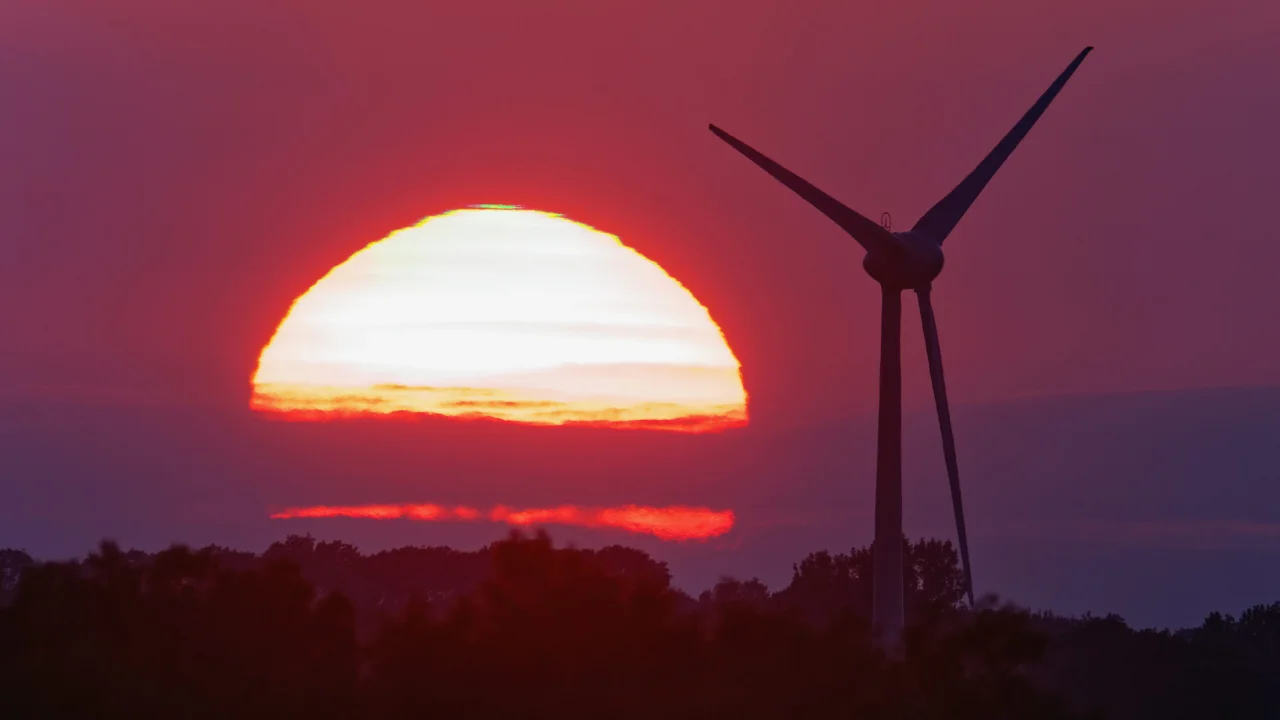
Last summer, my eight-year-old nephew stared at the sunset through his telescope filter and asked me something that stopped me cold: “Uncle Mike, why does the Sun look green sometimes right before it disappears?” I’d been watching sunsets for decades, but I’d never noticed the elusive green flash he was describing. That moment reminded me how our nearest star still holds countless mysteries, even for those of us who think we know it well.
It turns out my nephew had stumbled upon one of the Sun’s most fascinating optical phenomena. The green flash occurs when atmospheric conditions bend away the red, orange, and yellow light, leaving only that brief emerald gleam. It’s just one of many incredible cool things about the Sun that continue to surprise astronomers and stargazers alike.
Our daytime star never stops revealing new secrets. From its bizarre rotation patterns to its magnetic personality changes, the Sun operates on scales and timelines that challenge our earthbound perspective. These aren’t just abstract scientific facts – they’re the mechanics behind every sunrise, every season, and every moment of life on our planet.
The Sun’s Hidden Personality Traits
Think you know how rotation works? The Sun might change your mind. Unlike Earth, which spins as a solid unit, our star rotates at completely different speeds depending on which part you’re watching.
“The Sun’s differential rotation is like watching a cosmic dance where different dancers move to different beats,” explains Dr. Sarah Chen, a solar physicist at Stanford University. “It creates this incredible dynamic tension that drives much of the Sun’s magnetic activity.”

The equatorial regions complete a full rotation in just 25.6 days, while the polar regions take a leisurely 33.5 days. This isn’t just a quirky detail – it’s the engine behind solar flares, sunspots, and the magnetic chaos that can knock out our satellites.
Speaking of magnetic behavior, here’s something that sounds like science fiction: every 11 years, the Sun completely flips its magnetic poles. North becomes south, south becomes north, and this dramatic reversal ties directly into the sunspot cycle that affects everything from radio communications to the aurora displays dancing across our polar skies.

By the Numbers: Solar Statistics That Blow Your Mind
The composition of our star tells an incredible story of cosmic chemistry. When you break down what the Sun is actually made of, the numbers are staggering:
| Element | Percentage of Sun’s Mass |
|---|---|
| Hydrogen | 73.46% |
| Helium | 24.85% |
| Oxygen | 0.63% |
| Carbon | 0.22% |
| Neon | 0.17% |
| Everything else | 0.67% |
What’s remarkable is that everything beyond hydrogen and helium – all the heavy elements that make up planets, people, and pizza – accounts for less than 2% of the Sun’s total mass. We’re literally made of stellar leftovers, the cosmic minority ingredients.
The Sun’s gravity is another mind-bender. Standing on the Sun’s surface (if you could somehow survive), you’d weigh 28 times more than you do on Earth. A 150-pound person would suddenly tip the scales at over 4,000 pounds.
“These extreme conditions help us understand why the Sun can maintain nuclear fusion in its core,” notes Dr. Michael Rodriguez from the National Solar Observatory. “The incredible pressure and temperature created by that intense gravity is what keeps our star burning.”
- The Sun’s outer corona extends 12 times the star’s radius from its surface
- From Neptune, the Sun appears 30 times smaller and 900 times dimmer than from Earth
- The most powerful solar flare ever recorded was also the first one observed, back in 1859
- The Sun rises in the east and sets in the west everywhere on Earth – even in the Southern Hemisphere
How Solar Secrets Shape Our Daily Lives
These cool things about the Sun aren’t just cosmic trivia – they directly impact our modern world in ways most people never realize. When the Sun’s magnetic field flips every 11 years, it can trigger intense space weather that disrupts GPS systems, airline communications, and power grids.
The 1859 solar flare that Richard Carrington first observed was so powerful it caused telegraph wires to spark and catch fire. If a similar event happened today, it could knock out internet infrastructure and satellite networks for months.
Even the Sun’s journey through space affects us. Our entire solar system is racing toward a point near the star Nu Herculis at about 450,000 miles per hour. You can actually spot this target star on summer nights – it sits about 12 degrees southwest of bright Vega in the constellation Lyra.
“Understanding the Sun’s movement helps us predict long-term climate patterns and even plan for future space missions,” explains Dr. Lisa Park from NASA’s Goddard Space Flight Center. “We’re not just passengers on Earth – we’re passengers on a cosmic ship following the Sun through the galaxy.”
The Sun travels along an imaginary line called the ecliptic, and this path determines where and when we can see solar and lunar eclipses. The zodiac constellations that astrologers love so much? They’re simply the star patterns that happen to lie along the Sun’s apparent route through our sky.
From the green flash that amazed my nephew to the magnetic pole reversals that could crash our power grid, the Sun continues to surprise us. These stellar secrets remind us that even our most familiar celestial neighbor still has plenty of cool things about the Sun left to discover.
FAQs
Why does the Sun rotate at different speeds?
The Sun is made of plasma, not solid rock like Earth, so different parts can rotate independently based on magnetic forces and internal currents.
What happens when the Sun’s magnetic poles flip?
The magnetic reversal triggers increased solar activity, including more sunspots and solar flares that can affect Earth’s technology and create beautiful auroras.
Can you really see where the Sun is heading in space?
Yes! Look for the star Nu Herculis near Vega during summer nights – that’s the approximate direction our solar system is traveling through the galaxy.
Why is the green flash so rare to see?
The green flash requires very specific atmospheric conditions and a clear horizon, which is why most people never notice it during regular sunsets.
How does the Sun’s gravity compare to other planets?
The Sun’s surface gravity is 28 times stronger than Earth’s, about 2.5 times stronger than Jupiter’s, and over 10 times stronger than any other planet in our solar system.
What would happen if we got hit by another 1859-level solar flare today?
A Carrington Event-level solar storm today could knock out power grids, disable satellites, disrupt GPS systems, and cause trillions of dollars in damage to modern technology.
About the Author