Maria Gonzalez was dropping off her seven-year-old daughter at the local elementary school when she noticed something that made her heart race. Federal agents in tactical gear were stationed near the school parking lot, causing parents to hurry their children inside with worried glances over their shoulders. “I didn’t know if I should run or stay,” Maria later told her neighbor. “My daughter asked me why I was shaking.”

This scene has become all too familiar across Los Angeles neighborhoods over the past months. Parents, business owners, and community members have watched as federal immigration enforcement operations have disrupted daily life in ways that feel anything but normal.
Now, Mayor Karen Bass is taking a bold stand against what she calls an unprecedented federal overreach. Her new immigration enforcement directive aims to shield city property from becoming staging grounds for these operations, setting up a potential legal showdown with federal authorities.

Bass Draws a Line in the Sand Over City Property
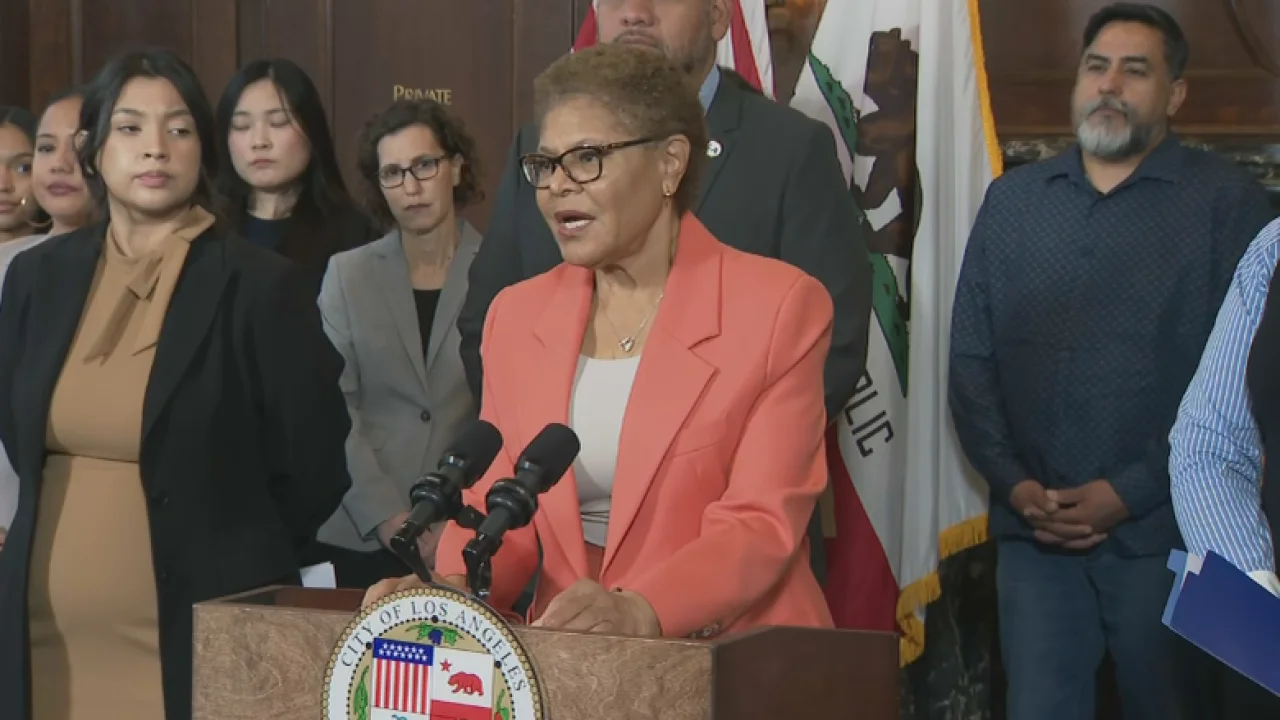
On Tuesday morning, Mayor Bass signed an executive directive that explicitly prohibits federal immigration agents from using any city-owned or controlled property for their operations. This isn’t just a symbolic gesture – it’s a direct challenge to how Immigration and Customs Enforcement (ICE) has been conducting business in Los Angeles.
“Let me make myself clear, this is not normal, and it will never be normal,” Bass declared during the signing ceremony. “It is the opposite of what a federal government is supposed to do.”

The mayor developed this immigration enforcement directive with input from community organizations and immigrant rights leaders who have been documenting the impact of recent raids. Their collaboration reflects months of growing tension between local and federal authorities.
Bass pointed to a troubling pattern she’s observed across the city. “What we have seen in all of our districts is ICE go and attempt to stage at various properties, public or private,” she explained. These staging operations have turned familiar community spaces into sources of fear and uncertainty.

What the New Rules Actually Do
The immigration enforcement directive isn’t just about saying no to federal agents. It creates a comprehensive framework for how the city will respond to and document immigration enforcement activities. Here’s what the directive actually requires:
| Department | New Responsibilities |
|---|---|
| Los Angeles Police Department | Preserve all evidence related to immigration enforcement operations for reporting purposes |
| City Planning Department | Prepare ordinance to impose fees on property owners who allow federal staging |
| All City Departments | Maintain designated immigration affairs liaisons and preparedness plans |
The directive also builds on previous measures Bass implemented to protect immigrant communities. Earlier executive orders required city departments to develop specific preparedness plans for federal immigration activity and establish clear communication chains through immigration affairs liaisons.

One immigration policy expert who asked not to be named said, “This creates a paper trail that could be crucial in future legal challenges. The city is essentially building a case while protecting its residents.”
- Prohibition on using city property for federal staging operations
- Evidence preservation requirements for all immigration enforcement activities
- Financial penalties for private property owners who cooperate with federal agents
- Enhanced coordination between city departments during enforcement actions
- Mandatory reporting systems for tracking federal immigration activities
The Federal Government Fires Back
The Department of Homeland Security didn’t wait long to respond to Bass’s immigration enforcement directive. Their reaction was swift and pointed, with a spokesperson calling the mayor’s move “legally illiterate.”
“Enforcing federal immigration laws is a clear federal responsibility under Article I, Article II and the Supremacy Clause,” the DHS statement read. The department made it clear they have no intention of backing down from their operations in Los Angeles.
Secretary Kristi Noem’s office emphasized that DHS will “continue to enforce the law, relentless and unapologetic, every day in greater Los Angeles.” They’ve framed this as a matter of public safety, not political posturing.
The federal response included sharp criticism of Bass personally. “Sanctuary politicians like Karen Bass are attempting to demonize law enforcement for doing their job,” the DHS spokesperson said. They went further, accusing the mayor of releasing dangerous criminals onto the streets while federal agents risk their lives to make arrests.
A former federal prosecutor familiar with immigration law noted, “This sets up a classic federalism battle. The question becomes whether cities can limit federal access to public property, even when that property wasn’t purchased with federal funds.”
Real People, Real Consequences
Behind all the political rhetoric and legal positioning are real families and businesses dealing with the daily reality of immigration enforcement in their neighborhoods. Bass has been vocal about the economic impact these raids have had on local communities.
Small business owners report customers staying away from areas where enforcement operations have been spotted. Restaurant owner Carlos Mendez from East LA said, “People are scared to come out. They’re scared to go to work. My lunch rush disappeared after agents were seen near the plaza.”
The fear extends beyond just undocumented immigrants. Legal residents and even citizens have found themselves caught up in the uncertainty, unsure of their rights when agents appear in their neighborhoods wearing masks and sometimes failing to properly identify themselves.
Bass has consistently criticized these tactics since the raids began last summer. She’s highlighted cases where agents have operated without clear identification, creating confusion and fear among residents who can’t tell legitimate law enforcement from potential criminals.
Community organizers have documented numerous instances where children have been separated from parents during school pickup times, and where medical appointments have been missed because people are afraid to travel through certain neighborhoods.
The psychological impact on children has been particularly concerning to educators and child psychologists. “Kids are asking their teachers if they’ll be safe at school,” said Dr. Elena Rodriguez, who works with immigrant families. “That’s not the America we want our children to grow up in.”
Local businesses haven’t just lost customers – they’ve also struggled with employee attendance as workers avoid areas known for enforcement activity. This creates a ripple effect that touches even businesses and residents who aren’t directly involved in immigration issues.
The immigration enforcement directive represents more than just a policy disagreement between different levels of government. It’s about competing visions of what American communities should feel like and how federal law enforcement should interact with local populations.
For Mayor Bass, this directive is about maintaining Los Angeles as a place where all residents can participate in daily life without fear. For federal authorities, it’s about fulfilling their mandate to enforce immigration law regardless of local political preferences.
As this standoff continues, families like Maria’s will be watching to see whether their children can go to school without witnessing scenes that make their parents shake with fear. The legal battle may be fought in courtrooms, but its impact will be measured in the daily experiences of ordinary people trying to live their lives in peace.
FAQs
Can Mayor Bass legally prevent federal agents from using city property?
This is currently unclear and will likely be decided in federal court, as it involves the tension between federal law enforcement authority and local property rights.
What happens to property owners who let federal agents use their land?
Under the new directive, the city planning department will create an ordinance imposing fees on private property owners who allow federal staging operations.
Does this directive affect all federal law enforcement or just immigration agents?
The directive specifically targets immigration enforcement operations and doesn’t appear to restrict other federal law enforcement activities.
How will the city track compliance with this directive?
The LAPD must preserve evidence of all immigration enforcement operations, and city departments have designated immigration affairs liaisons to coordinate responses.
What was happening before this directive was signed?
Federal agents were using various public and private properties as staging areas for immigration raids, which Bass said was creating fear and disrupting community life.
Could other cities copy this approach?
Yes, other sanctuary cities may look to Los Angeles as a model for limiting federal immigration enforcement access to municipal property.
About the Author