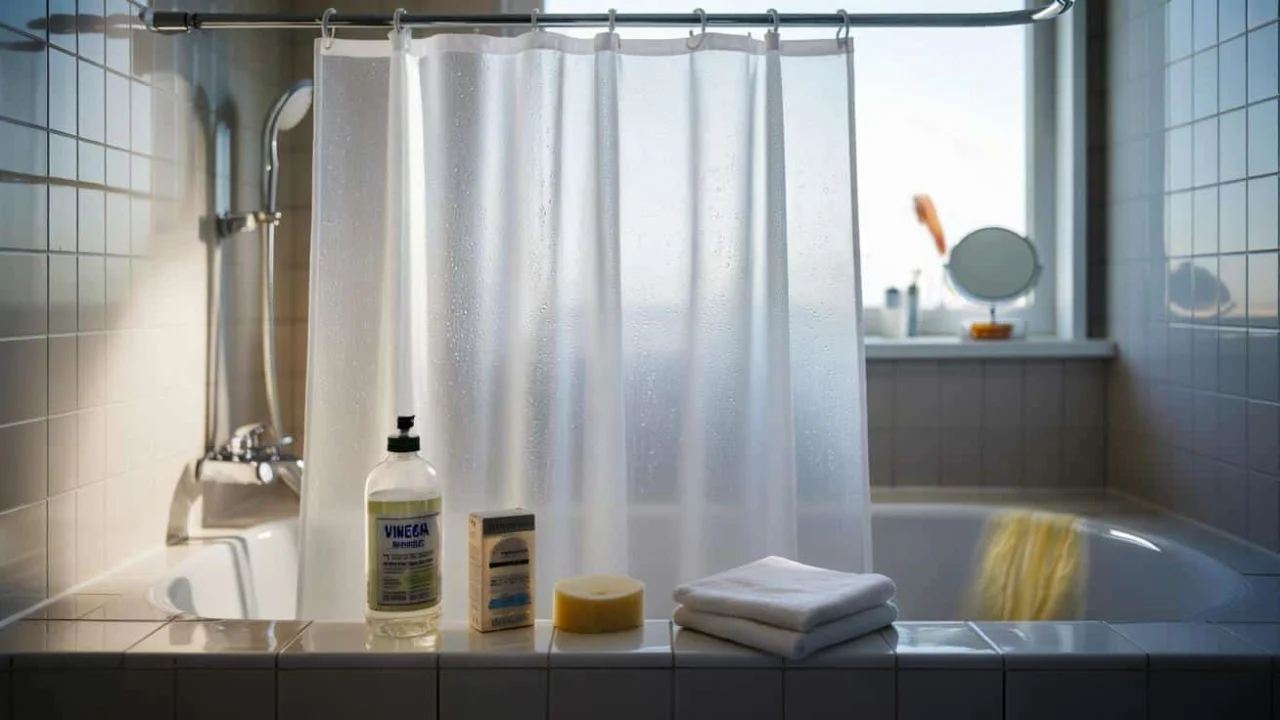
Last Tuesday, I stepped into my friend Sarah’s bathroom and immediately regretted it. The smell hit me like a damp slap – that unmistakable musty odor that screams “something’s growing in here.” Her shower curtain hung limply, dotted with suspicious dark spots along the bottom hem. When I mentioned it gently, she laughed nervously and said, “I know, I know. I’ve been meaning to deal with that.”

We’ve all been there. That moment when you realize your bathroom has developed its own ecosystem, complete with a shower curtain that’s become a breeding ground for things you’d rather not think about.
The truth is, most people don’t know how to clean shower curtains properly, so they either replace them constantly or live with the smell. Neither option is ideal when you could solve the problem with a few simple techniques and keep your bathroom fresh for months.

Why your shower curtain turns into a science experiment
Your bathroom after a hot shower is basically a tropical rainforest. Steam rises, moisture clings to every surface, and your shower curtain becomes ground zero for humidity. Unlike your towels that eventually dry out, that plastic or fabric barrier stays damp for hours, sometimes all day.
“The biggest mistake people make is leaving their shower curtain bunched up after use,” explains home maintenance expert Jennifer Martinez. “Those folds create perfect pockets where moisture gets trapped and mold thrives.”

Every time you shower, you’re coating that curtain with a cocktail of soap residue, body oils, shampoo, and mineral deposits from hard water. This invisible film becomes a feast for mold spores that are constantly floating around your home, just waiting for the right conditions.
Think about it: when was the last time you actually cleaned your shower curtain? Most people scrub the tub, wipe down surfaces, and completely ignore the one thing hanging right in front of them collecting all that grime.

The complete guide to cleaning different curtain types
Not all shower curtains are created equal, and the cleaning method depends entirely on what yours is made from. Here’s your breakdown:
| Curtain Type | Cleaning Method | Frequency | Special Notes |
|---|---|---|---|
| Plastic/Vinyl | Machine wash or hand scrub | Every 2-3 weeks | Add baking soda to prevent tearing |
| Fabric | Regular machine wash | Weekly | Check care label first |
| Hemp/Linen | Gentle cycle, air dry | Every 2 weeks | May shrink if washed wrong |
| PEVA | Wipe down or gentle wash | Every 3 weeks | Eco-friendly but delicate |
For plastic curtains, the washing machine method works surprisingly well. Remove the curtain completely, including those metal rings (they can go in too). Toss everything in with a couple of old towels to prevent tearing, add your regular detergent plus a cup of white vinegar, and run a warm cycle.

The towels act as gentle scrubbers, while the vinegar cuts through soap scum and kills mold spores. Skip the spin cycle if possible – you want the curtain damp but not wrung out.
For hand cleaning, fill your tub with warm water and add these powerhouse ingredients:
- 1 cup white vinegar (kills mold and bacteria)
- ½ cup baking soda (scrubs away buildup)
- A few drops of dish soap (cuts through oils)
- Optional: 10 drops tea tree oil (natural antifungal)
Let the curtain soak for 30 minutes, then scrub the bottom hem and any visible spots with an old toothbrush. “I tell my clients to pay special attention to the areas where the curtain touches the tub,” says cleaning specialist Robert Chen. “That’s where the worst buildup happens.”
Rinse thoroughly and hang immediately. Never leave a wet curtain bunched up – spread it completely across the rod so air can circulate.
Making your bathroom hostile to mold and mildew
Cleaning your shower curtains is only half the battle. The real secret is creating an environment where mold can’t take hold in the first place.
Ventilation is everything. Run your exhaust fan during showers and for at least 30 minutes afterward. If you don’t have one, crack a window or use a small fan to move air around. Stagnant, humid air is mold’s best friend.
“Most people think closing the bathroom door after a shower keeps the moisture contained, but it actually makes the problem worse,” notes indoor air quality specialist Dr. Amanda Ross. “You want that humid air to escape, not linger.”
Consider these preventive measures:
- Install a timer switch for your exhaust fan
- Keep the curtain completely extended after showers
- Wipe down the curtain weekly with a microfiber cloth
- Use a daily shower spray with vinegar and water
- Replace worn curtains before they become problem areas
The daily spray trick is a game-changer. Mix equal parts water and white vinegar in a spray bottle, add a few drops of your favorite essential oil, and give the curtain a quick spritz after each shower. This prevents soap buildup and keeps mold spores from getting comfortable.
Some people swear by leaving the bathroom door open and the curtain spread wide for maximum airflow. Others prefer running a small dehumidifier in windowless bathrooms. The key is finding what works for your specific space and sticking with it.
Your shower curtain doesn’t have to be the weak link in your bathroom’s cleanliness. With the right cleaning routine and a few preventive habits, you can keep it fresh, clean, and odor-free. Your guests (and your nose) will thank you.
“The difference between a clean bathroom and a truly fresh bathroom often comes down to details like the shower curtain,” says home organization expert Lisa Park. “It’s one of those things that makes a bigger impact than people realize.”
FAQs
How often should I clean shower curtains?
Clean plastic curtains every 2-3 weeks and fabric ones weekly, but wipe them down between cleanings to prevent buildup.
Can I put my shower curtain in the dryer?
Never put plastic or vinyl curtains in the dryer as they’ll melt. Fabric curtains can usually go on low heat, but air drying is safer.
What’s the white buildup on my shower curtain?
That’s usually soap scum mixed with hard water deposits. Vinegar and baking soda will cut right through it.
Why does my curtain still smell after washing?
You might not be using enough vinegar, or the curtain isn’t drying completely. Try extending your wash cycle and improving bathroom ventilation.
Should I replace my shower curtain if it has mold spots?
Small spots can usually be cleaned with bleach or vinegar, but if mold covers more than a few inches, replacement is safer and more effective.
Is it worth buying expensive shower curtains?
Higher-quality curtains often resist mold better and last longer, but even budget curtains will stay fresh with proper cleaning and care.
About the Author