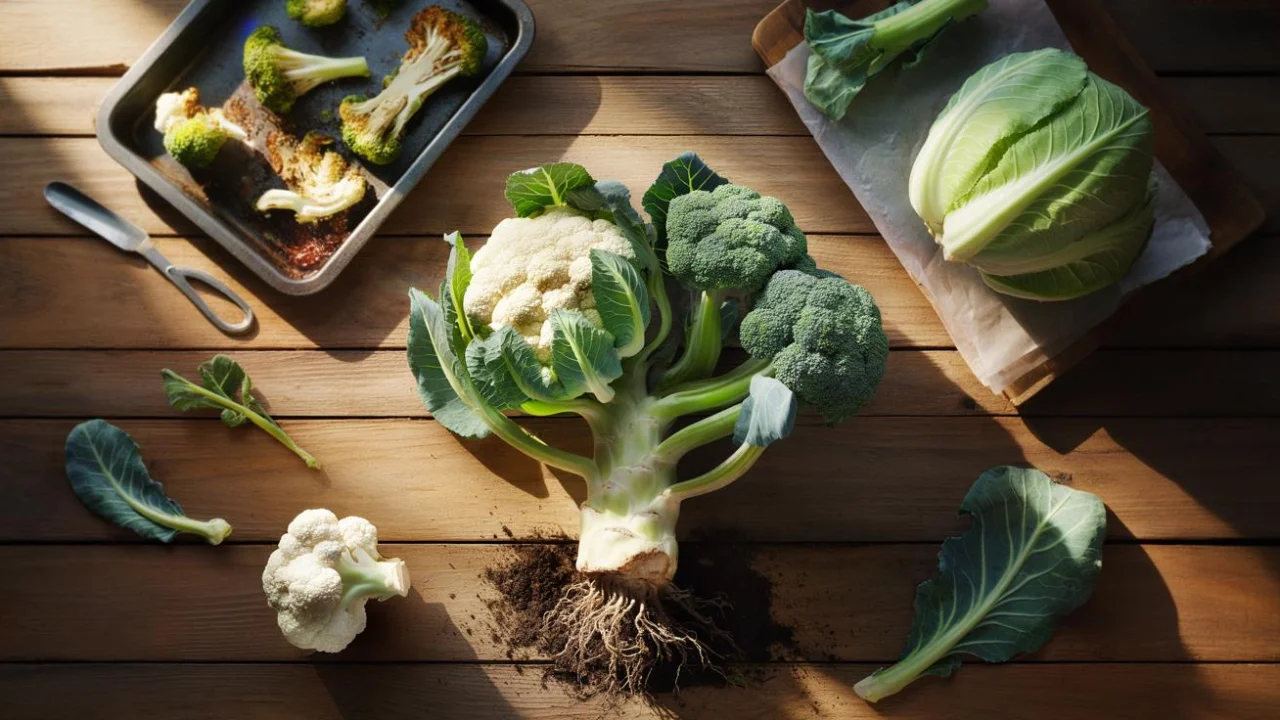
Standing in the grocery store last week, I watched a mother explain vegetables to her five-year-old. “This is broccoli,” she said, pointing to the green crowns. “And this white one? That’s cauliflower. Totally different.” The kid nodded seriously, filing away another life lesson. Meanwhile, I stood there holding my phone, having just read something that would blow both their minds.

These “different” vegetables sitting in separate bins, priced differently, cooked in completely different ways? They’re basically the same plant wearing different costumes.
That revelation hit me like finding out your favorite movie stars are actually siblings. Everything I thought I knew about vegetables suddenly felt like a lie.

The great vegetable identity reveal
Here’s the truth that most people never learn: cauliflower, broccoli, cabbage, kale, Brussels sprouts, and kohlrabi are all varieties of the exact same species. They’re called brassica oleracea varieties, and they’re proof that humans have been playing genetic sculptor for thousands of years.
Think about it this way. If you’ve ever seen how different dog breeds can look while still being the same species, you’re already halfway to understanding this vegetable mystery.

“Most people are shocked when they learn this,” says Dr. Sarah Mitchell, a plant geneticist at Cornell University. “They see these vegetables as completely separate foods, but they’re really just different expressions of the same genetic blueprint.”
The original wild plant still grows along Mediterranean and Atlantic coastlines. It’s a scraggly, bitter thing that looks nothing like the vegetables we know. But early farmers saw potential in different traits and spent generations selecting for them.

Want bigger leaves? Keep planting seeds from the plants with the biggest leaves. Eventually, you get cabbage. Prefer the flower buds? Select for those, and you get broccoli and cauliflower. Like the idea of tiny heads growing on a stalk? Hello, Brussels sprouts.
Breaking down the brassica oleracea family tree
Each variety represents humans focusing on a different part of the plant. Here’s how we created this vegetable empire:

| Variety | Part We Eat | What Farmers Selected For | First Developed |
|---|---|---|---|
| Cabbage | Leaves | Large, overlapping leaves that form tight heads | Ancient times |
| Kale | Leaves | Large, loose leaves that don’t form heads | Ancient times |
| Broccoli | Flower buds | Dense clusters of unopened flower buds | Roman times |
| Cauliflower | Flower buds | White, tightly packed flower clusters | 12th century |
| Brussels Sprouts | Buds | Small cabbage-like buds along the stem | 13th century Belgium |
| Kohlrabi | Stem | Swollen stem that grows above ground | 15th century |
The process took centuries, but the results speak for themselves. We turned one wild, barely edible plant into six completely different vegetables that look, taste, and cook in entirely different ways.
“It’s like having one actor play six completely different characters so convincingly that the audience forgets they’re the same person,” explains botanist Dr. James Rodriguez from UC Davis.
The genetic differences between these varieties are surprisingly small. A broccoli plant can actually cross-pollinate with a cabbage plant, and their offspring would be fertile. Try that with a carrot and a potato, and you’ll get nowhere.
Why this vegetable secret matters in your kitchen
Understanding that these are brassica oleracea varieties isn’t just interesting trivia. It actually explains a lot about how they behave in your kitchen and on your plate.
Ever notice how all these vegetables have similar nutritional profiles? They’re all packed with vitamin C, vitamin K, and similar antioxidants. That’s because they’re working from the same genetic foundation.
They also share cooking characteristics. All brassica oleracea varieties can get bitter if overcooked, and they all develop that distinctive sulfur smell when they break down. Some people love it, others hate it, but it’s the same chemical process happening across the whole family.
- They all prefer similar growing conditions (cool weather, rich soil)
- They have similar pest problems (cabbage worms love them all equally)
- They can often be substituted for each other in recipes with adjustments
- They all belong to the same crop rotation family in garden planning
“When people understand they’re dealing with variations of the same plant, they often become more adventurous cooks,” says chef Maria Santos, who runs cooking classes in Portland. “If you can cook one well, you can learn to cook them all.”
This knowledge also helps explain why some people have such strong reactions to these vegetables. If you hate the taste of cabbage, you might struggle with the whole family because you’re responding to shared compounds.
The reverse is also true. If you love the peppery bite of arugula (another brassica, though a different species), you might find yourself drawn to the subtle heat in radish greens or the sharp edge of watercress.
Garden centers are starting to catch on to this connection. Instead of scattering brassica oleracea varieties throughout the store, some now group them together. It helps customers understand that if they can successfully grow cabbage, they have the skills for broccoli and cauliflower too.
The next time you’re at the grocery store, take a moment to look at these vegetables with fresh eyes. Those separate bins and different price tags don’t change the fundamental truth: you’re looking at one of humanity’s greatest agricultural success stories.
One wild plant, thousands of years of patient selection, and six vegetables that have fed civilizations. Not bad for a scraggly seaside weed that most people would have walked right past.
FAQs
Can these different brassica oleracea varieties cross-pollinate with each other?
Yes, they can cross-pollinate because they’re the same species, though the timing has to be right since they flower at different times.
Why do Brussels sprouts and broccoli taste so different if they’re the same plant?
Different parts of the plant concentrate different compounds, plus centuries of selective breeding emphasized different flavors and textures.
Are there other vegetables that are actually the same plant?
Yes! Beets and Swiss chard are the same species, and so are turnips and bok choy (different brassica species though).
Can I save seeds from store-bought vegetables to grow these at home?
It’s tricky because most commercial varieties are hybrids, so the seeds won’t grow plants identical to the parent.
Do all these vegetables have the same nutritional value?
They’re similar but not identical – kale has more vitamin A, while broccoli has more folate, for example.
Why didn’t early farmers just stick with the original wild cabbage?
The wild plant is quite bitter and tough, with small edible parts – selective breeding made it much more palatable and productive.
About the Author