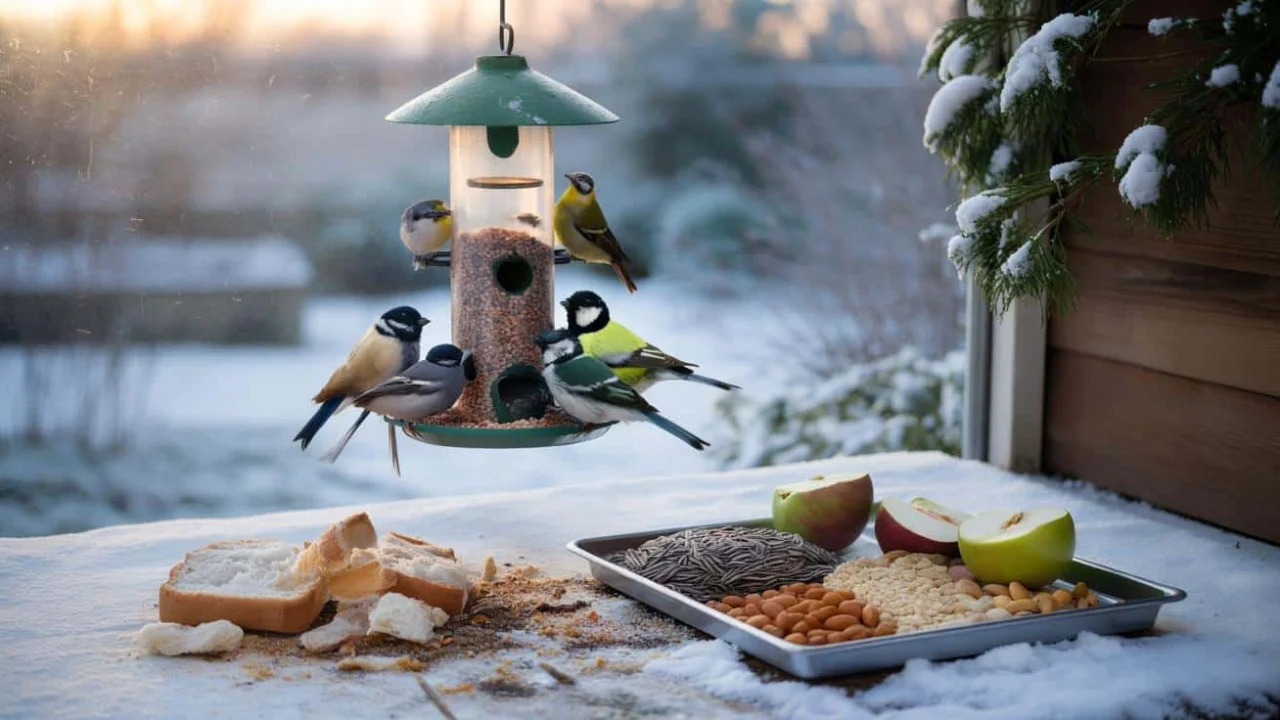
Sarah first noticed something was wrong when the little robin outside her kitchen window started looking different. For weeks, she’d been tossing bread crusts onto her snowy lawn, watching the bird return every morning like clockwork. But by January, its feathers looked dull and ruffled, and it seemed to struggle more with each landing.

What Sarah didn’t realize was that her daily act of kindness was slowly making the robin sick. The bread she offered contained almost no nutrition that wild birds actually need, filling them up while leaving them malnourished in the harshest months of the year.
Sarah’s story isn’t unique. Across neighborhoods everywhere, well-meaning people are unknowingly harming the very birds they’re trying to help through winter feeding habits that seem generous but can actually be dangerous.

The hidden dangers of feeding birds winter food
Dr. Emma Richardson, an ornithologist at the Royal Society for the Protection of Birds, sees this pattern repeatedly during winter months. “People have this image of birds being grateful for any food we provide,” she explains. “But feeding birds winter scraps like bread, rice, or even some commercial bird foods can create serious health problems.”
The main issue isn’t that birds refuse our offerings – they’ll eat almost anything when they’re desperate. The problem is that wrong foods can cause malnutrition, disease outbreaks, and dependency issues that make birds less capable of surviving on their own.

When multiple birds gather around inadequate food sources, diseases spread rapidly through flocks. Salmonella outbreaks at backyard feeders have killed thousands of birds in recent winters, according to wildlife rehabilitation centers.
“We’re seeing birds arrive at our center with what we call ‘junk food syndrome,'” says Mark Thompson, a wildlife rehabilitator in Colorado. “They’re technically fed, but severely malnourished because they’ve been surviving on the wrong types of food all winter.”

What birds actually need versus what we typically give them
Understanding proper winter bird nutrition requires knowing what birds need to survive cold weather. Their requirements are specific and very different from human food.
| What Birds Need | What We Often Give | Why It’s Problematic |
|---|---|---|
| High-fat seeds (sunflower, nyjer) | Bread, crackers, cereal | Low nutrition, fills them up with empty calories |
| Fresh, unfrozen water | Snow or frozen water dishes | Forces birds to waste energy melting ice internally |
| Consistent, clean food sources | Irregular feeding, moldy leftovers | Creates dependency then abandonment |
| Species-appropriate foods | One-size-fits-all mixed birdseed | Attracts wrong species, creates competition |
The most dangerous misconceptions involve bread and rice. Both expand in birds’ stomachs, creating a false sense of fullness while providing almost zero nutrition. Birds that fill up on these foods often stop foraging for the insects, seeds, and berries they actually need.
Feeding locations also matter more than most people realize. Placing feeders too close to windows causes deadly collisions, while feeders near dense shrubs can create ambush sites for cats and other predators.
- Bread and baked goods cause malnutrition and digestive problems
- Cooked rice can harbor bacteria and provides little nutritional value
- Moldy or spoiled foods spread deadly fungal infections
- Irregular feeding schedules create dangerous dependency cycles
- Dirty feeders and water sources become disease transmission hotspots
How winter bird feeding affects entire ecosystems
The impact of improper winter bird feeding extends far beyond individual birds. When people consistently provide food in concentrated locations, it changes how birds behave across entire regions.
Dr. Lisa Chen, who studies urban bird populations, has documented how artificial feeding creates “ecological traps” – places that look ideal to birds but actually reduce their survival chances. “Birds start gathering in unnaturally large groups around feeders, which increases aggression, disease transmission, and predation risk,” she notes.
These concentrations also affect which species survive winter in urban areas. Aggressive birds like starlings and grackles often dominate feeders, pushing out smaller native species that people actually want to help.
Some birds become so dependent on feeders that they stop teaching their young how to forage naturally. This creates generations of birds with reduced survival skills, making entire populations more vulnerable when feeders disappear or people move away.
Window strikes increase dramatically near feeding stations. Birds flying between feeders and natural cover hit windows at fatal speeds, with some estimates suggesting that backyard feeders contribute to millions of bird deaths annually through collision injuries.
“What we see as kindness can actually create ecological disruption,” explains Dr. Richardson. “The kindest thing we can do is either feed birds properly with species-appropriate foods in clean, safe locations, or focus on creating natural habitat that supports them year-round.”
Winter bird feeding isn’t inherently harmful, but it requires more knowledge and commitment than most people realize. Birds that become dependent on artificial food sources need consistent, nutritious meals and clean feeding environments throughout the entire cold season.
For people who can’t maintain that level of commitment, experts recommend focusing on habitat improvements like native plants, natural water sources, and shelter options that support birds without creating dependency relationships.
FAQs
What should I feed birds in winter instead of bread?
Black oil sunflower seeds, suet, and nyjer seeds provide the high-energy nutrition birds need for cold weather survival.
How often should I clean bird feeders?
Clean feeders every two weeks with a bleach solution, and immediately remove any wet or moldy food to prevent disease outbreaks.
Is it better not to feed birds at all?
If you can’t maintain clean, consistent feeding with proper foods, birds are better off finding natural food sources without human interference.
Why do birds keep coming back if the food is bad for them?
Hungry birds will eat almost anything available, especially in winter, but accepting food doesn’t mean it’s nutritionally appropriate for their needs.
Can I stop feeding birds once I start?
You can stop, but do it gradually over a week or two so birds can adjust their foraging patterns without suddenly losing a major food source.
How do I know if birds in my yard are sick from feeding?
Look for birds with ruffled feathers, difficulty flying, unusual lethargy, or visible discharge around eyes and beaks – these indicate potential health problems.
About the Author