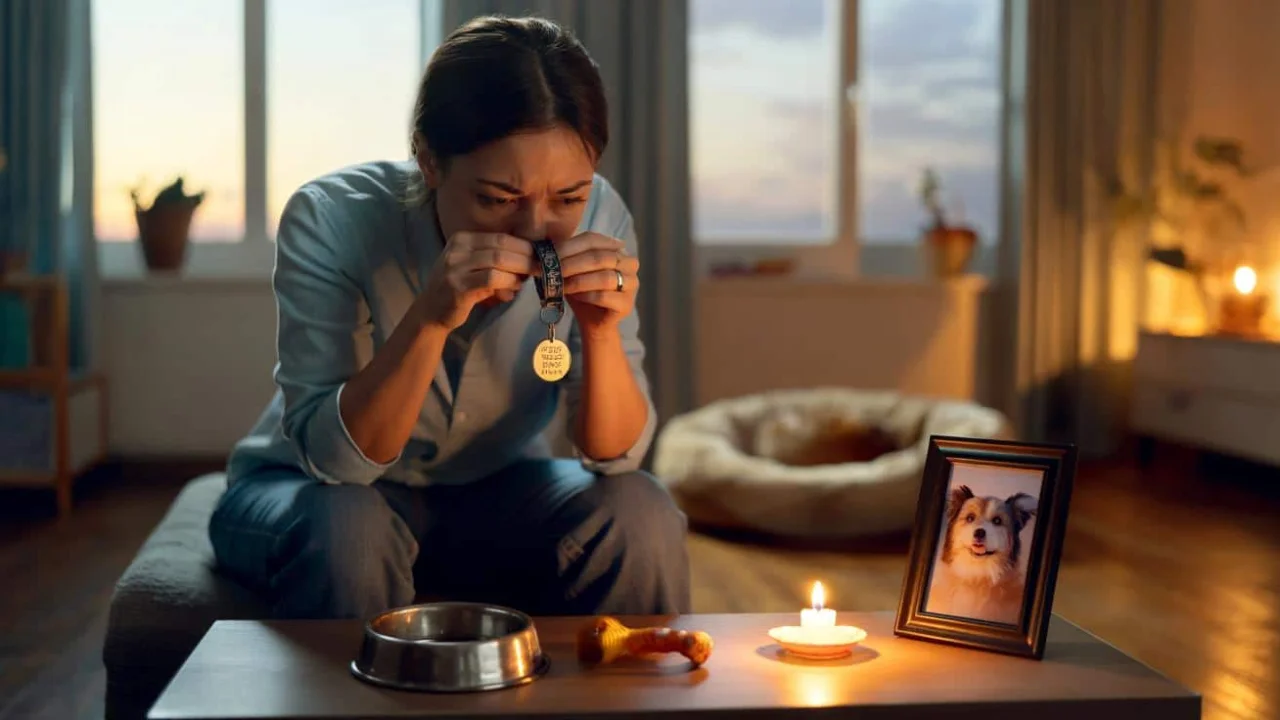
Sarah had been dreading this moment for weeks. Her 14-year-old golden retriever, Max, could barely lift his head anymore. The vet’s words felt distant and muffled as she signed the papers, but when she walked back to her car with just an empty leash in her hand, something inside her completely shattered.

That night, she found herself setting out two bowls for dinner out of habit. The silence where Max’s tail used to thump against the kitchen cabinets felt deafening. Her friends meant well when they said, “At least he’s not suffering anymore,” but their words felt hollow against the raw ache in her chest.
What Sarah didn’t realize was that her brain was processing this loss exactly like losing a human family member. The pet bereavement grief she was experiencing wasn’t “less than” or “different from” other types of mourning—it was grief, period.

Your brain doesn’t distinguish between species when it comes to love
When we lose a beloved pet, our neurological response mirrors human bereavement in striking ways. The same brain regions that activate during human grief light up when we mourn our animal companions. The attachment bonds we form with pets trigger identical stress responses, sleep disruptions, and emotional processing patterns.
“The grief people experience after losing a pet can be just as intense as losing a human family member,” explains Dr. Patricia Morris, a veterinary grief counselor. “Our brains form attachment bonds based on daily interactions and emotional connections, not species classification.”

This biological reality explains why pet bereavement grief can catch people off guard with its intensity. Your morning routine revolved around letting the dog out. Your evening wind-down included a purring cat on your lap. When those touchpoints vanish, your nervous system registers it as a fundamental disruption.
The symptoms often mirror clinical depression: difficulty concentrating, changes in appetite, sleep disturbances, and a persistent sense of emptiness. Some people report phantom sounds—hearing their pet’s collar jingling or paws on hardwood floors.

The hidden complexities of mourning our animal companions
Pet bereavement grief comes with unique challenges that human grief doesn’t typically involve. Society often minimizes this type of loss, leaving mourners feeling isolated and misunderstood.
Here are the most common symptoms people experience:

- Intense sadness lasting weeks or months
- Difficulty making decisions about daily routines
- Physical symptoms like fatigue and loss of appetite
- Guilt over end-of-life decisions
- Avoiding places or activities associated with the pet
- Searching behaviors (looking for the pet in usual spots)
The timeline and intensity vary dramatically between individuals, but research shows several key factors influence the grieving process:
| Factor | Impact on Grief Intensity | Duration |
|---|---|---|
| Length of companionship | Longer relationships = deeper grief | 2-6 months typically |
| Daily care involvement | Primary caregivers grieve more intensely | Varies widely |
| Circumstances of death | Sudden loss often more traumatic | 3-12 months |
| Social support | Understanding friends reduce grief duration | Significant factor |
“I’ve seen clients struggle more with pet loss than with human loss because society doesn’t give them permission to grieve fully,” notes Dr. Jennifer Walsh, an animal behaviorist specializing in human-animal bonds. “They’re expected to ‘get over it’ quickly, which can complicate the natural healing process.”
The guilt component adds another layer of complexity. Many pet owners agonize over end-of-life decisions, replaying scenarios where they question their timing or choices. This guilt can extend the grieving period and intensify symptoms.
How pet loss reshapes our daily reality
The practical impact of losing a pet extends far beyond emotional pain. These animals often structure our entire day, from wake-up calls to evening routines. Their absence creates a void that touches every aspect of daily life.
Working from home becomes different when there’s no furry supervisor keeping you company. Dog owners suddenly have extra time in their schedules without walks to take. Cat owners might find themselves reaching for phantom pets during Netflix sessions.
“The hardest part was coming home to silence,” shares Mark, who lost his parrot of 18 years. “Romeo would start talking the moment he heard my key in the lock. That greeting was the highlight of my day for nearly two decades.”
Some people experience what psychologists call “continuing bonds”—maintaining a connection with their deceased pet through rituals, photographs, or keeping their belongings. This isn’t pathological; it’s a normal part of processing significant loss.
The decision about getting another pet becomes fraught with emotion. Some people feel guilty about “replacing” their companion, while others desperately want to fill the emptiness. There’s no universal right answer, and rushing the decision often leads to complications.
Financial considerations also play a role. Pet ownership involves significant expenses, and suddenly having that money available can trigger complex feelings about the value of their companion’s life.
“Pet bereavement grief is real grief,” emphasizes Dr. Sarah Chen, a clinical psychologist who studies human-animal relationships. “Anyone who dismisses it as ‘just a pet’ fundamentally misunderstands how attachment works in the human brain.”
Recovery typically involves gradually rebuilding routines, finding ways to honor the pet’s memory, and eventually opening up to the possibility of new relationships. Some people find comfort in volunteer work with animals, while others prefer focusing on human relationships for a while.
The key is recognizing that this grief deserves the same patience and understanding we’d extend to any other significant loss. Your pet wasn’t “just” anything—they were a daily companion who shared your life, your home, and your heart.
FAQs
How long does pet bereavement grief typically last?
Most people experience intense grief for 2-6 months, though some symptoms may persist for a year or more. The timeline varies based on your relationship length and circumstances of the loss.
Is it normal to cry more over a pet than over some humans?
Absolutely. Your daily interaction with your pet was likely more consistent than with many humans. The brain responds to attachment intensity, not species.
Should I take time off work when my pet dies?
If you need it, yes. Many employers now recognize pet bereavement as legitimate grounds for personal time, though policies vary widely.
When should I consider getting another pet?
When you can think about your deceased pet with more joy than pain, and when you want a new companion for themselves, not as a replacement.
Are there support groups for pet loss?
Yes, many veterinary colleges, animal hospitals, and online communities offer pet grief support groups. These can be incredibly helpful for validation and coping strategies.
Is pet grief counseling worth it?
If your grief is interfering with daily functioning after several months, professional help can provide valuable coping tools and perspective.
About the Author