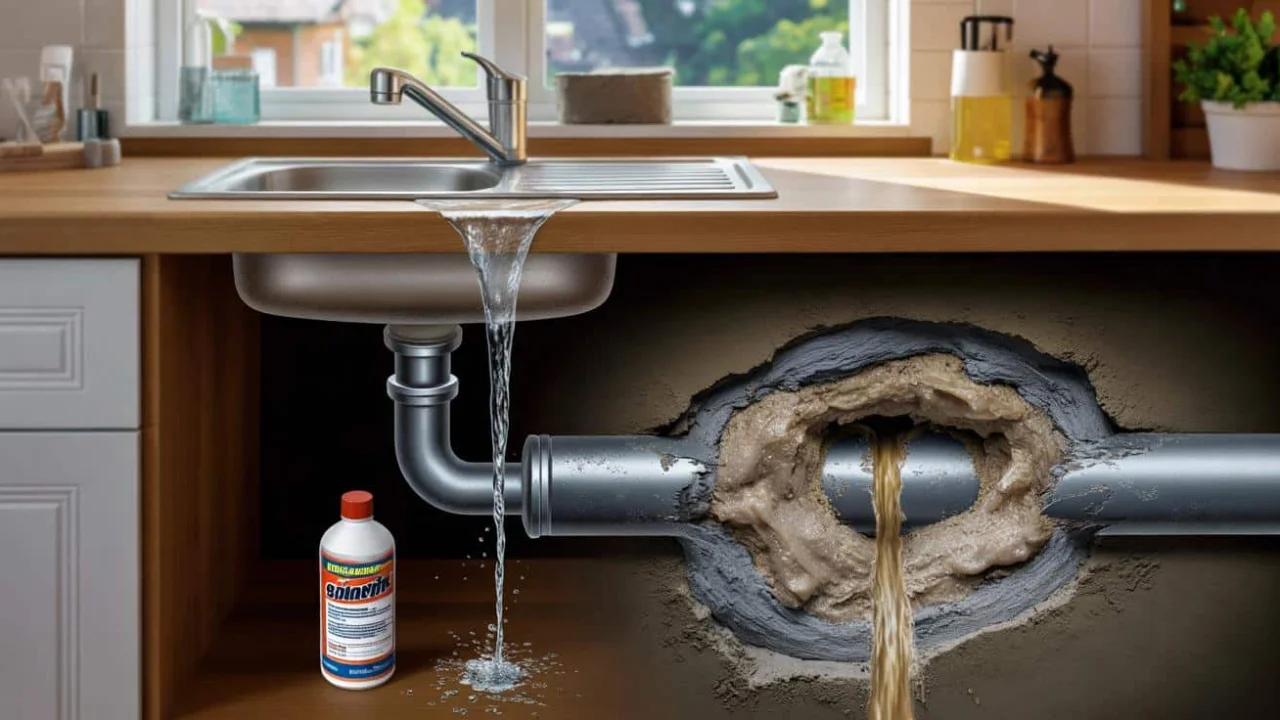
Sarah stared at the kitchen sink, watching brown water creep back up through the drain like a slow-motion horror movie. Twenty-four hours ago, she’d poured half a bottle of industrial-strength drain cleaner down there, watched it foam and hiss like a science experiment, then celebrated as the water finally swirled away. She’d even posted about her “DIY victory” on social media.

Now the backup was worse than before. The water wasn’t just slow—it was actually reversing, carrying mysterious chunks and a smell that made her gag. Her neighbor knocked on the door, asking if she knew why their shared laundry room was flooding.
That’s when Sarah learned the uncomfortable truth about most drain blockage solutions: they don’t actually solve the problem. They just relocate it.

Why quick fixes create bigger problems
Most liquid drain cleaners work by dissolving organic matter or pushing debris through pipes with chemical pressure. Sounds reasonable, right? The problem is that your home’s plumbing system isn’t a straight shot to the street. It’s more like a tree, with branches that get narrower as they meet up with your neighbors’ pipes and eventually reach the main sewer line.
“I see this constantly,” says Mike Rodriguez, a master plumber with 15 years of experience in residential repairs. “Homeowners use these products thinking they’ve fixed the issue, but they’ve actually just moved a hairball from their 3-inch pipe into a 2-inch connection point where it causes a much bigger backup.”

The chemistry behind most drain cleaners doesn’t actually eliminate blockages—it breaks them into smaller pieces or lubricates them enough to slide deeper into your system. Hair clumps become hair mats. Grease solidifies further down where temperatures are cooler. Food particles collect in joints and bends where they have time to settle.
Think of it like trying to clear traffic by pushing all the cars into the next town. You’ve solved your immediate problem, but you’ve probably made someone else’s situation much worse.

What actually happens to moved blockages
When drain blockage solutions push debris deeper into your plumbing, several things can happen, none of them good:
- Neighbor impact: Your clog becomes their emergency flood
- Main line backup: Multiple small clogs combine into one massive blockage
- Pipe damage: Pushed debris gets stuck in joints, causing pressure buildup
- Chemical residue: Harsh cleaners leave behind films that actually attract more debris
- Root infiltration: Tree roots grow toward the nutrients in pushed-through organic matter

The financial impact escalates quickly. A $10 bottle of drain cleaner might temporarily fix a $50 plumbing call, but it often creates a $500 main line cleaning or even a $2,000 pipe replacement job.
| Problem Location | Typical Cost | Who Pays |
|---|---|---|
| Single drain backup | $75-150 | Homeowner |
| Multiple drain backup | $200-400 | Homeowner |
| Main line blockage | $300-800 | Shared among affected units |
| Pipe replacement | $1,500-5,000 | Property owner or HOA |
“The worst case I ever saw was a condo building where everyone on the same vertical line started using the same brand of ‘miracle’ drain cleaner,” recalls plumbing contractor Lisa Chen. “All that dissolved hair and soap formed a cement-like plug in the main stack. We had to jackhammer through the parking garage floor to reach it.”
Better approaches that actually work
Real drain blockage solutions focus on removing debris rather than relocating it. Professional plumbers use several methods that homeowners can sometimes replicate:
Mechanical removal pulls blockages out instead of pushing them deeper. A basic drain snake costs $15-30 and can clear most hair and soap clogs without chemicals. For tougher blockages, plumbers use motorized augers that chew through debris and pull it back out.
Enzyme cleaners actually digest organic matter instead of just dissolving it. These take longer to work—usually overnight—but they break down proteins and fats into harmless byproducts that won’t recombine downstream.
High-pressure water jetting scours pipe walls clean and flushes debris all the way to the main sewer line, where municipal systems are designed to handle it. Professional hydro-jetting services cost $200-400 but can prevent years of recurring problems.
Prevention beats cure every time. Simple habits like using drain screens, flushing with hot water weekly, and avoiding grease disposal down sinks eliminate most blockages before they start.
“I tell my customers to think long-term,” says Rodriguez. “Would you rather spend $20 every few months on temporary fixes that create bigger problems, or $100 once a year on proper cleaning that actually maintains your pipes?”
The next time you’re standing over a slow drain with a bottle of chemical solution in your hand, remember Sarah’s flooded kitchen. That blockage has to go somewhere. Make sure it’s actually gone, not just relocated to become someone else’s expensive emergency.
Who pays when blockages migrate
Property law around drainage issues varies by location, but generally follows a simple rule: if your actions cause damage to shared systems, you’re liable for repairs. This includes situations where chemical drain cleaners push debris into main lines or cause backups in neighboring units.
Homeowners insurance typically covers sudden water damage but excludes maintenance issues and problems caused by improper use of chemical products. Condo associations and apartment complexes increasingly include clauses that make residents financially responsible for drain cleaning costs if their units are identified as the source of blockages.
“We’ve started requiring residents to try mechanical solutions first before using any chemical products,” explains property manager David Torres. “Too many expensive main line cleanings traced back to multiple people using liquid drain cleaners on the same day.”
Some cities now classify certain drain cleaning chemicals as hazardous waste, making homeowners liable for environmental cleanup costs if they cause sewer system damage or contamination.
FAQs
How can I tell if my drain cleaner just moved the blockage instead of clearing it?
Watch for recurring clogs in the same location, unusual gurgling sounds from other drains, or backups that happen elsewhere in your home within days of using chemical cleaners.
Are enzyme drain cleaners really better than chemical ones?
Yes, because enzymes actually digest organic matter instead of just dissolving it or pushing it deeper into pipes. They work slower but create lasting results.
What should I do if my neighbor’s drain problems started after I used drain cleaner?
Contact a plumber immediately to assess whether your drain connects to theirs, and consider sharing the cost of professional cleaning if your blockage migrated.
How often should I have my drains professionally cleaned?
Most plumbers recommend annual cleaning for main drains and every 2-3 years for individual fixtures, depending on usage and the age of your pipes.
Can I prevent blockages from moving deeper into my plumbing system?
Yes, by using mechanical removal methods first (snakes, plungers) and only using enzyme cleaners rather than harsh chemical solutions that push debris downstream.
Is it worth buying professional-grade drain cleaning equipment?
A basic drain snake and plunger handle 80% of home blockages and cost less than a few bottles of chemical drain cleaner. For anything more serious, calling professionals is usually more cost-effective.
About the Author