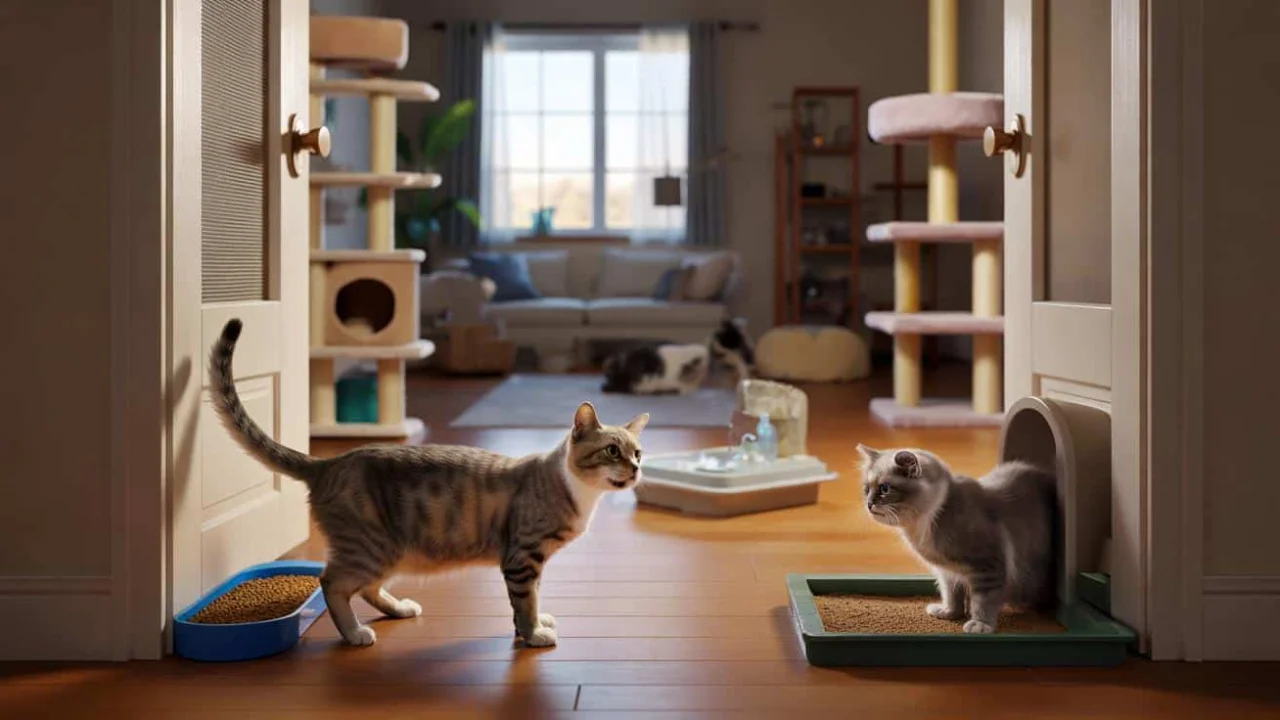
Sarah thought her two cats, Muffin and Tiger, were best friends. They’d sleep curled together on her bed every night for three years. Then one Tuesday morning, she woke up to the sound of yowling and crashing from the kitchen. Tiger was cornering Muffin near the food bowls, fur standing on end, looking like a completely different animal.

Within a week, Muffin was hiding under the bed most of the day. Tiger seemed to patrol the hallways like a security guard. Sarah felt heartbroken watching her peaceful home turn into a war zone. Sound familiar?
Cat fights at home can erupt seemingly overnight, leaving pet owners devastated and wondering what went wrong. Before you start considering rehoming one of your beloved pets, there are proven strategies that can often restore peace to your multi-cat household.

When playful spats turn into serious cat fights
Not every hiss or swat signals trouble brewing. Cats naturally establish social hierarchies, and minor disagreements are completely normal. The difference between healthy communication and problematic aggression lies in the patterns you observe.
“Brief hissing, a quick swat, then both cats walking away is usually normal social interaction,” explains Dr. Rachel Martinez, a veterinary behaviorist. “The red flags appear when one cat starts controlling the other’s access to basic needs.”

Here’s what genuine cat fights and bullying behavior look like in your home:
- One cat consistently blocking doorways, stairs, or access to food and water
- The victim cat avoiding the litter box because the aggressor guards the route
- Silent stalking followed by sudden ambushes from behind furniture
- Constant tension where both cats seem on edge whenever they’re in the same room
- One cat hiding for most of the day or showing stress-related health issues

If these behaviors happen daily rather than occasionally, your cats have moved beyond normal social dynamics into a genuinely harmful situation that requires intervention.
The surprising reasons why cat fights suddenly start
Many cat owners feel blindsided when previously peaceful cats begin fighting. Understanding the common triggers can help you address the root cause rather than just managing the symptoms.

Medical issues top the list of unexpected causes. A cat experiencing pain from arthritis, dental problems, or urinary tract infections may lash out at housemates who come too close. Thyroid disorders and cognitive changes in senior cats can also dramatically alter personality and social tolerance.
“Any sudden behavioral change in a multi-cat household should prompt vet visits for all the cats involved,” advises feline specialist Dr. James Chen. “We often find underlying health issues that explain the aggression.”
Beyond medical triggers, these environmental factors frequently spark cat fights:
| Trigger | How It Causes Fighting | Quick Solution |
|---|---|---|
| Redirected aggression | Cat sees outdoor animal, can’t reach it, attacks nearby housemate | Block visual access to outside triggers |
| Resource competition | Too few food stations, litter boxes, or resting spots | Add more resources in different locations |
| Territorial stress | Major household changes like moving or new furniture | Gradual introductions and familiar scent maintenance |
| Fear association | Traumatic event creates lasting negative connection between cats | Separation and careful reintroduction process |
Changes in routine, new pets, visitors, or even switching food brands can disrupt the delicate social balance in multi-cat homes. Sometimes the trigger happened weeks ago, but the cats are still processing the stress.
Practical steps to stop cat fights and restore peace
The good news? Most cat fights can be resolved with patience and the right approach. Success depends on creating physical and emotional safety for both cats while slowly rebuilding positive associations.
Start with immediate separation. This doesn’t mean permanent isolation, but rather giving both cats space to decompress. Set up completely separate territories with their own food, water, litter boxes, and comfortable resting areas.
“Think of separation as hitting the reset button on their relationship,” explains animal behavior consultant Lisa Thompson. “Once the stress hormones settle, you can begin reintroduction work.”
The reintroduction process requires careful steps:
- Feed the cats on opposite sides of a closed door so they associate each other with good things
- Swap their bedding daily so they get used to each other’s scent without direct contact
- Allow brief visual contact through baby gates or screen doors during calm moments
- Gradually increase positive interactions while monitoring stress signals
- Never force interactions or punish aggressive behavior, which often makes things worse
Environmental changes can dramatically reduce cat fights. The “one plus one” rule suggests having one litter box, food station, and water source per cat, plus one extra. Vertical space becomes crucial—cat trees, shelving, and perches allow cats to coexist without competing for floor territory.
Pheromone diffusers containing synthetic calming scents can help reduce overall household stress. These plug-in devices release chemicals that mimic the natural pheromones mother cats produce to comfort their kittens.
Some cats benefit from anti-anxiety medication during the reintroduction process, especially if the fighting involved serious injury or deep fear responses. Your veterinarian can discuss whether pharmaceutical intervention might speed up the peace-making process.
“The key is patience and consistency,” notes Dr. Martinez. “Rushing the process often sets you back to square one, while taking things slowly usually leads to lasting harmony.”
Monitor your cats’ body language throughout the process. Relaxed ears, slow blinking, and normal eating patterns indicate progress. Crouched postures, dilated pupils, or loss of appetite suggest you need to slow down and give them more time.
Most cat relationships can be repaired with dedicated effort, though some cats simply prefer to coexist peacefully rather than becoming best friends again. That’s perfectly acceptable as long as both cats can access their basic needs without fear or aggression.
FAQs
How long does it take to stop cat fights between housemates?
The reintroduction process typically takes 2-8 weeks, depending on how severe the fighting was and how long it had been going on before intervention.
Should I break up cat fights when they happen?
Never use your hands to separate fighting cats as you risk serious injury. Instead, make a loud noise, throw a blanket over them, or spray water from a distance to interrupt the fight.
Can cats that fought seriously ever be friends again?
Yes, many cats can rebuild positive relationships after serious fights, though some may only achieve peaceful coexistence rather than close friendship.
Do I need to rehome one of my cats if they keep fighting?
Rehoming should be a last resort after trying behavior modification, environmental changes, and potentially medication under veterinary guidance.
Will getting my cats spayed or neutered help reduce fighting?
Spaying and neutering significantly reduces territorial and hormone-driven aggression, making cats generally more compatible as housemates.
How can I tell if my cats are playing or actually fighting?
Play fighting involves taking turns being the “aggressor,” silent or quiet vocalizations, and both cats returning to normal behavior afterward, while real fighting features continuous aggression from one cat, loud yowling, and prolonged stress responses.
About the Author
