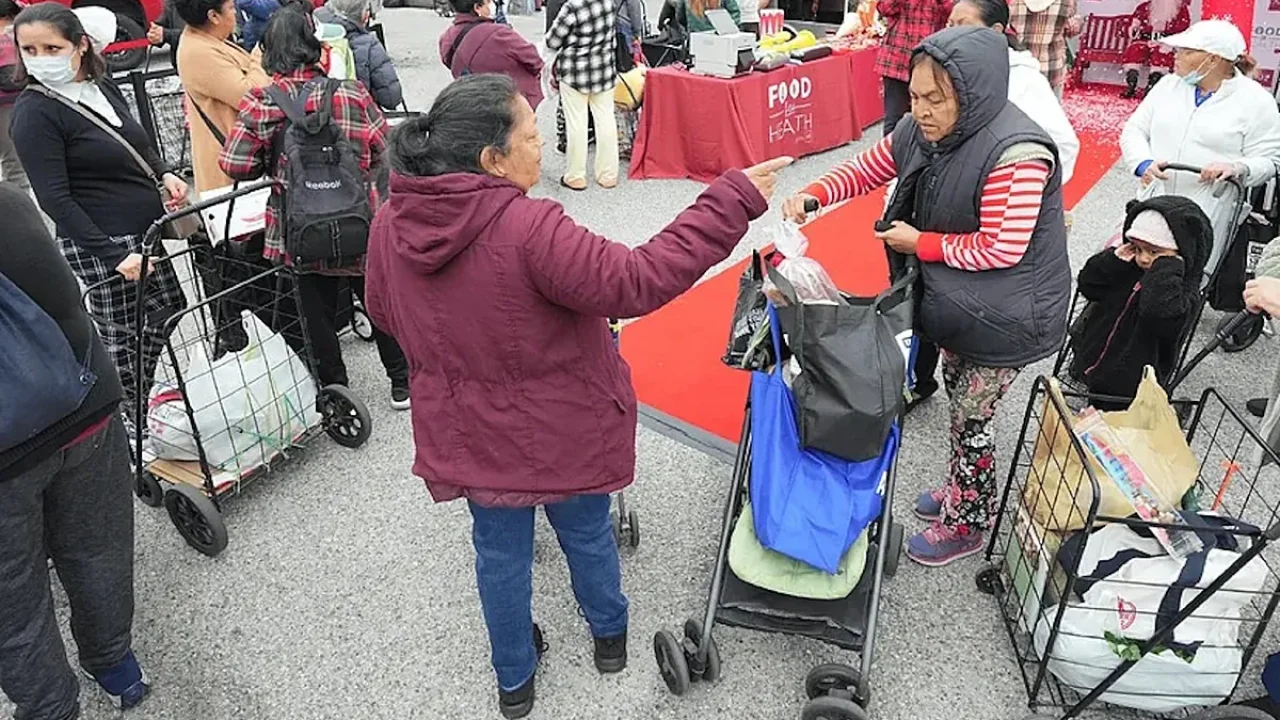
Maria Gonzalez stared at the letter in her hands, her heart sinking as she read the words again. After three years of receiving SNAP benefits to feed her family of four, the federal government was cutting off her assistance. As a refugee who had built a new life in Albuquerque, she wondered how she would manage to put food on the table for her children.

But Maria didn’t know that New Mexico had a plan. Just days before families like hers would lose their lifeline, the state announced something unprecedented—a $12 million emergency program to catch those falling through the cracks.
Her story isn’t unique. Across New Mexico, thousands of immigrant families are facing the same uncertainty as new federal regulations reshape who can access food assistance in America.

New Mexico Steps Up When Washington Steps Back
The “One Big Beautiful Bill Act” that took effect on January 1, 2026, has fundamentally changed the landscape of food assistance in the United States. The federal law has tightened eligibility requirements, leaving many immigrant families who previously qualified for SNAP benefits suddenly without support.
New Mexico’s response has been swift and decisive. The state government recognized that losing federal food assistance would create a humanitarian crisis in communities across the state. Governor Michelle Lujan Grisham’s administration moved quickly to establish the New Mexico food assistance program, designed specifically to bridge the gap for immigrant families caught in this transition.

“We’re not going to let families go hungry because of changes in Washington,” said Jennifer Padgett, spokesperson for the New Mexico Health Care Authority. “This program represents our commitment to every resident who calls New Mexico home.”
The program operates differently from traditional monthly SNAP benefits. Instead of ongoing monthly payments, eligible households will receive a one-time lump sum payment calculated based on a percentage of what they previously received under the federal program. This approach allows the state to maximize its impact with the available $12 million budget.

Who Qualifies for New Mexico’s Emergency Food Program
The New Mexico food assistance program has specific eligibility requirements that families must meet to receive support. Understanding these requirements is crucial for families who may be eligible for help.
| Eligibility Category | Requirements | Key Details |
|---|---|---|
| Immigration Status | Legal presence with excluded status | Refugees, asylees, humanitarian admissions |
| SNAP History | Current SNAP recipient | Must be receiving benefits before January 1, 2026 |
| Renewal Status | Complete SNAP renewal process | Required even if federal eligibility ends |
| EBT Card | Maintain active EBT card | Funds deposited directly to existing card |
The program specifically targets three groups of residents:

- Immigrants with legal presence: This includes refugees, asylees, and individuals admitted for urgent humanitarian reasons who fall under immigration categories that the new federal law has excluded from SNAP eligibility.
- Current SNAP recipients: Only households that were already receiving SNAP benefits and will lose their federal eligibility during their 2026 renewal qualify for state assistance.
- Pre-2026 beneficiaries: Families must have been receiving benefits before January 1, 2026. New applicants who don’t meet federal requirements after that date cannot access these state funds.
“The program is designed to help people who played by the rules and suddenly found themselves without support through no fault of their own,” explained Dr. Sarah Martinez, a policy researcher at the University of New Mexico who has studied food insecurity in immigrant communities.
State officials emphasize two critical steps that eligible families must take to receive their payments. First, they must complete their SNAP renewal process even if they know they’ll lose federal eligibility. The state uses this renewal information to calculate and process payments. Second, families must keep their EBT cards active because the state will deposit funds directly onto existing cards.
Real Impact on New Mexico Families
The changes affect thousands of households across New Mexico, with immigrant communities bearing the brunt of the federal policy shift. These families often work in essential industries like agriculture, hospitality, and healthcare, yet struggle with food insecurity despite their contributions to the state’s economy.
For families like Maria’s, the timing couldn’t be more critical. Winter months typically bring increased challenges for households already stretched thin, and the loss of federal benefits threatens to push many families into deeper poverty.
“We’re seeing families make impossible choices between paying rent and buying groceries,” said Carlos Ramirez, director of a community food bank in Las Cruces. “This state program provides crucial breathing room while families adjust to their new reality.”
The one-time payment structure means families will need to budget carefully and seek alternative long-term solutions. Community organizations across the state are preparing expanded services to help bridge the gap after state funds are distributed.
Food banks, community kitchens, and local assistance programs are bracing for increased demand. Many organizations are already reporting higher numbers of families seeking help as word spreads about the federal benefit changes.
The program’s $12 million budget will be distributed based on household size and previous benefit amounts, with larger families receiving proportionally larger payments. State officials estimate the funds will help between 8,000 and 12,000 households, though exact numbers depend on how many eligible families complete the application process.
“This isn’t just about food,” noted Rebecca Torres, a social worker in Santa Fe who works with immigrant families. “When families can’t afford groceries, it affects children’s performance in school, parents’ ability to work, and entire communities’ wellbeing.”
New Mexico joins a small group of states taking independent action to address gaps left by federal policy changes. Hawaii, Nevada, and the District of Columbia have announced similar programs, recognizing that their diverse populations and unique migration patterns require tailored solutions.
The success of New Mexico’s program could influence other states facing similar challenges, potentially creating a model for state-level responses to federal benefit restrictions.
FAQs
How much money will eligible families receive through New Mexico’s food assistance program?
The payment amount varies by household and is calculated as a percentage of what the family previously received in federal SNAP benefits. Specific amounts haven’t been publicly disclosed.
When will eligible families receive their payments?
Payments are being processed as families complete their SNAP renewals throughout 2026. The exact timing depends on individual renewal schedules and processing time.
Can families apply for this program if they weren’t receiving SNAP before January 2026?
No, only households that were already receiving SNAP benefits before January 1, 2026, are eligible for this state assistance program.
What happens if someone throws away their EBT card after losing federal benefits?
Families should contact the New Mexico Health Care Authority immediately to request a replacement card, as state funds will only be deposited to EBT cards.
Is this a monthly benefit like SNAP, or a one-time payment?
This is a one-time lump sum payment designed to help families transition after losing federal benefits, not an ongoing monthly program.
Will New Mexico extend this program beyond 2026?
The program is currently funded through 2026 with $12 million allocated. Future extensions would require additional state legislative action and funding.
About the Author