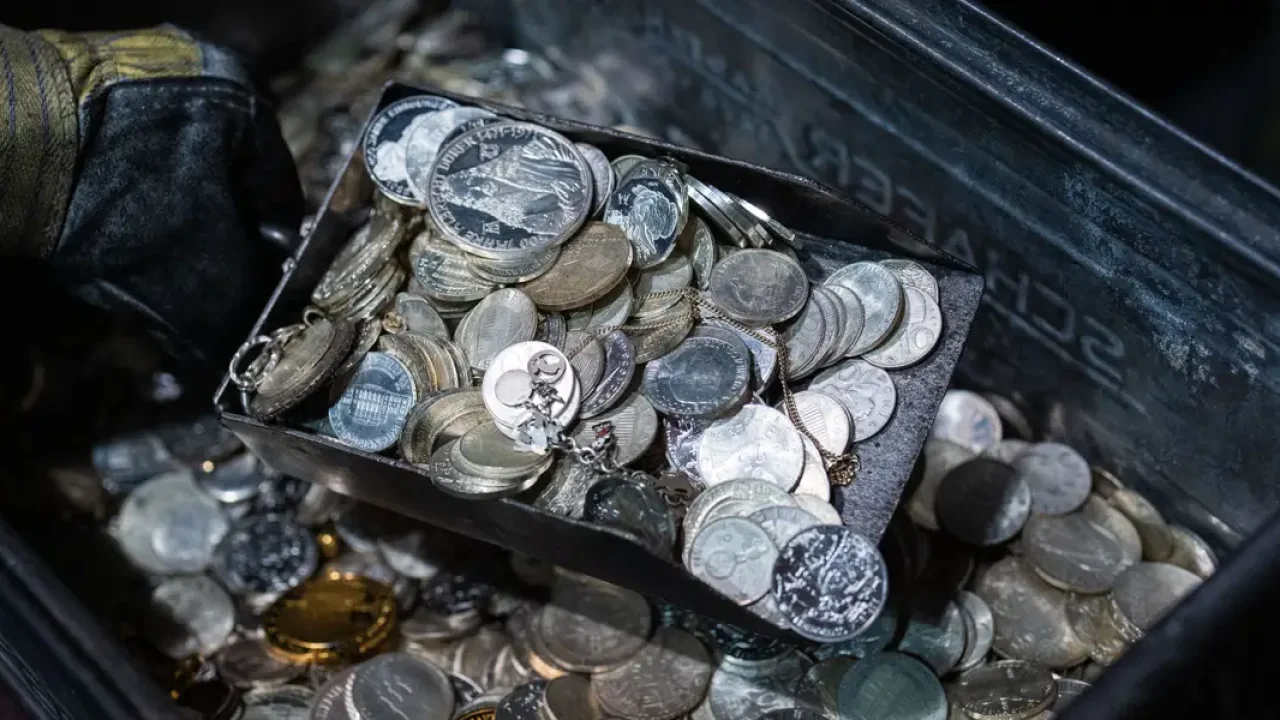
Sarah Martinez clutched her grandmother’s silver tea set as she walked into Madison Coin Exchange last Tuesday morning. The ornate pieces had sat in her dining room cabinet for years, but with her daughter’s college tuition due and silver prices hitting near-record highs, it seemed like the perfect time to cash in.

What she didn’t expect was the chaos she’d find inside. The small shop was packed wall-to-wall with people carrying everything from jewelry boxes to plastic bags full of old coins. The owner looked frazzled, constantly checking his phone for price updates while trying to keep up with the steady stream of sellers.
“I’ve never seen anything like this in thirty years of business,” he told her as silver prices dropped $4 an ounce during her twenty-minute wait. Sarah’s grandmother’s tea set, worth $800 when she walked in, had lost $60 in value by the time she reached the counter.

When Precious Metals Markets Go Wild
Local coin shops across America are experiencing an unprecedented situation right now. After gold soared past $5,300 per ounce and silver nearly touched $120 in January, these small businesses found themselves drowning in precious metals as people rushed to cash in on the historic price surge.
The problem isn’t just the massive influx of sellers. It’s what happens next that’s creating a real headache for shop owners.

Tim Heuer, who manages University Coin & Jewelry in Wisconsin, witnessed the volatility firsthand. “A customer came in to sell silver at $98 an ounce,” he recalls. “By the time I wrote his check, silver was already down $3.50 from when he walked through the door.”
This wild price movement has created a domino effect throughout the entire precious metals supply chain. Local coin shops, which typically serve as the first stop for people looking to sell their gold and silver, are now struggling to find places to sell their mounting inventory.

The Silver Shortage Nobody Saw Coming
Here’s where things get really interesting. While everyone assumes there’s a shortage of precious metals, the opposite is actually happening in many parts of the supply chain:
| Market Level | Current Situation | Impact |
|---|---|---|
| Individual Sellers | Rushing to sell at high prices | Massive supply increase |
| Local Coin Shops | Overwhelmed with inventory | Running out of storage and capital |
| Refineries | Completely backed up | Stopped accepting new materials |
| Export Markets | Processing delays | Entire chain slowing down |
Jarret Niesse, president of Precious Metal Refining Services in Chicago, had to make a tough business decision last October. When silver crossed $50 per ounce, his company stopped buying scrap silver entirely.

“We had people bringing in everything – old silverware, platters, decorative pieces that had been gathering dust for decades,” Niesse explains. “This entire crazy silver move that has happened, we have been sitting on the sidelines.”
The key issues local coin shops are facing include:
- Refineries refusing new shipments due to processing backlogs
- Rapidly changing prices that can wipe out profit margins in minutes
- Limited storage space for mounting inventory
- Cash flow problems from buying but not being able to sell upstream
- Customer expectations based on outdated price information
The situation has become so challenging that many refineries have essentially closed their doors to new business. “When the guys at the top say they’re going to open the doors and start accepting more material, the guys in the middle, like me and my competitors, will send in,” Niesse adds.
How Shop Owners Are Adapting to Survive
Local coin shops can’t simply stop buying precious metals – that’s their core business. But they’re having to get creative about how they manage this unprecedented situation.
Tom Spoerl, manager at Rick’s Olde Gold in Madison, puts it bluntly: “If you do this wrong, you run out of capital really fast.”
The challenge is particularly acute because precious metals businesses operate differently than most retail stores. They can’t rely on traditional financing methods to manage inventory.
“You don’t want to hold metal and finance it for any length of time,” explains HSBC precious metals analyst James Steel. “These price moves have done a lot of damage all across the line.”
Both Spoerl and Heuer have implemented new strategies to keep their businesses afloat:
- Setting daily purchase limits per customer
- Requiring appointments for large transactions
- Offering slightly lower purchase prices to manage risk
- Focusing on smaller, more frequent transactions
- Building relationships with alternative buyers outside traditional refineries
These limits serve multiple purposes. They help shops manage their cash flow while ensuring they can serve more customers who might need money for immediate expenses like tax payments or medical bills.
The ripple effects extend beyond just business operations. Many people rely on local coin shops as a quick source of cash during financial emergencies. When these shops become overwhelmed or have to limit purchases, it affects real families dealing with real problems.
For shop owners, the situation requires constant vigilance. Price tracking has become an obsession, with many checking spot prices every few minutes throughout the day. Some have started using more sophisticated hedging strategies typically reserved for larger dealers.
What makes this particularly challenging is the unpredictable nature of the current market. Unlike gradual price increases that businesses can plan for, the recent volatility has created sudden, dramatic swings that can change the entire economics of a transaction in real time.
As the precious metals market continues to stabilize after January’s wild ride, local coin shops are learning to navigate this new reality. The experience has taught many shop owners valuable lessons about risk management and the importance of maintaining flexible business practices in volatile markets.
FAQs
Why are local coin shops having trouble selling their inventory?
Refineries are completely backed up with materials and have stopped accepting new shipments, leaving coin shops with nowhere to sell their mounting inventory.
Should I wait to sell my silver and gold?
Market timing is impossible to predict, but if you need the money now, local coin shops are still buying despite the challenges they’re facing.
Are coin shops paying fair prices right now?
Most reputable shops are still offering competitive prices, though some have had to adjust their margins slightly to manage the increased risk from price volatility.
What’s causing all this chaos in the precious metals market?
Record-high prices in January triggered massive selling from individuals, creating a supply glut that the normal processing chain couldn’t handle.
How long will this situation last?
It depends on when refineries clear their backlogs and prices stabilize, but most experts expect the situation to gradually improve over the coming months.
Can I still buy precious metals from coin shops?
Yes, most local coin shops still have inventory available for purchase, and some are actually offering good deals as they try to manage their excess stock.
About the Author