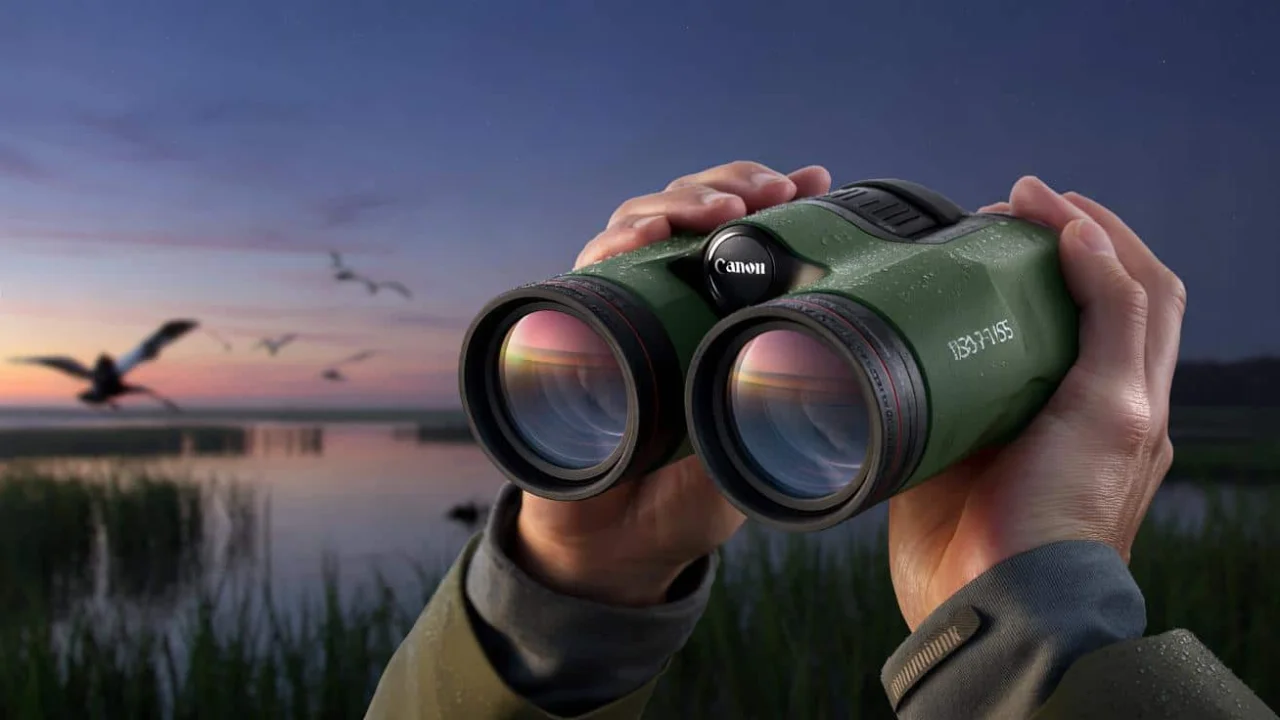
Sarah had been watching the same hawk circling her backyard for twenty minutes, squinting through her old 8×32 binoculars and getting increasingly frustrated. The bird was too far away to see clearly, and every time she tried to track its flight, her hands would shake just enough to lose it completely. Then her neighbor handed her his Canon 15×50 binoculars, and everything changed.

The moment she pressed the image stabilization button, it was like someone had mounted her view on a rock-solid tripod. The hawk’s feathers came into sharp focus, and she could actually follow its hunting patterns without fighting against her own trembling hands. That evening, Sarah understood why serious birders and stargazers swear by these particular binoculars.
This is exactly the kind of transformation that makes the Canon 15×50 binoculars so compelling, despite their hefty price tag and considerable weight.

What Makes These Binoculars Stand Out
The Canon 15×50 IS All Weather binoculars aren’t your typical grab-and-go optics. At 2.6 pounds, they’re closer to carrying a small camera than lightweight field glasses. But that weight serves a purpose – it houses Canon’s sophisticated image stabilization system that can turn shaky handheld viewing into steady, tripod-like observations.
The 15x magnification means you’re getting serious reach. While most handheld binoculars max out at 10x before becoming too shaky to use effectively, these push that boundary thanks to their built-in stabilization. The 50mm objective lenses gather plenty of light, making them surprisingly effective in low-light conditions like dawn wildlife watching or evening astronomy.

“The stabilization isn’t just a gimmick,” explains wildlife photographer Mike Chen. “At 15x magnification, even your heartbeat can cause image shake. Canon’s system genuinely transforms how you can use high-power binoculars in the field.”
The green rubber armoring aims to blend into natural environments better than traditional black binoculars. However, this coating has proven somewhat controversial among users. While it looks the part, many report that it feels slippery when wet and shows scuffs more readily than expected for a premium product.

Technical Specifications and Real-World Performance
Let’s break down exactly what you’re getting with these Canon 15×50 binoculars and how they perform in actual use:
| Magnification | 15x |
| Objective Lens Diameter | 50mm |
| Weight | 2.6 lbs (1,180g) |
| Dimensions | 7.5″ x 5.9″ x 3.1″ |
| Eye Relief | 15mm |
| Field of View | 4.4° (231 feet at 1,000 yards) |
| Close Focus Distance | 6.5 feet |
| Battery Life | Approximately 8 hours continuous use |
The image stabilization system operates on two AA batteries and provides about 8 hours of continuous use. Users report that the stabilization is most noticeable when tracking moving objects or during extended viewing sessions. The system reduces hand shake by approximately 2-3 stops, which effectively makes 15x magnification feel as steady as 6-8x without stabilization.

Key performance highlights include:
- Exceptional image stability that allows comfortable handheld use at 15x magnification
- Sharp, bright images with good contrast and color fidelity
- Effective in low-light conditions thanks to large 50mm objectives
- Unique hinge design that keeps grip consistent regardless of interpupillary distance
- Weather-resistant construction suitable for most outdoor conditions
The optical quality lives up to Canon’s reputation. Colors appear natural and vibrant, with minimal chromatic aberration even at the edges of the field of view. The coatings effectively control glare and reflections, though some users note that the view isn’t quite as bright as premium European alternatives like Swarovski or Zeiss.
“For astronomy, these binoculars are absolutely fantastic,” says amateur astronomer Lisa Rodriguez. “The stabilization lets you comfortably observe star clusters and nebulae that would be impossible to track steadily with traditional handheld binoculars.”
Who Should Consider These Binoculars
The Canon 15×50 binoculars aren’t for everyone, but they excel in specific situations where their unique capabilities shine. They’re particularly well-suited for serious wildlife watchers who need to observe distant subjects, astronomy enthusiasts looking for a portable alternative to a telescope, and anyone who struggles with hand tremor or wants steady viewing during long observation sessions.
Bird watchers find them especially valuable for open-country birding – watching raptors soar over fields, scanning distant shorelines for waterfowl, or picking out details on birds that are simply too far away for standard 8x or 10x binoculars. The stabilization makes the difference between glimpsing a bird and actually studying its behavior.
For stargazing, they occupy a sweet spot between handheld binoculars and telescope astronomy. You can easily scan the Milky Way, resolve double stars, and track satellites – all without the setup time and bulk of traditional astronomy equipment.
However, these aren’t ideal for everyone. Hikers concerned about weight might find them burdensome on long treks. The price point puts them out of reach for casual users, and the bulk makes them impractical for situations requiring discretion or quick deployment.
“They’re a specialized tool that excels in their niche,” notes outdoor gear reviewer Tom Walsh. “If you need what they offer – serious magnification with stability – they’re outstanding. But they’re definitely not a replacement for general-purpose binoculars.”
The weather resistance, while improved over earlier models, still doesn’t match truly rugged outdoor optics. They can handle light rain and humidity, but aren’t fully waterproof or suitable for extreme conditions.
Battery dependency is another consideration. Unlike traditional binoculars that work indefinitely, these require AA batteries for the stabilization system. While 8 hours of use per set is reasonable, it means carrying spares on longer trips and the possibility of the stabilization failing when you need it most.
Despite these limitations, the Canon 15×50 binoculars represent a unique solution to the age-old problem of handheld high-magnification viewing. They successfully bridge the gap between compact binoculars and telescope astronomy, offering capabilities that simply weren’t available in portable form before image stabilization technology matured.
FAQs
How long do the batteries last in Canon 15×50 binoculars?
The batteries typically provide about 8 hours of continuous stabilization use, though this can vary based on temperature and usage patterns.
Can you use these binoculars without turning on the image stabilization?
Yes, they function as regular binoculars when the stabilization is off, though the 15x magnification makes them quite shaky for handheld use without the stabilization active.
Are these binoculars waterproof?
They’re weather-resistant and can handle light rain, but they’re not fully waterproof like some rugged outdoor binoculars.
How do Canon 15×50 binoculars compare to using a telescope?
They offer more portability and easier setup than telescopes, but telescopes provide higher magnification and better image quality for serious astronomy.
Do these work well for people who wear glasses?
The 15mm eye relief is usable with glasses, though not as generous as some other binoculars designed specifically for eyeglass wearers.
What’s the warranty coverage on Canon 15×50 binoculars?
Canon typically provides a limited warranty covering manufacturing defects, but specific terms vary by region and retailer.
About the Author