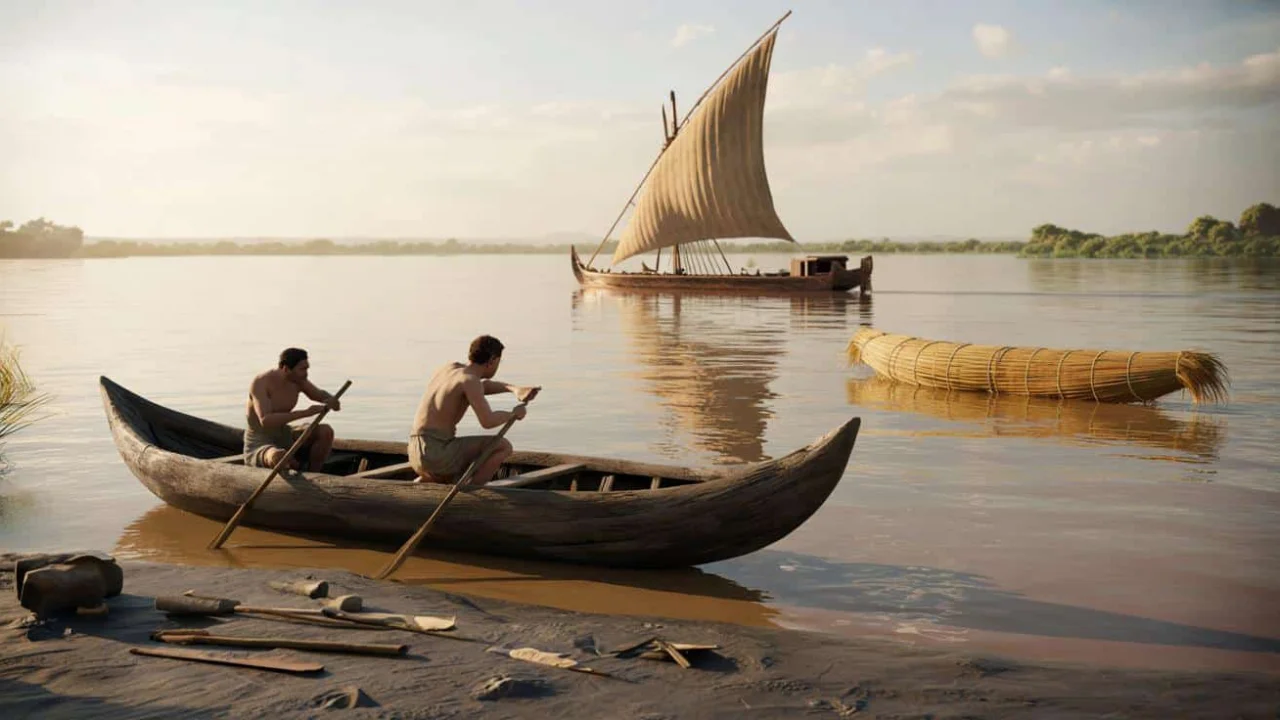
Sarah stood at the edge of Lake Michigan last summer, watching her 8-year-old son push a makeshift raft into the water. He’d lashed together fallen branches with rope, determined to sail his “pirate ship” to the other side. As she watched him paddle frantically with a stick, something clicked. This wasn’t just child’s play—this was humanity’s oldest instinct playing out right before her eyes.

That moment of wonder, that desire to conquer water instead of being stopped by it, connects us to our earliest ancestors. Long before smartphones, cities, or even agriculture, humans looked at rivers and oceans and thought: “I wonder if I can cross that.”
The story of when boats were invented isn’t just about transportation—it’s about the moment our species refused to accept natural boundaries.

Why the First Boats Remain a Mystery
Here’s the frustrating truth about when boats were invented: we’ll probably never know the exact moment. Unlike pottery or stone tools, early boats were made from materials that nature loves to reclaim. Wood rots away, reeds decompose, and animal skins crumble into dust.
But archaeologists have become detectives, piecing together clues from the most unlikely places. The biggest hint? Where early humans managed to go.

“The fact that people reached Australia between 50,000 and 65,000 years ago tells us everything we need to know,” explains Dr. James Mitchell, a maritime archaeologist at the University of Southampton. “They couldn’t have walked there, even during ice ages. Someone built boats that could handle open ocean.”
Think about that for a second. While Europe was still locked in ice, our ancestors were already engineering watercraft sophisticated enough to cross 60 miles of treacherous ocean. They were doing this without metal tools, written instructions, or any of the technology we consider basic today.

The journey to Australia required planning, skill, and boats that could carry entire families. These weren’t accidental voyages on drifting logs—this was intentional maritime travel by people who understood wind, waves, and navigation.
The Oldest Boats We Can Actually Touch
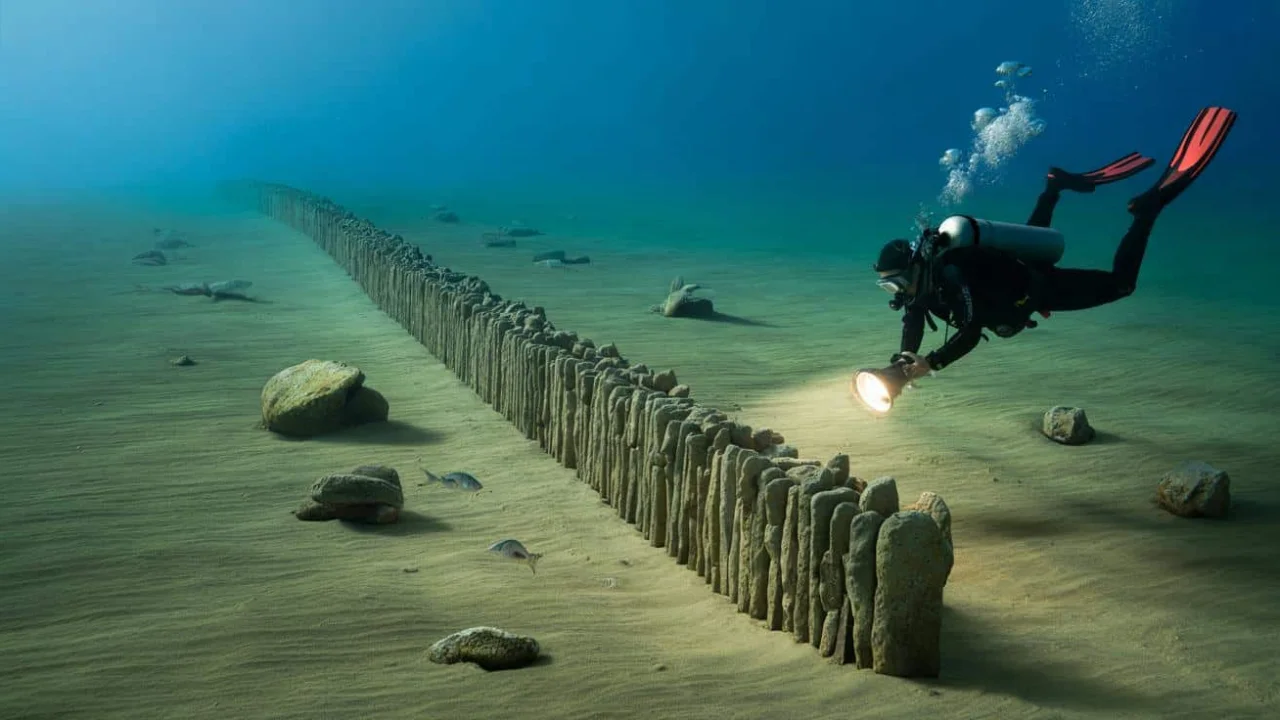
While the very first boats have vanished, some ancient vessels did survive in special conditions. Here are the oldest boats that archaeologists can still examine today:
| Boat Name | Location | Age | Material | Significance |
|---|---|---|---|---|
| Pesse Canoe | Netherlands | 10,000 years | Pine dugout | Oldest surviving boat in Europe |
| Kuahuqiao Canoe | China | 8,000 years | Tree dugout | Shows advanced carving techniques |
| Dufuna Canoe | Nigeria | 8,000 years | African mahogany | Oldest boat found in Africa |
| La Marmotta Boats | Italy | 7,000 years | Oak dugouts | Multiple boats found together |
These ancient vessels tell us that boats were invented independently across the globe. People in China weren’t copying Europeans, and Africans weren’t following Asian designs. The need to cross water was so universal that every culture solved it on their own.
“What amazes me is the consistency,” says marine archaeologist Dr. Elena Rodriguez. “Whether you’re looking at boats from Europe, Asia, or Africa, the basic concept is always the same—hollow out a tree, make it float, add a paddle.”
But dugout canoes weren’t the only solution. In areas without massive trees, people got creative:
- Reed boats: Bundled papyrus or cattails lashed together with rope
- Skin boats: Animal hides stretched over wooden frames
- Bark canoes: Birch bark sewn and sealed with tree sap
- Inflated skin rafts: Animal bladders blown up like balloons
Each design reflected local materials and needs. Arctic peoples perfected kayaks using seal skins. Egyptians mastered papyrus boats for the Nile. Native Americans developed birch bark canoes that were both light and durable.
How Early Boats Changed Everything
Once humans figured out how to build reliable boats, the world became a smaller place almost overnight. Rivers turned from barriers into highways. Coastal waters became bridges between distant lands.
The impact was immediate and dramatic. Trade networks exploded across continents. Ideas, languages, and technologies spread along waterways faster than ever before. Archaeological evidence shows that once boats were invented, human societies became more connected and complex within just a few thousand years.
“Boats didn’t just help people travel—they fundamentally changed how humans thought about geography,” explains Dr. Robert Chen, an expert in prehistoric technology. “Suddenly, that mountain range wasn’t a dead end. You could sail around it.”
Early boats also revolutionized fishing and food security. Instead of waiting for fish to come to shore, people could go out and find them. This reliable protein source supported larger populations and more permanent settlements.
Military applications followed quickly. Control of waterways meant control of trade routes. The first naval battles probably happened within centuries of the first boats being invented. Water went from being nature’s fortress to being the ultimate strategic asset.
Perhaps most importantly, boats gave humans their first taste of true exploration. Every river bend, every distant island, every unexplored coastline became a possibility rather than a fantasy. This mindset of pushing boundaries and exploring the unknown became part of human DNA.
The psychological impact was just as profound as the practical benefits. Humans went from being land-bound creatures to masters of two environments. That shift in thinking—from accepting limitations to engineering solutions—shaped how we approach challenges even today.
“Every time you see someone refuse to accept ‘impossible,’ you’re seeing the boat inventor’s mindset in action,” notes Dr. Sarah Williams, who studies the cultural impact of early technologies. “Boats taught us that barriers exist to be overcome, not accepted.”
FAQs
When exactly were boats invented?
The exact date is unknown, but evidence suggests boats were invented at least 50,000-65,000 years ago, when humans first reached Australia by crossing open ocean.
What was the first type of boat?
The earliest boats were likely simple rafts or dugout canoes made from logs, though reed boats and skin boats were also developed independently in different regions.
Why don’t we have older boat remains?
Early boats were made from organic materials like wood, reeds, and animal skins that decompose over time, leaving no archaeological trace.
Did all cultures invent boats independently?
Yes, archaeological evidence shows that different cultures around the world developed boats independently, using whatever materials were available locally.
What’s the oldest surviving boat we can still see today?
The Pesse canoe from the Netherlands, dating to about 10,000 years ago, is generally considered the oldest surviving boat that can still be examined.
How did early humans build boats without metal tools?
They used stone tools, fire, and clever techniques like controlled burning to hollow out tree trunks, plus natural materials like tree sap and plant fibers for binding and waterproofing.
About the Author