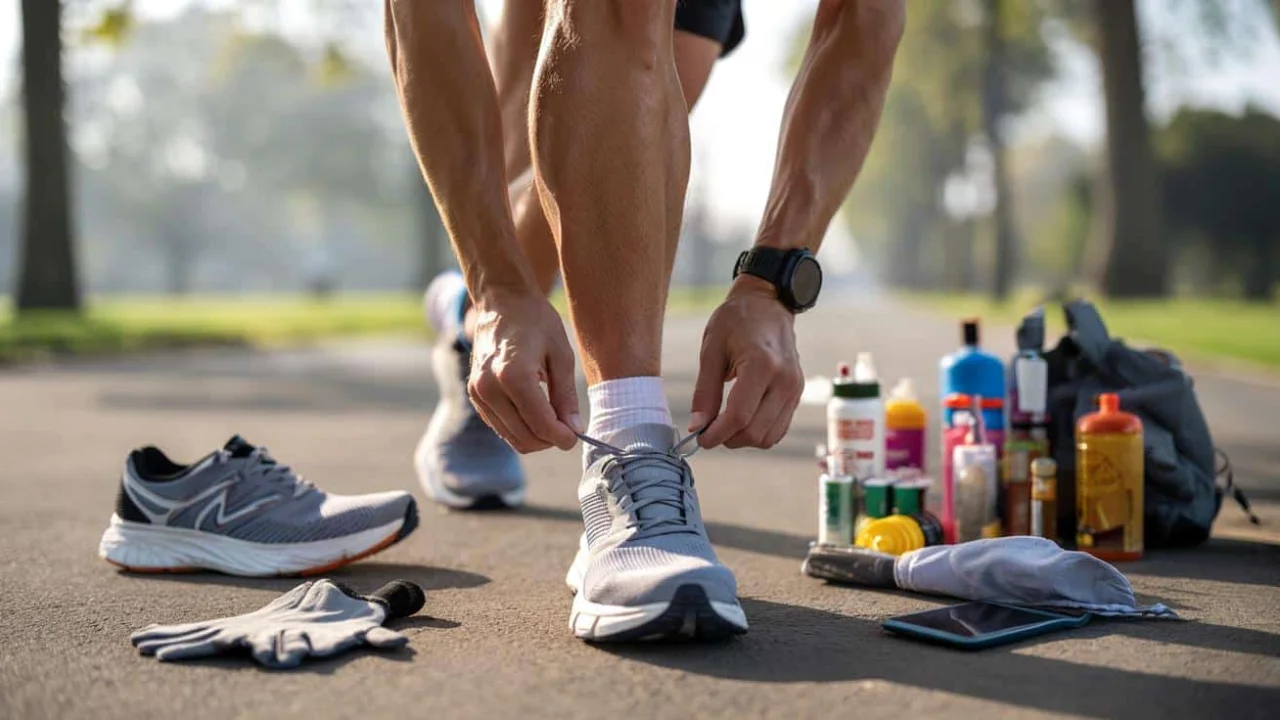
Sarah pulled on her old tennis shoes and headed out for her first run in years. Twenty minutes later, she was limping back home with blisters forming on both heels and her shins screaming in protest. “Maybe I need better gear,” she thought, scrolling through endless running websites that night.

Sound familiar? Sarah’s story plays out thousands of times every day as new runners dive headfirst into a world that seems to demand endless equipment. The fitness industry loves selling us solutions, but the truth is simpler than the marketing suggests.
The real challenge isn’t finding the motivation to start running – it’s cutting through the noise to figure out what beginner running gear actually matters and what’s just expensive distraction.
What Really Matters When You’re Starting Out
Walk into any running store and you’ll face walls of colorful shoes, racks of moisture-wicking shirts, and gadgets promising to transform your performance. It’s overwhelming, and it’s designed to be.
But here’s what experienced runners wish they’d known from day one: you need surprisingly little to run well. The essentials boil down to proper shoes, decent socks, weather-appropriate clothing, and a plan for recovery. Everything else is optional.

“Most beginners spend money on the wrong things first,” says longtime running coach Mike Chen. “They buy expensive watches and compression gear but run in old sneakers. It should be the other way around.”
Your first few months of running are about building the habit and letting your body adapt. The fancy stuff can wait until you know what kind of runner you’re becoming.

Essential Beginner Running Gear vs. Marketing Hype
Let’s break down what deserves your money and what doesn’t when you’re starting your running journey.
| Must-Have Items | Why It Matters | Can Wait | Why It’s Optional |
|---|---|---|---|
| Proper running shoes | Prevents injury, supports your gait | GPS watch | Your phone works fine initially |
| Good running socks | Prevents blisters and hot spots | Compression gear | No proven benefit for beginners |
| Weather-appropriate clothing | Keeps you comfortable and safe | Energy gels/supplements | Unnecessary for runs under 90 minutes |
| Basic recovery plan | Prevents overuse injuries | Specialized insoles | Only needed for specific issues |
The running shoe conversation deserves special attention because it’s where beginners often go wrong. That pair of cross-trainers in your closet might handle occasional walks, but running creates different stresses on your feet and legs.

Every runner moves differently. Some people’s feet roll inward when they land (overpronation), others roll outward (underpronation), and many stay relatively neutral. The right shoe supports your natural movement pattern rather than fighting against it.
“Getting your gait analyzed at a specialty running store is like getting a free insurance policy,” explains biomechanics expert Dr. Lisa Rodriguez. “It takes ten minutes and can prevent months of injury.”
Here’s what to look for in your first pair of running shoes:
- Proper fit with thumb-width space at the toe
- Support that matches your gait pattern
- Comfort from the first wear (no “breaking in” period)
- Appropriate cushioning for your preferred surfaces
Don’t get caught up in the latest technology or flashiest colors. A mid-range shoe that fits your foot and running style will serve you far better than an expensive model designed for someone else’s needs.
Socks matter more than most people realize. Cotton socks hold moisture and create friction – the perfect recipe for blisters. Look for synthetic or merino wool blends that wick sweat away from your skin. The small investment pays off immediately in comfort.
What You Can Skip (At Least For Now)
The running industry wants you to believe that success comes from having the right gear. The reality is that most “must-have” items are solutions to problems you don’t have yet.
GPS watches top the list of premature purchases. Yes, they’re useful for tracking progress and pacing, but your smartphone can handle basic distance and time tracking while you’re building the running habit. Save the watch investment for when you’re consistently running three times per week.
Compression clothing falls into similar territory. The benefits are minimal for recreational runners, and the high cost rarely justifies the marginal gains. Regular athletic wear that fits well and manages moisture will serve you just fine.
Energy supplements and gels are another common beginner mistake. Unless you’re running for more than 90 minutes straight, your body has plenty of stored energy to fuel your workout. Focus on eating well throughout the day rather than buying expensive mid-run fuel.
“New runners often think they need to eat and drink like elite athletes,” notes sports nutritionist Karen Walsh. “The truth is, a banana and some water will handle most of what beginners throw at their bodies.”
Specialty insoles, expensive recovery tools, and premium hydration belts all have their place – but that place isn’t in your first few months of running. Let your experience guide your purchases rather than marketing messages.
The exception to the “wait and see” approach is safety gear. If you’ll be running in low-light conditions, reflective clothing or a small light isn’t optional – it’s essential. The same goes for weather protection if you live somewhere with extreme conditions.
Building a sustainable running habit depends more on consistency than equipment. The goal is to remove barriers, not create them. Start simple, run regularly, and let your growing experience inform your gear decisions.
Remember Sarah from the beginning? Six months later, she’s running three times a week in properly fitted shoes and blister-free socks. She still uses her phone for tracking and wears the same athletic shirts she started with. The difference isn’t her gear – it’s her approach.
FAQs
How much should I spend on my first pair of running shoes?
Expect to spend $80-120 for quality running shoes that will last 300-500 miles. It’s worth the investment for injury prevention.
Do I need special clothes to start running?
Any comfortable athletic wear that doesn’t chafe will work initially. Avoid cotton if possible, especially for longer runs.
Should I buy a GPS watch right away?
No, your smartphone can track distance and time while you’re building the habit. Wait until you’re running consistently before investing in a watch.
What about running in my old sneakers?
Old sneakers lack the support and cushioning designed for running’s repetitive impact. They increase your injury risk significantly.
How do I know if I need special insoles or orthotics?
Start with properly fitted shoes first. Only consider orthotics if you develop specific pain or have a diagnosed foot condition.
Is expensive gear really better for beginners?
Not necessarily. Mid-range gear that fits properly often performs better than premium items designed for advanced athletes’ specific needs.
About the Author