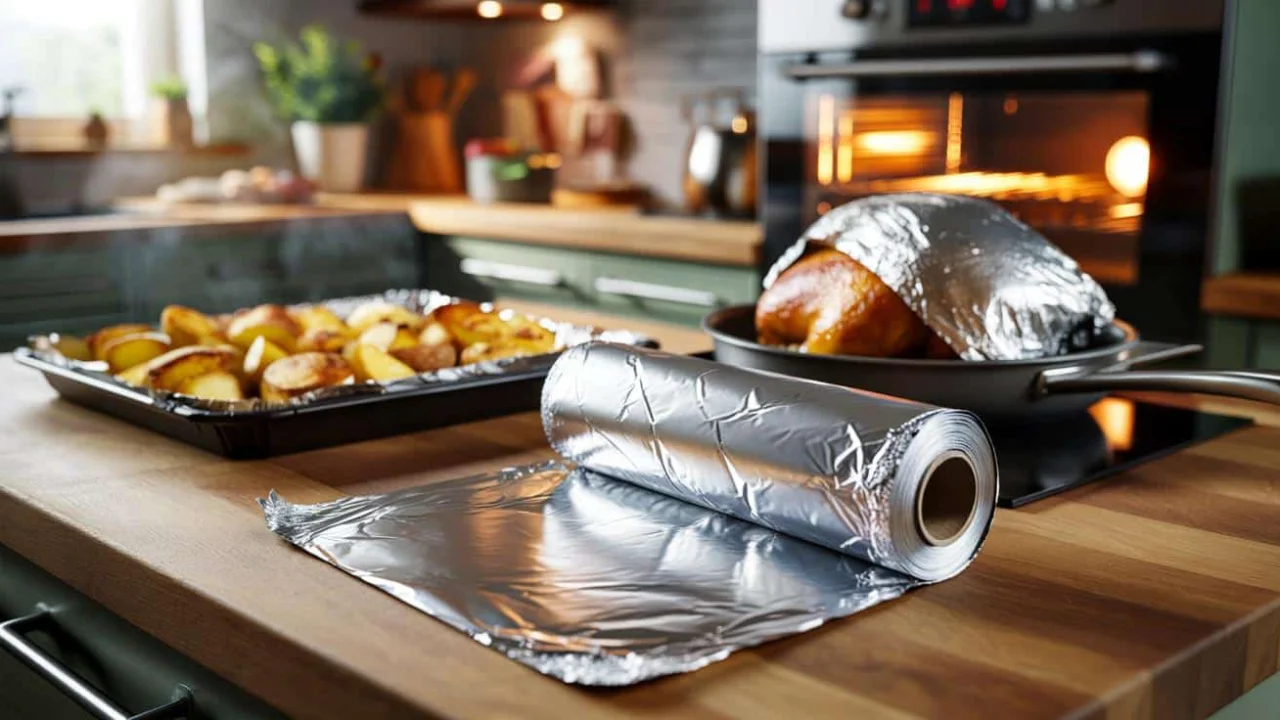
Last Tuesday, I watched my neighbor Sarah stand frozen in her kitchen, holding a sheet of aluminum foil like it was a piece of ancient scripture. She’d been about to wrap her leftover lasagna when her teenage daughter walked by and gasped, “Mom, you’re doing it wrong! The shiny side has to go in!”

Sarah paused, flipped the foil over, then back again. “But your grandmother always said shiny side out,” she muttered. For thirty seconds, this perfectly capable woman who runs a small business and raises three kids was completely stumped by a piece of metal that costs pennies.
We’ve all been there. That tiny moment of kitchen uncertainty where you wonder if you’ve been using aluminum foil wrong your entire life. Turns out, that doubt isn’t misplaced.

The manufacturing secret behind aluminum foil sides
The truth about aluminum foil sides starts in the factory, not your kitchen. When manufacturers create that impossibly thin sheet we tear off the roll, they don’t make it one layer at a time. Instead, they roll two sheets of aluminum together through massive industrial rollers.
The side that touches those polished steel rollers comes out mirror-bright and reflective. The other side, pressed against its aluminum twin, emerges with a duller, slightly textured finish. Those microscopic scratches and imperfections aren’t defects – they’re the natural result of aluminum pressing against aluminum under tremendous pressure.

“Most people assume the difference is intentional, like we’re trying to give them options,” says food scientist Dr. Maria Rodriguez. “Really, it’s just physics. Two different surfaces create two different textures.”
This simple manufacturing process has spawned decades of kitchen folklore. Your aunt insists the shiny side reflects heat better. Your coworker swears the dull side prevents sticking. Your mother-in-law has a theory about which side keeps food fresher. They’re not all wrong, but the reality is more subtle than most people realize.

What science actually tells us about foil performance
When food scientists measured the thermal properties of both aluminum foil sides, they discovered something surprising. The performance difference exists, but it’s much smaller than kitchen legends suggest.
The shiny side reflects about 88% of radiant heat, while the dull side reflects around 80%. That 8% difference sounds significant until you realize what it means in your actual oven. We’re talking about temperature variations of just a few degrees in most cooking situations.

“For everyday cooking, the side you choose makes almost no difference,” explains chef and food technology expert James Chen. “Where it starts to matter is in extreme heat situations or when you’re trying to achieve very specific results.”
Here’s where the science gets practical:
| Cooking Situation | Best Side Choice | Why It Matters |
|---|---|---|
| Grilling directly over coals | Shiny side facing heat source | Reflects intense radiant heat away from food |
| Wrapping for slow-roasting | Dull side touching food | Slightly better heat absorption for even cooking |
| Storing leftovers | Either side | No meaningful difference in preservation |
| Lining baking sheets | Shiny side up | Easier food release, less sticking |
| Covering delicate dishes | Dull side facing food | Gentler heat transfer, less risk of overcooking |
The texture difference between aluminum foil sides also affects how food interacts with the surface. The microscopically rough dull side can grip food slightly, which sometimes helps with browning but can also cause sticking. The smooth shiny side generally releases food more easily.
How this knowledge changes your everyday cooking
Understanding aluminum foil sides isn’t about following rigid rules – it’s about making intentional choices based on what you’re trying to achieve. Most of the time, your random selection works fine. But when precision matters, the difference becomes useful.
Take grilling, for example. When you’re cooking delicate fish or vegetables directly over high heat, placing the shiny side toward the flames can prevent that aggressive searing that turns dinner into charcoal. The reflected heat creates a gentler cooking environment.
For baking, many home cooks have discovered that lining cookie sheets with the shiny side up makes cleanup easier and reduces the chance of cookies sticking. The smoother surface simply releases better than the textured dull side.
“I started paying attention to foil sides when I was catering events,” says professional cook Lisa Martinez. “When you’re making 200 servings of something, even small improvements in heat control or sticking prevention make a huge difference.”
Storage applications show the least dramatic difference between aluminum foil sides. Whether you wrap your leftover pizza shiny-in or dull-in, it’s going to taste pretty much the same tomorrow. The barrier properties are nearly identical.
But there are subtle benefits worth knowing:
- Shiny side against acidic foods (like tomato-based dishes) may provide slightly better protection against metallic taste transfer
- Dull side touching fatty foods can help prevent the surface from becoming overly greasy
- For freezer storage, either side works equally well for preventing freezer burn
- When covering dishes in the microwave, the dull side facing food tends to heat more evenly
The key insight isn’t that one side is always better. It’s that understanding the subtle differences lets you match your foil choice to your cooking goal. Most dishes won’t suffer if you choose randomly, but some will benefit from a deliberate decision.
“Think of it like choosing between a regular spoon and a slotted spoon,” suggests culinary instructor Robert Kim. “Both work for most things, but knowing when to use which one makes you a more precise cook.”
Breaking free from foil anxiety
The biggest revelation about aluminum foil sides might be permission to stop worrying about them so much. Years of conflicting advice have created unnecessary kitchen stress around a relatively minor detail.
For 90% of home cooking applications, your instinctive choice will work perfectly fine. Wrapping leftovers, covering casseroles, lining pans – the performance difference is so small that other factors matter more. How tightly you wrap, whether you crimp the edges, and the quality of the foil itself all have bigger impacts than which side faces which direction.
The exceptions are worth remembering for when they matter: intense heat situations where reflection helps, delicate dishes where gentle cooking prevents overcooking, and food release situations where the smoother surface performs better.
But even professional chefs sometimes choose randomly. The aluminum foil police aren’t going to arrest you for wrapping your sandwich with the “wrong” side touching the turkey.
FAQs
Does it matter which side of aluminum foil touches food when storing leftovers?
For most foods, there’s no meaningful difference in preservation or taste when storing leftovers. Choose whichever side feels right.
Will using the wrong side of foil ruin my cooking?
No, the performance difference is subtle enough that your dish will still turn out fine. The “wrong” choice rarely causes disasters.
Which side should face up when lining a baking sheet?
The shiny side generally works better facing up because it releases food more easily and cleans up better after baking.
Is there a safety difference between the shiny and dull sides?
Both sides are equally food-safe. The manufacturing process doesn’t create any safety concerns with either surface.
Do expensive foils have more dramatic differences between sides?
Higher-quality foils may have slightly more pronounced differences, but the basic principle remains the same: the difference is helpful but not dramatic.
Should I worry about which side touches acidic foods like tomatoes?
The shiny side may provide slightly better protection against metallic taste transfer with very acidic foods, but the difference is minimal for normal cooking times.
About the Author