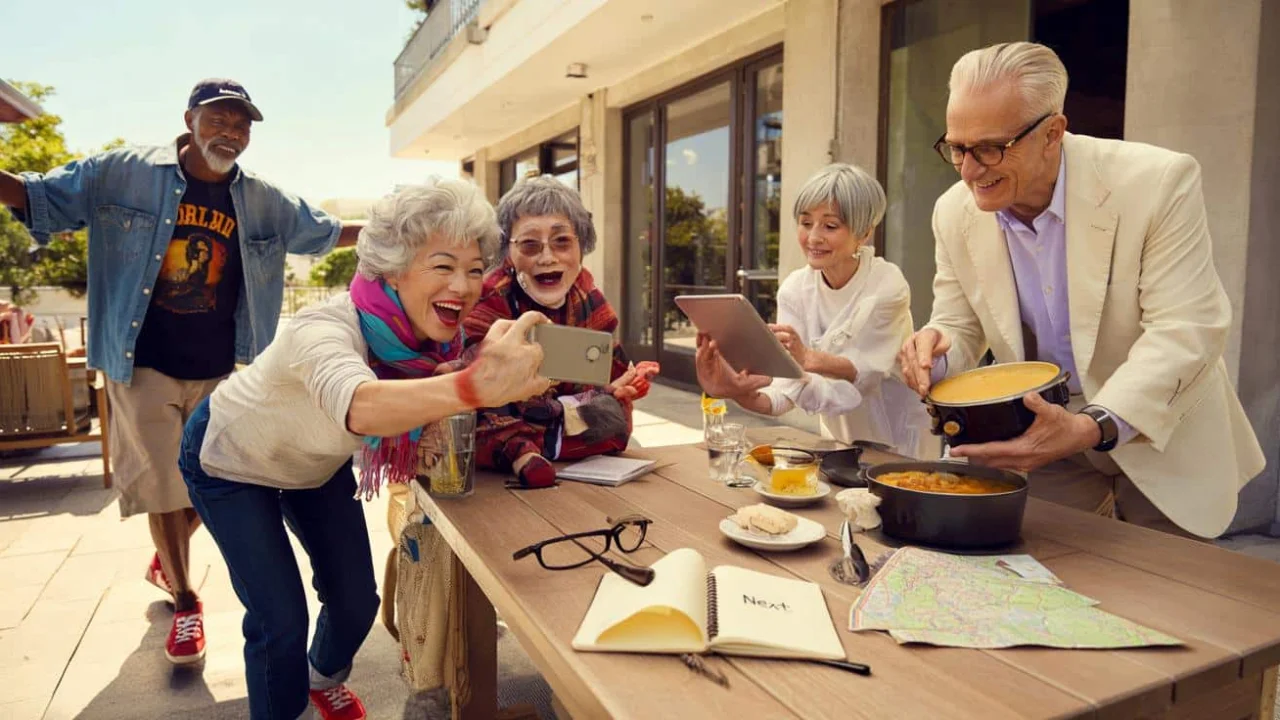
At a crowded Sunday brunch, I watched a silver-haired woman in red sneakers teach her grandson how to take a selfie. She was laughing so hard her glasses fogged up, and the kid kept saying, “Grandma, you’re cooler than my friends.” A few tables away, another woman, probably the same age, sat staring at her phone, scrolling, not really seeing anything.

Same decade of life. Completely different energy.
We’ve all been there, that moment when you spot someone older and think, half in awe and half in envy, “I hope I’m like that when I’m their age.” That reaction isn’t magic. It’s built, quietly, by healthy aging habits that some people nurture while others let slip away.
The Nine Habits That Make People Age Like Fine Wine
The difference between vibrant 70-year-olds and those who seem defeated by age isn’t luck or genetics. It’s a collection of simple choices made daily, year after year. These healthy aging habits create that magnetic quality that makes younger people pause and think, “That’s who I want to be.”
Dr. Sarah Martinez, a geriatrician who’s worked with thousands of older adults, puts it simply: “The patients who thrive aren’t necessarily the healthiest on paper. They’re the ones who never stopped engaging with life.”

Here are the nine things that separate the inspiring from the invisible:
- Staying genuinely curious about the world – Learning new skills, asking questions, exploring unfamiliar topics
- Maintaining meaningful friendships – Actively nurturing relationships and making new connections
- Moving their bodies daily – Not necessarily gym workouts, but consistent physical activity
- Embracing technology – Using devices to stay connected rather than avoiding them
- Sharing their wisdom – Teaching, mentoring, or simply telling their stories
- Taking calculated risks – Trying new experiences despite potential discomfort
- Laughing regularly – Finding humor in daily situations and not taking themselves too seriously
- Staying involved in their communities – Contributing to causes or groups they care about
- Adapting to change – Rolling with life’s punches instead of resisting every shift
What These Habits Look Like in Real Life
Take Margaret, 74, who decided to start a YouTube channel about vintage cooking. She had no idea how to edit videos or understand algorithms. Her first attempts were shaky and poorly lit. But she kept going.
“My great-niece taught me about thumbnails and hashtags,” Margaret says. “Now I have subscribers from six countries asking for my apple pie recipe.”

Physical movement doesn’t mean running marathons. It might look like dancing in the kitchen while making coffee, taking the stairs when possible, or walking to the mailbox the long way. The key is consistency over intensity.
“I see 70-year-olds who move better than 50-year-olds,” notes physical therapist James Chen. “The difference isn’t their starting point. It’s that they never completely stopped.”
| Habit Category | Daily Example | Weekly Example | Impact |
|---|---|---|---|
| Mental Stimulation | Read news from different sources | Learn one new thing | Sharper thinking, better conversations |
| Social Connection | Text or call someone | Meet friends or make plans | Reduced isolation, emotional support |
| Physical Activity | Walk 10 minutes | Try a new physical activity | Better mobility, increased energy |
| Emotional Growth | Practice gratitude | Reflect on personal growth | Resilience, positive outlook |
Technology often intimidates older adults, but those who embrace it gain access to endless learning opportunities and ways to stay connected. They’re not trying to become tech wizards. They’re simply refusing to let unfamiliarity become a barrier.
Consider Frank, 71, who joined Instagram to follow his daughter’s travels. He now posts pictures of his garden and has connected with other gardeners worldwide. “I never thought I’d have friends in Australia,” he laughs. “But here we are, comparing tomato varieties.”
Why These Habits Transform How Others See You
When someone maintains healthy aging habits, it shows in ways that go far beyond physical appearance. Their eyes light up when they talk. They ask genuine questions about your life. They share stories that make you laugh or think differently.
The woman in red sneakers at brunch wasn’t trying to impress anyone. She was simply living fully, and that authenticity drew people to her. Her grandson didn’t think she was cool because she knew how to take selfies. He was responding to her enthusiasm, her willingness to be silly, her genuine interest in his world.
Psychologist Dr. Linda Rodriguez explains: “When older adults stay engaged and curious, they project vitality. People are drawn to that energy because it represents hope for their own future.”
These habits also create a positive feedback loop. The more you engage with life, the more life engages back. Opportunities appear. Conversations happen. Connections form. Energy builds on energy.
The contrast with those who withdraw is stark. Isolation breeds more isolation. Disengagement leads to irrelevance. Fear of change creates stagnation. The gap between the vibrant and the resigned grows wider each year.
“I tell my patients that aging is inevitable, but how you age has a lot of room for choice,” says geriatrician Dr. Martinez. “The ones who make good choices don’t just live longer. They live better.”
Some people worry that starting these healthy aging habits later in life won’t make a difference. That’s simply not true. The brain remains plastic throughout life. Social skills can be rebuilt. Physical fitness can improve at any age. Curiosity can be rekindled.
The key is starting somewhere, anywhere, and building momentum. Maybe it’s signing up for one class, downloading one app, or calling one old friend. Small actions compound over time into the kind of person others admire and want to emulate.
What makes someone truly inspiring at 70 isn’t perfection or exceptional achievements. It’s the simple act of remaining fully alive, fully engaged, and fully themselves. That’s a choice available to everyone, at any age, starting right now.
FAQs
Is it too late to develop healthy aging habits if I’m already in my 60s or 70s?
Absolutely not. Research shows that positive changes in habits can have immediate benefits at any age, and the brain remains adaptable throughout life.
Do I need to be physically active to age well if I have mobility limitations?
Physical activity looks different for everyone. Even chair exercises, gentle stretching, or simple movements can make a significant difference in how you feel and function.
How can I stay curious when I feel like I’ve lost interest in learning new things?
Start small with topics that connect to things you already enjoy. If you like cooking, explore cuisines from different cultures. Curiosity often returns gradually once you begin.
What if my friends and family aren’t supportive of me trying new things at my age?
While support is helpful, your personal growth doesn’t require anyone else’s permission. Many people find new communities and friendships through their new interests and activities.
How do I overcome fear of technology when it seems so complicated?
Focus on learning just one feature at a time, and don’t hesitate to ask for help. Most younger people are happy to teach basic tech skills to older adults who show genuine interest.
Can healthy aging habits really make that much difference in how others perceive me?
Yes, because these habits change how you carry yourself, interact with others, and engage with the world. That energy and vitality is immediately noticeable to others.
About the Author