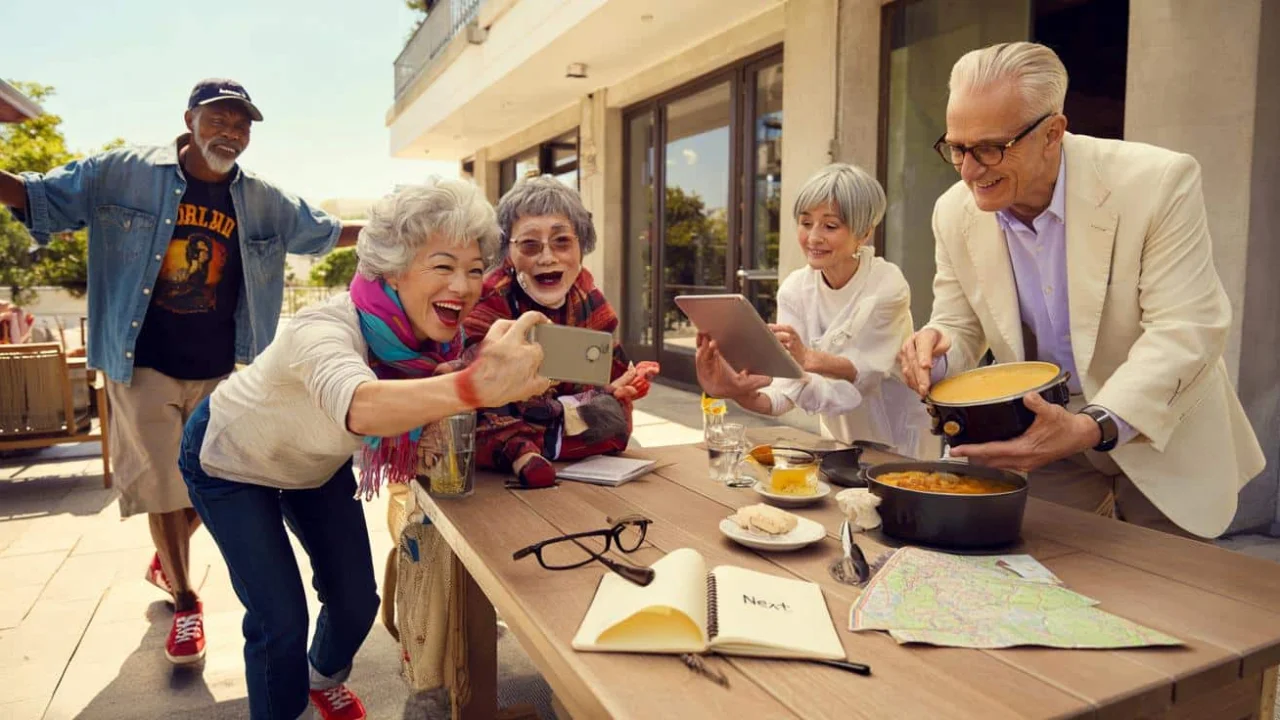
At a crowded Sunday brunch, I watched a silver-haired woman in red sneakers teach her grandson how to take a selfie. She was laughing so hard her glasses fogged up, and the kid kept saying, “Grandma, you’re cooler than my friends.” A few tables away, another woman, probably the same age, sat staring at her phone, scrolling, not really seeing anything.

Same decade of life. Completely different energy.
We’ve all been there, that moment when you spot someone older and think, half in awe and half in envy, “I hope I’m like that when I’m their age.” That reaction isn’t magic. It’s built quietly by habits that define healthy aging at 70.

The Nine Habits That Make 70 Look Extraordinary
The difference between someone who inspires admiration at 70 and someone who just exists isn’t luck or genetics. It’s about the choices they make every single day. These are the nine things that separate the vibrant from the merely surviving.
“The people who age gracefully aren’t necessarily the healthiest on paper,” says Dr. Maria Santos, a geriatrician who’s worked with seniors for over two decades. “They’re the ones who refuse to stop engaging with the world around them.”

Here’s what that engagement looks like in practice:
- Staying curious instead of retreating into “I’ve seen it all” – Learning new skills, asking questions, trying unfamiliar experiences
- Maintaining physical movement – Not necessarily gym workouts, but regular activity that keeps the body functional
- Nurturing genuine friendships – Quality connections that involve real conversation and mutual support
- Having something to look forward to – Plans, projects, or goals that create anticipation
- Staying flexible with change – Adapting to new technology, social shifts, and life circumstances
- Contributing to something bigger – Volunteering, mentoring, or sharing knowledge with others
- Keeping their sense of humor intact – Finding joy and laughter even in difficult situations
- Practicing self-care without guilt – Taking time for personal needs and interests
- Remaining open to new relationships – Building connections across age groups and backgrounds

What Healthy Aging at 70 Really Looks Like
Take Denis, 72, who started learning Korean when most of his friends stopped driving at night. He downloaded an app, joined a beginner class full of twenty-somethings, and practiced by watching K-dramas with subtitles. His accent is terrible, his vocabulary small. But he keeps trying.
When his granddaughter visited, she couldn’t believe he knew phrases from her favorite show. She filmed him saying them and posted the clip online. The comments were full of variations of the same line: “I hope I’m still learning new stuff at his age.”

Denis isn’t extraordinary. He’s just refusing to live on mental leftovers.
| Activity Type | Weekly Time Investment | Impact on Aging Quality |
|---|---|---|
| Physical movement | 3-4 hours | Maintains mobility and energy |
| Social connections | 5-6 hours | Prevents isolation and depression |
| Learning activities | 2-3 hours | Keeps mind sharp and engaged |
| Contributing to others | 2-4 hours | Provides purpose and fulfillment |
The woman in red sneakers from the brunch? She’s probably doing most of these things without thinking about it. She’s engaged with her grandson, learning new technology, laughing at herself, and staying present in the moment.
“Physical health is important, but what really makes someone magnetic at 70 is their mental and emotional vitality,” explains gerontologist Dr. James Wright. “They’re the people who haven’t given up on themselves or the world.”
Why These Habits Transform How Others See You
The impact of maintaining these behaviors at 70 extends far beyond personal satisfaction. It changes how family members, friends, and even strangers relate to you. Instead of seeing limitations, they see possibilities. Instead of worrying about your decline, they’re inspired by your growth.
Consider Margaret, who at 74 decided to start a neighborhood walking group. What began as her personal attempt to stay active became a community of twelve people ranging from 35 to 82. They meet every Tuesday and Thursday, rain or shine.
“She’s the reason I started walking regularly,” says Sarah, 45, one of the group members. “Watching her tackle hills I struggle with at half her age made me realize I had no excuses.”
This ripple effect happens because healthy aging at 70 challenges everyone’s assumptions about what’s possible at that stage of life. When someone sees a 70-year-old learning Spanish, volunteering at an animal shelter, or planning a solo trip to visit college friends, it expands their vision of their own future.
The key is consistency rather than intensity. These aren’t people running marathons or climbing mountains (though some might be). They’re people who show up for their own lives every day in small, meaningful ways.
“The biggest mistake people make is thinking they need to do something dramatic to age well,” notes Dr. Santos. “It’s really about not letting yourself shrink. Keep your world as big as you can handle, even if that world looks different than it did at 30.”
The habits that make healthy aging at 70 admirable aren’t about defying age – they’re about embracing it while refusing to let it define your limits. They’re about staying curious, connected, and contributing long after society expects you to slow down.
When someone whispers “I hope I’m like that when I’m older,” they’re not just admiring energy or health. They’re recognizing someone who’s managed to keep their spark alive, who’s chosen engagement over withdrawal, and who’s aging on their own terms.
FAQs
Is it too late to start these habits if I’m already over 70?
Never. The brain remains capable of forming new habits and connections throughout life, and starting even small changes can make a significant difference in how you feel and how others perceive you.
Do I need to be in perfect health to practice healthy aging at 70?
No. These habits can be adapted to any health condition or physical limitation. The key is working within your capabilities while refusing to stop engaging with life.
How long does it take to see results from changing aging habits?
Most people notice increased energy and better mood within 2-3 weeks of making consistent changes. Others around you may notice positive changes even sooner.
What if I don’t have family or many friends to stay connected with?
Community centers, religious organizations, volunteer groups, and hobby clubs are excellent ways to build new connections. Many successful connections at 70+ start with shared interests rather than existing relationships.
Are expensive activities required for healthy aging?
Not at all. Walking, library programs, community volunteering, and learning through free online resources can be just as effective as costly alternatives.
How do I balance staying active with accepting age-related limitations?
Focus on what you can do rather than what you can’t. Adaptation isn’t giving up – it’s finding new ways to stay engaged and purposeful within your current abilities.
About the Author