Maria Rodriguez clutches her daughter’s hand tighter as they walk past the subway station entrance. The 34-year-old restaurant worker from Queens has been a New York resident for eight years, but recent news of federal immigration raids has her constantly looking over her shoulder. She’s not alone – thousands of immigrant families across the city are grappling with heightened fears as federal enforcement activities intensify throughout the region.

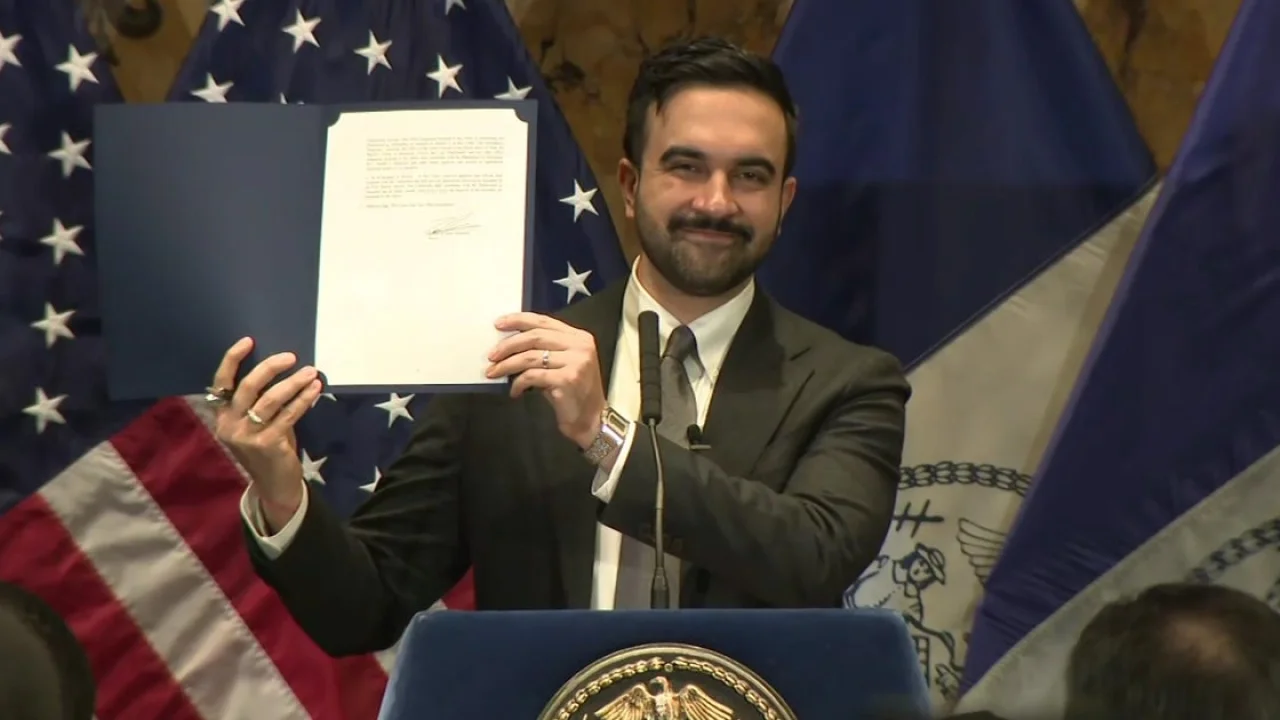
Mayor Zohran Mamdani’s response came swift and decisive. On Friday, he signed Executive Order No. 13 at the New York Public Library in Bryant Park, declaring it “a sweeping reaffirmation of commitment to our immigrant neighbors.” The order strengthens sanctuary city protections and establishes new barriers against what Mamdani calls “abusive immigration enforcement” by federal authorities.
“ICE is more than a rogue agency — it is a manifestation of the abuse of power,” Mamdani told faith leaders from across the five boroughs during Friday’s Interfaith Breakfast.
Also Read Shade-Loving Plants That Still Bloom and Help Keep Mosquitoes Away
The executive order arrives as tensions escalate between local and federal authorities over immigration enforcement tactics. Across the river in Jersey City, Mayor Steven Fulop recently demanded ICE agents “get out and never come back,” highlighting the growing rift between sanctuary jurisdictions and federal immigration policy.

Executive Order Provisions and Timeline
| Provision | Action Required | Timeline |
|---|---|---|
| Privacy Officer Appointment | Each city agency must designate officer | 14 days |
| Policy Audits | Review internal immigration policies | Immediate |
| Information Sharing Ban | Stop sharing data with federal authorities | Effective immediately |
| Employee Training | Educate staff on federal agent interactions | Ongoing |
| Warrant Requirement | Federal agents need warrants for city property | Effective immediately |
Scenarios Where New Protections Apply
The executive order creates specific safeguards for various community interactions:
- If you need city services like childcare assistance, then agencies cannot share your information with federal immigration authorities
- If federal agents want to enter schools or hospitals, then they must present a valid warrant
- If you’re detained by NYPD, then officers cannot automatically notify ICE about your immigration status
- If you work in city shelters or public spaces, then your workplace gains additional federal access restrictions
- If you interact with social services, then your data remains protected under enhanced privacy protocols

Comprehensive Agency Compliance Measures
The order mandates sweeping changes across multiple city departments. The NYPD, Department of Correction, Department of Probation, Administration for Children’s Services, and Department of Social Services must immediately audit their internal policies regarding federal immigration authorities.
Each agency has fourteen days to appoint a dedicated privacy officer responsible for ensuring compliance with the new restrictions. These officers will oversee information-sharing protocols and train employees on proper procedures when federal agents request access or data.

City properties including parking garages, lots, schools, shelters, hospitals, and public spaces now require federal agents to present warrants before entry. This provision significantly expands sanctuary protections beyond traditional law enforcement interactions.
“No New Yorker should be afraid to apply for city services like child care because they are an immigrant,” Mamdani emphasized during the order’s signing.
Know Your Rights Campaign Launch
Alongside the executive order, Mamdani launched an ambitious “Know Your Rights” campaign. The initiative will distribute over 30,000 multilingual flyers detailing individual rights during ICE interactions.
The flyers outline three fundamental rights: remaining silent during questioning, requesting legal representation, and requesting an interpreter for non-English speakers. Faith leaders received special instructions to share these materials with all congregants, regardless of citizenship status.
The campaign acknowledges that immigration enforcement actions often affect entire communities, not just undocumented individuals. Citizens and legal residents frequently become caught up in enforcement sweeps, making widespread rights education crucial for community protection.
Federal Response and Statistical Context
| Metric | Current Status | Federal Position |
|---|---|---|
| Active ICE Detainers | 7,113 individuals | Requests immediate transfer |
| Criminal Status | All have criminal charges/convictions | Public safety priority |
| Current Custody | New York City facilities | Local jurisdiction control |
| Federal Cooperation | Limited under sanctuary policies | Demands full compliance |
The Department of Homeland Security issued a sharp rebuke of Mamdani’s executive order, claiming the policy would compromise public safety. DHS representatives argue that limiting local-federal cooperation forces increased visible enforcement presence in communities.
According to federal data, New York City currently holds 7,113 individuals with active ICE detainers. DHS characterizes all these individuals as “criminal illegal aliens” and demands their immediate transfer to federal custody for deportation proceedings.
Community Impact and Implementation Challenges
The executive order’s practical implications extend far beyond government offices. Immigrant-serving organizations report increased demand for legal services and community education following recent federal enforcement activities.
Healthcare providers express particular concern about access to medical care. Many immigrant patients avoid seeking treatment due to deportation fears, potentially creating public health risks that affect entire neighborhoods.
Educational institutions face complex compliance requirements under the new order. School administrators must now verify warrant requirements while maintaining learning environments free from enforcement fears that could impact student attendance and academic performance.
Social service agencies anticipate implementation challenges as they restructure information-sharing protocols. Staff training becomes critical for ensuring consistent policy application across diverse city departments with varying federal interaction histories.
The fourteen-day compliance timeline creates additional pressure for agencies already managing complex caseloads. Privacy officers must quickly establish oversight systems while maintaining essential service delivery to vulnerable populations.
Frequently Asked Questions
What happens if federal agents demand access without warrants?
City employees must refuse entry and direct agents to proper legal procedures.
Can ICE still arrest people on city streets?
Yes, the order only restricts access to city property and information sharing.
Do these protections apply to legal immigrants and citizens?
Yes, all New Yorkers benefit from enhanced privacy and access protections.
What penalties exist for agencies that violate the order?
The order doesn’t specify penalties but requires compliance audits and corrections.
How does this affect cooperation in serious criminal cases?
Agencies can still share information when required by federal law or court orders.
“When politicians bar local law enforcement from working with DHS, our law enforcement officers have to have a more visible presence so that we can find and apprehend the criminals,” a DHS spokesperson said in response to the executive order.
Looking Ahead: Sanctuary City Commitment
Mamdani’s executive order represents the thirteenth such directive since taking office, demonstrating consistent commitment to progressive policies despite federal pressure. The order joins similar measures across sanctuary jurisdictions nationwide as local leaders push back against expanded immigration enforcement operations.
Legal challenges appear inevitable as federal and local authorities maintain competing interpretations of enforcement priorities and constitutional authority. The outcome will likely influence sanctuary policies in cities across the nation facing similar federal-local tensions.
Community organizations prepare for increased demand for services as immigrant families navigate heightened enforcement pressures. The success of Mamdani’s protections may depend largely on effective implementation and community education efforts in the coming months.
Three key takeaways emerge from this development:
- New York City strengthens sanctuary protections through comprehensive agency compliance requirements and warrant restrictions for federal access
- The “Know Your Rights” campaign distributes 30,000 multilingual flyers educating all residents about their legal protections during immigration encounters
- Federal authorities demand cooperation for 7,113 detained individuals while threatening increased visible enforcement in response to local resistance
About the Author