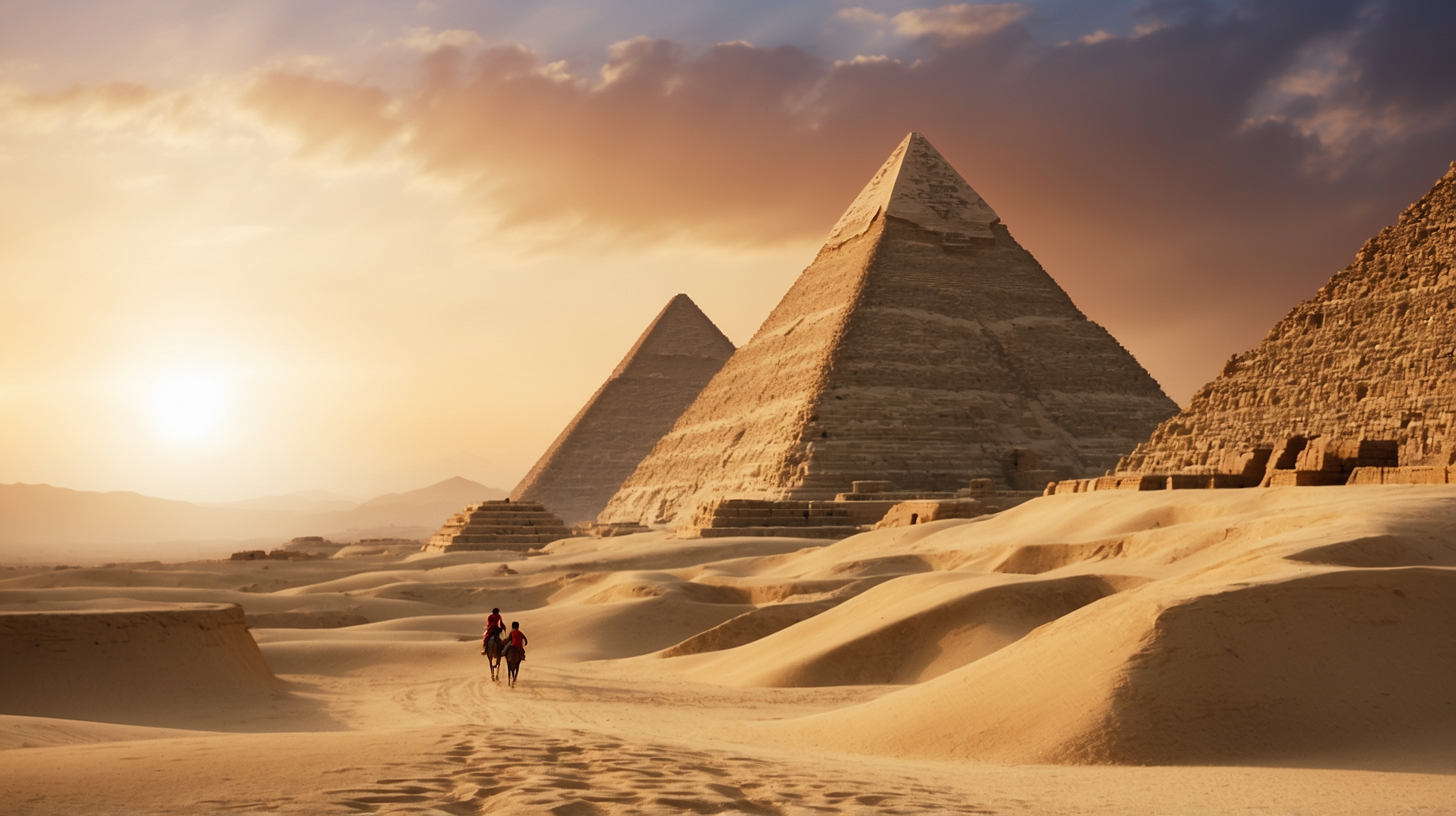

The Great Pyramid of Giza, one of the most iconic man-made structures in the world, continues to capture the imagination of historians, archaeologists, and tourists alike. As the last surviving wonder of the ancient world, it represents the pinnacle of ancient Egyptian engineering and ambition. For centuries, scholars have tried to determine not just how it was built, but precisely when. Recent discoveries and scientific advancements are now reshaping the timeline historians use to interpret the construction of this colossal monument.

The towering structure, once believed to have been completed around 2560 BCE, may have a more nuanced history than previously thought. With new carbon dating evidence, sediment analysis, and archaeological reinterpretation of surrounding structures, a revised picture is emerging. Understanding the pyramid’s construction date is more than an academic exercise—it provides insight into the powerful reign of Pharaoh Khufu (also known as Cheops), the political and religious climate in ancient Egypt, and the sheer capabilities of early civilization.
Overview – The Great Pyramid’s Historical Context
| Structure Name | The Great Pyramid of Giza |
| Estimated Original Height | 146.6 meters (481 feet) |
| Current Height | 138.5 meters (454 feet) |
| Construction Period | Traditionally c. 2580 – 2560 BCE |
| Pharaoh Associated | Khufu (Cheops) |
| Total Weight | Approx. 6 million tons |
| Estimated Number of Blocks | 2.3 million limestone blocks |
What historians believed about the pyramid’s construction date
For many years, Egyptologists relied primarily on historical records from ancient scribes and Greek historians, such as Herodotus, to estimate the construction of the Great Pyramid. Most dated the monument to the reign of Pharaoh Khufu during Egypt’s Fourth Dynasty, putting the time of construction roughly between 2580 and 2560 BCE. These dates were supported by referencing the work of royal chronicles and a few inscriptions found near the pyramid that attribute its construction to Khufu.

However, the lack of extensive inscriptions directly on the pyramid itself has always left room for debate. The absence of detailed architectural plans, combined with erosion and looting over millennia, has challenged experts seeking to pinpoint its construction timeline more precisely. But new technologies promise to close the gaps in knowledge left by incomplete historical records.
New evidence reshaping the timeline
In recent years, scientific dating methods such as **radiocarbon dating**, **optically stimulated luminescence**, and **sediment layer analysis** have yielded fresh insights. A significant breakthrough came when researchers analyzed organic material—such as wood, plant fibers, and mortar—extracted from within and around the pyramid complex. These materials, embedded within the structure, offered clues about the time of construction and maintenance phases.

Carbon dating indicated some anomalies compared to the previously accepted range. Some materials tested turned out to be **decades to even a century older** than Khufu’s reign. This has led some scholars to propose that earlier foundational efforts or pre-construction staging may have begun well before Khufu’s rule, possibly even initiated by his father, Sneferu. Others argue that the material could have come from older sources reused in construction.
“The materials surrounding the pyramid complex suggest a more complex timeline than we originally thought. While Khufu remains central to the pyramid’s construction, evidence now points to a longer preparatory phase that may have predated his reign.”
— Dr. Leila Mostafa, Egyptologist and Radiocarbon Dating SpecialistAlso Read Social Security’s 2026 cost-of-living increase may look different than expected
Revisiting the reign of Khufu
The central figure in the history of the Great Pyramid remains Pharaoh Khufu, whose reign is estimated to have lasted from 2589 to 2566 BCE. Ancient documents portray him as a ruler with immense resources and vision, albeit surrounded by mystery. Khufu’s status as the pyramid’s mastermind is largely supported by quarry marks found at Giza—particularly on blocks within hidden chambers discovered inside the pyramid in the 19th century.
Despite this, his image in Egyptian society remains enigmatic. No full statue survives, only a small ivory figure found in Abydos. Khufu’s prolonged absence from the detailed records adds complexity to the narrative. But the scale and ambition of the pyramid nearly guarantee that only a king of his stature and accumulated wealth could have spearheaded such a grand construction endeavor.
How the labor force timeline aligns with new findings
Labor patterns at the pyramid site have also come under new scrutiny. Excavations reveal that an estimated 20,000 to 30,000 workers—not slaves, as once theorized, but well-fed and somewhat professional laborers—likely built the structure over a span of 20 to 30 years. New cemetery findings nearby suggest that the pyramid’s workforce was divided into rotating teams, possibly organized in guild-like structures.
Interestingly, some of the burial sites date slightly earlier than Khufu’s assumed reign. This lends more weight to the theory that preparatory work, including site leveling, transportation system setup, and quarrying, might have begun during or even before Sneferu’s time. These findings compel historians to look at pyramid construction not as a single-decade project, but as a **multi-generational endeavor**.
“The paralleled burial markers from before Khufu’s official rule hint at early mobilization and planning. We could be looking at a 40-year-long logistical operation where Khufu merely completed the final construct.”
— Prof. Ahmed Rashid, Director of Giza Plateau Archaeology Mission
The ongoing mystery of advanced engineering
While dating the pyramid is critical, equal intrigue lies in how such a structure was built with primitive tools. New scanning technologies, including thermal imaging and cosmic-ray muon radiography, have unearthed hidden chambers and variations in block placement. These discoveries may soon provide a more precise chronology based on design evolution.
Additionally, **evidence of water transport systems, inclined planes**, and sophisticated logistics networks suggests a much more advanced level of civil engineering than historically understood. Some of these elements, particularly involving load distribution and interlocking stones, might be separated by subtle shifts in technique over time, helping trace construction phases more accurately.
Why exact dating still matters today
Understanding the true timeline of the Great Pyramid’s construction does more than resolve academic debates. It directly affects how we interpret early human achievement, state power in ancient Egypt, and the evolution of engineering. Accurate dating can also realign the chronology of other pyramids and temples, impacting how historical comparatives are constructed across meso-American, Mesopotamian, and Indus Valley civilizations.
Moreover, as Egypt further develops tourism tied to cultural heritage, knowing the pyramid’s precise age allows for more authentic and compelling storytelling. It’s a matter of preserving legacy with accuracy, in a way that respects the enormity of what ancient civilizations accomplished millennia ago.
Frequently Asked Questions
When was the Great Pyramid of Giza built?
Traditionally, it is believed to have been constructed around 2580–2560 BCE during the reign of Pharaoh Khufu, but new evidence suggests planning and groundwork may have started earlier.
What new evidence has changed our understanding of its age?
Carbon dating of organic materials and analysis of sediment around the pyramid have offered data suggesting an earlier start to construction preparations than previously thought.
Was Khufu definitely the builder of the Great Pyramid?
While most evidence, including quarry marks and ancient texts, attribute the pyramid to Khufu, some findings suggest earlier phases of construction could involve predecessors like Sneferu.
How long did it take to build the pyramid?
Estimated construction time is between 20 to 30 years, but this does not include the possible decades of site preparation and logistical setup possibly initiated before Khufu’s rule.
Did slaves build the Great Pyramid?
No, modern archaeology has revealed that the workers were likely skilled laborers who received food, shelter, and burial honors, challenging the old slave theory.
Is the pyramid aligned with astronomical bodies?
Yes, the pyramid’s sides are closely aligned with the four cardinal points, supporting theories that astronomy played a key role in its planning.
What materials were used in the pyramid’s construction?
It consists primarily of limestone, with granite used in the King’s chamber and mortar that has lasted thousands of years.
Are there still hidden chambers inside the pyramid?
Recent scans have revealed voids and anomalies in the structure, indicating there may still be hidden chambers yet to be explored.
About the Author