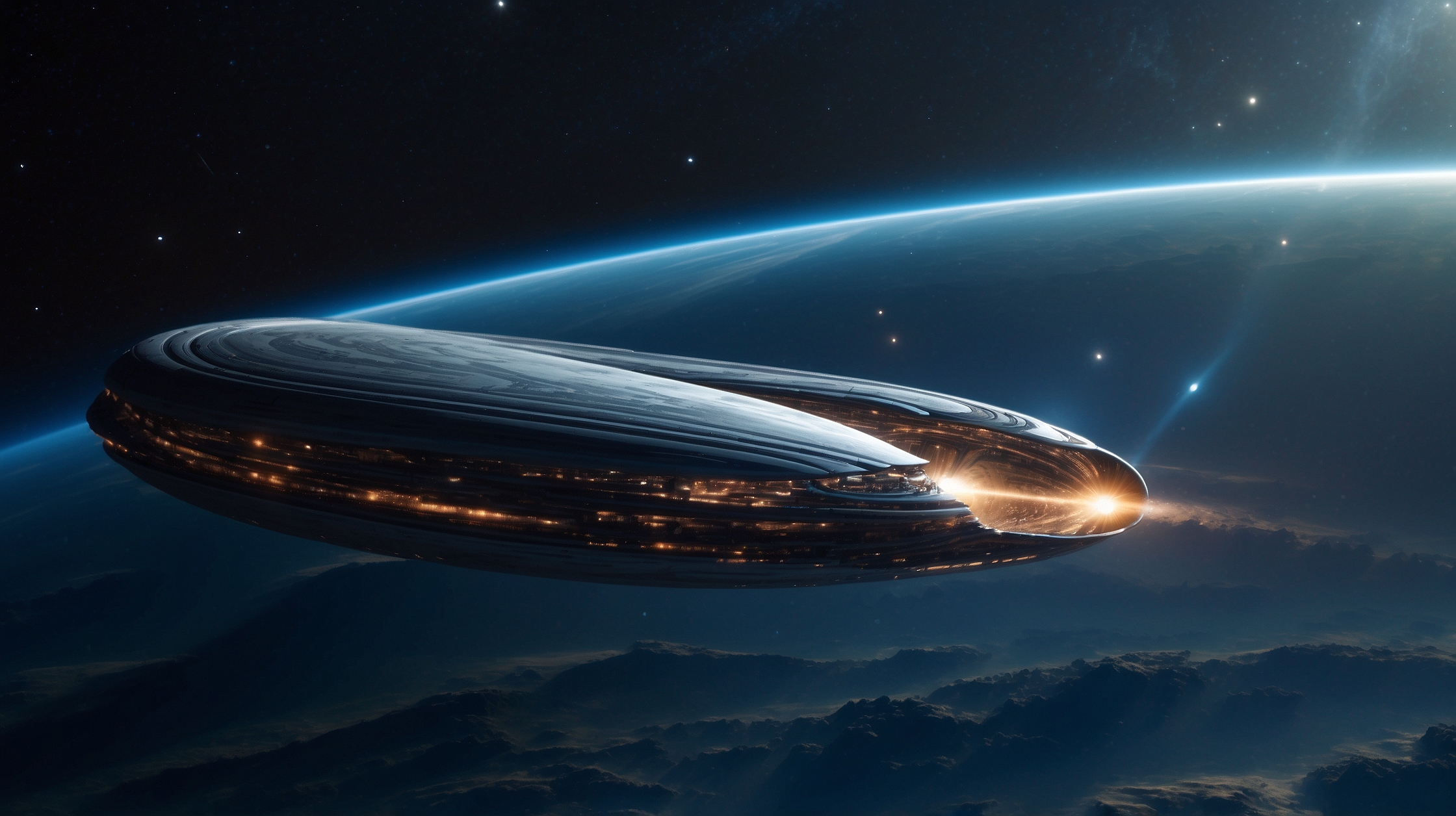

In a groundbreaking cosmic event capturing the attention of astronomers and space enthusiasts worldwide, scientists have detected an object from another solar system traveling at a record-breaking speed toward our own. Known as an **interstellar interloper**, this extraordinarily fast-moving visitor challenges prior understanding of celestial mechanics and interstellar travel. With its incredible velocity and origin beyond the boundaries of our Sun’s gravitational influence, the discovery raises crucial questions about the dynamics of the universe and what could lie beyond the observable horizon.

Though interstellar objects have been spotted before — most famously ‘Oumuamua in 2017 and comet 2I/Borisov in 2019 — this newly-revealed object is traveling significantly faster, making it the fastest interstellar object ever observed. The implications could be profound: from uncovering new physics to revisiting theories about the formation of our solar system. Truly, this detection represents a frontier moment for astronomy and space research, opening doors to a better understanding of how interstellar space works and what roams within it.
Key facts about the record-fast interstellar object
| Object Type | Interstellar Object (ISO) |
| Origin | Outside of our Solar System |
| Discovery Method | Ground-based telescopes and trajectory modeling |
| Notable Speed | Faster than any previous interstellar object detected |
| Comparable Events | ‘Oumuamua (2017), 2I/Borisov (2019) |
| Estimated Size | Yet to be determined |
| Visibility Window | Narrow (due to high speed) |
Why this object is unlike anything we’ve ever seen
Unlike the relatively slow and gravitationally influenced bodies local to our solar system, this newly observed interstellar object is moving at a **phenomenal speed** that defies the pull of the Sun and inner planets. According to early velocity calculations, the object is zooming through space far faster than ‘Oumuamua, which was already considered fast by interstellar standards.

The speed of this object not only confirms its **interstellar origin**, but also hints at the immense energy required to escape its home system. That fact alone offers valuable data: understanding the object’s velocity may give researchers new insight into the gravitational and dynamic structures of other star systems. In simpler terms, this object may serve as a “messenger” carrying silent stories from across the stars.
How scientists detected the interstellar visitor
A consortium of observatories working collaboratively as part of a global sky survey network first picked up the object. Its hyperbolic trajectory, which differs significantly from the elliptical orbits of solar system objects, immediately raised flags. Detailed analysis confirmed that the object was not gravitationally bound to the Sun or any planetary body.

This discovery was made possible through innovation in telescopic accuracy, data processing, and celestial monitoring. Cross-referenced data from multiple observation points allowed astronomers to triangulate the incoming trajectory and confidently categorize it as an **interstellar traveler**. In just hours, the object transitioned from a blip on a screen to the latest celestial mystery demanding scientific attention.
What makes its speed so astonishing
Speed is the defining characteristic that sets this interstellar object apart. Traveling at velocities higher than 55 km/s (or more than 123,000 mph), the object moves significantly faster than the escape velocity of our Sun. By comparison, Voyager 1 — humanity’s farthest spacecraft — travels just under 17 km/s.

This unparalleled pace means that its time within the observable window of our solar system is short, creating logistical challenges for astronomers seeking to study it. These include everything from real-time spectroscopic analysis to telescope reorientation requirements. Despite these hurdles, scientists are racing against time to glean as much information as possible about the object before it disappears beyond observational reach.
How this reshapes existing theories of interstellar travel
Until recently, most interstellar travel models were theoretical or based on a limited number of data points. Now, with this new object — faster than any before — astronomers are revisiting long-held beliefs about how objects travel between star systems. The discovery provides **real-world evidence** that significantly expands the potential speed range interstellar bodies can achieve.
Is it possible that powerful gravitational events, such as supernovae or interactions with massive gas giants, propelled this object outward? Alternatively, could its speed indicate **artificial origin or influence** — though most scientists remain skeptical of that explanation. Whatever the case, this interstellar speedster invites a thorough reexamination of conventional interstellar mechanics.
Potential for future tracking and exploration
The attention garnered by this detection has reignited talk around developing specialized spacecraft or fast-response telescopic arrays capable of intercepting or studying interstellar objects in real time. Agencies around the world are facing renewed pressure to invest in **next-gen tracking systems** specifically designed for short-lived phenomena like this.
However, the speed and unpredictable trajectory of this interstellar interloper make successful interception near-impossible with current technology. Still, ongoing data collection may uncover clues about its composition or origin that inform future space missions or research priorities.
What this means for understanding our place in the cosmos
Rare events like this resonate far beyond STEM fields. They touch on **existential questions** about our role in the universe, the possibility of life beyond Earth, and the vastness of cosmic architecture. When an object from another star system passes this close, we are provided a tangible reminder of the universe’s dynamism — and its potential for future discoveries.
“This is a cosmic wake-up call. Interstellar objects like this show us that the solar system is not isolated — it’s part of a broader galactic conversation.”
— Dr. Elaine Simmons, Astrophysicist
Scientific community’s next steps
In response to the object’s discovery, international teams are leaning heavily into computational models and spectroscopic analysis tools. Laboratories are simulating the object’s path and attempting to reconcile its speed with known interstellar propulsion mechanisms.
Plans are also being created to determine whether fragments or tail emissions might be left behind that could be sampled or studied long after the object has exited our observational range. Regardless, the event has set a new benchmark for **interstellar object detection protocols** worldwide.
“This isn’t just about observing a fast rock flying by — it’s about updating how an entire field of science operates.”
— Dr. Kamal Restrepo, Director of SkyNet Lab
FAQs about the interstellar object discovery
What is an interstellar object?
An interstellar object is a celestial body that originates from outside our solar system and passes through it on a hyperbolic path, indicating it’s not bound by the Sun’s gravity.
How fast is this newly discovered object?
Early estimates suggest it is traveling at over 55 kilometers per second — making it the fastest interstellar object ever recorded.
Could this object pose a threat to Earth?
No, based on current trajectory models, the object is not on a collision course with Earth or any other planet.
When was it discovered?
The object was identified in mid-2024 by collaborative ground-based observatories using advanced trajectory modeling tools.
How does this object compare to ‘Oumuamua and 2I/Borisov?
It’s traveling much faster than either and therefore spends less time within the observational range of solar telescopes.
Will we be able to study it further?
Due to its high speed, only limited data can be collected at this time. However, researchers are prioritizing swift observation before it’s gone.
Is there any chance it is artificial?
Currently, there’s no evidence to suggest it is artificial. Most scientists support a natural origin, pending more data analysis.
What could this mean for space exploration?
This could accelerate the development of rapid-response space probes and heighten interest in interstellar object monitoring projects.
About the Author
