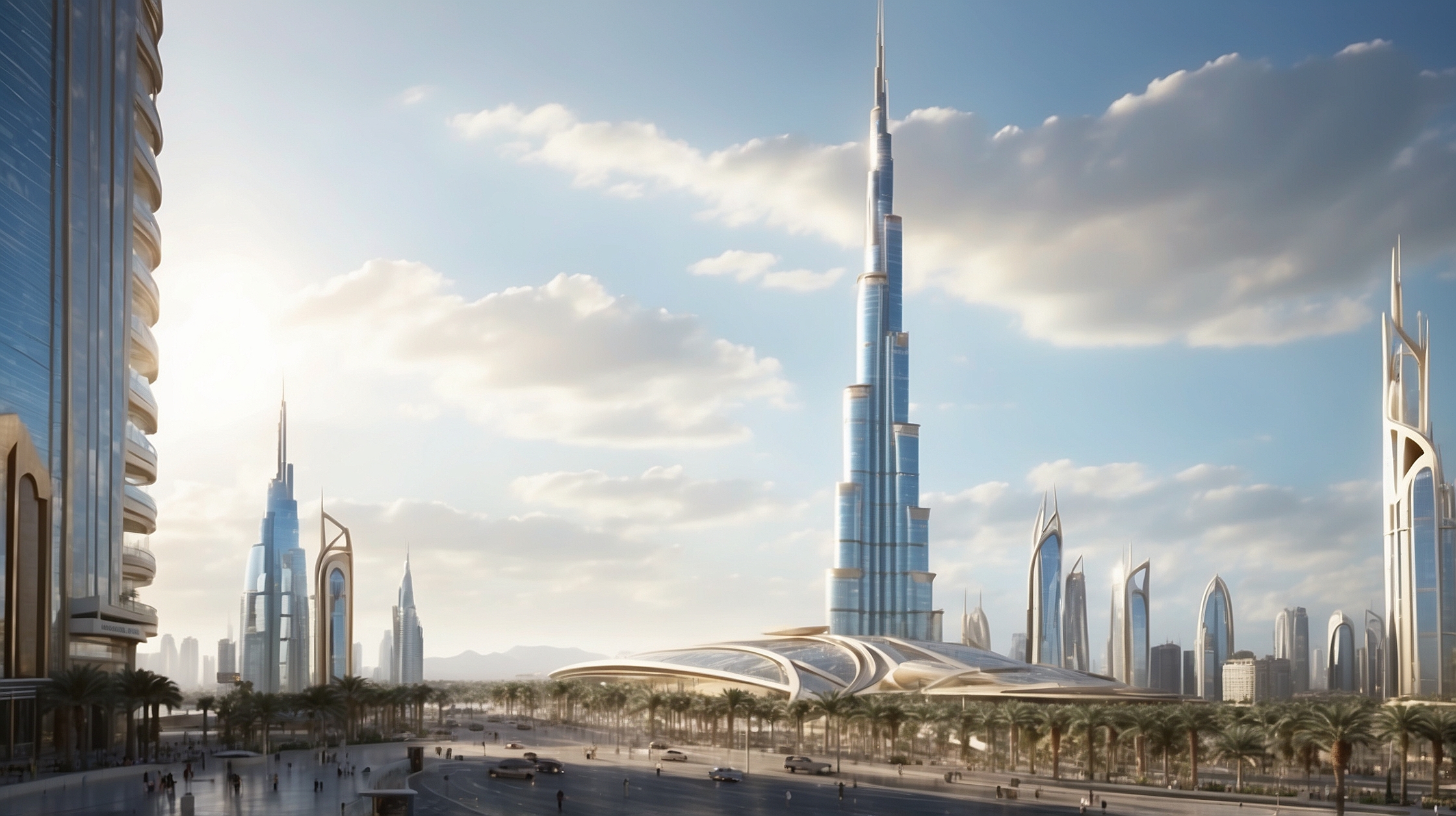
As Dubai’s record-breaking Burj Khalifa continues to awe the world from a height of 828 meters, Saudi Arabia is quietly laying the groundwork for a new architectural and engineering marvel that could redefine the skylines of the 21st century. A bold new project is in the pipeline — a **1-kilometer-tall skyscraper** planned for the Kingdom’s booming city of Jeddah. This visionary structure, known as the *Jeddah Tower* (previously *Kingdom Tower*), is not just a building; it’s a declaration of ambition, a symbol of transformation, and a key milestone in Saudi Arabia’s Vision 2030 strategy.
Originally conceived over a decade ago but repeatedly stalled due to financial and logistical issues, the project has garnered fresh momentum amid Saudi Arabia’s accelerated push to diversify its economy away from oil. Now, the revived vision is capturing global attention. Saudi Arabia isn’t just striving to *match* the Burj Khalifa — it’s looking to **surpass it by over 170 meters**, setting a new global benchmark for human achievement in engineering and design. Positioned as both a commercial and cultural landmark, the Jeddah Tower embodies the Kingdom’s desire to be recognized as a global leader in innovation, urban development, and futuristic architecture.
Overview of the new Jeddah Tower project
| Project Name | Jeddah Tower |
| Location | Jeddah, Saudi Arabia |
| Planned Height | 1,000+ meters (3,281 feet) |
| Status | Reactivation and re-bidding underway (as of 2024) |
| Expected Completion | Before 2030 (tentative) |
| Main Developer | Jeddah Economic Company (JEC) |
| Cost Estimate | $1.2 billion+ |
| Architectural Style | Neo-futurism |
What makes this tower different from previous mega-projects
While supertall buildings have captivated the attention of city planners and skyscraper fans for decades, the Jeddah Tower is poised to be a turning point in architectural ambition. For one, it’s not just about height. The design incorporates a blend of **sustainability principles**, **advanced vertical transportation**, and **multi-use functionality** that sets it apart from previous towers like Dubai’s Burj Khalifa or New York’s One World Trade Center.

Designed by the famed architect Adrian Smith — the same mind behind the Burj Khalifa — the Jeddah Tower features a sleek, aerodynamic form that reduces wind resistance, which becomes exponentially critical at extreme elevations. The building will include luxury hotels, high-end residential apartments, observational decks offering views over the Red Sea, and vast commercial office spaces. Its unique three-pronged footprint maximizes usability while ensuring floor-to-ceiling panoramic views.
“Jeddah Tower is about more than just height — it’s a fusion of design, technology, and aspiration. It’s a message to the world that Saudi Arabia is building its future, literally from the ground up.”
— Placeholder, Lead EngineerAlso Read Why You Feel the Need to Explain Every Small Choice, According to Psychology
How Saudi Arabia plans to turn vision into a skyline
The Jeddah Economic Company (JEC), developers of the project, recently issued a fresh round of tenders inviting global construction firms to bid for the resumption of structural work. While construction has been stalled since 2018, renewed interest from major international players hints at a resurgence driven by political will and fiscal backing. Reports suggest that the tower’s foundation is already in place, and nearly one-third of the structure had been built before the pause.

The timing is crucial. As Saudi Arabia accelerates its **Vision 2030 reforms** — including mega-projects like NEOM’s The Line and Qiddiya City — the Jeddah Tower is seen as a flagship that represents the Kingdom’s evolution. More than just eye candy for the skyline, this project will serve as an **economic accelerator** for the Jeddah Economic City, a large-scale urban zone expected to attract foreign investment, skilled labor, and tourism.
“This isn’t an isolated project. It’s the centerpiece of a broader strategy to transform Jeddah into a financial and cultural capital of the Red Sea coast.”
— Placeholder, Saudi Urban Development Authority
Engineering challenges at a kilometer high
Constructing a building over 1,000 meters introduces unprecedented engineering challenges. High-frequency winds, material fatigue, vertical mobility, and heat dissipation are some of the many hurdles. The tower will feature the world’s most advanced **elevator system**, anticipated to include **double-deck elevators** capable of moving at speeds exceeding 10 meters/second.
Moreover, engineers are addressing the **mechanical strain** from wind vortexes by integrating sloped trims and vented facades. These design elements help break up wind patterns that often become more chaotic at higher altitudes. Architects are also considering new building materials—hybrid composites—to reduce weight while maintaining structural integrity.
“We’re not just going up — we’re going smarter. The challenges we solve here could redefine urban construction for decades.”
— Placeholder, Structural Engineer
Who will live and work inside the tallest building on earth
The Jeddah Tower won’t simply be a commercial office or residential tower — it’s envisioned as a **vertical city**. The first 600 meters will host multiple lobbies, serviced apartments, offices, and luxury hotels. The higher tiers are expected to be exclusive residential penthouses and sky-high observation decks.
Pricing is expected to reflect the exclusivity. Reports suggest that residences in the tower could cost upwards of $8,000 per square meter, rivaling some of the most expensive real estate markets in the world. However, the real prize may lie not in occupancy but in reputation. Being headquartered in the world’s tallest building offers a rare prestige — one that corporations, global investors, and private buyers covet alike.
Winners and losers in the age of mega-skyscrapers
| Winners | Losers |
|---|---|
| Saudi Arabia’s tourism and real estate sectors | Local construction companies missing out to global firms |
| Jeddah Economic City investors | Cities with stagnating infrastructure |
| High-income residents and global tenants | Environmental critics concerned about mega-project emissions |
What this means for other cities in the region
Saudi Arabia’s skyscraper race raises the stakes for regional cities like Dubai, Doha, and Abu Dhabi. While the UAE has long held the crown for the world’s tallest and most elaborate structures, the Kingdom’s emerging ambitions could redistribute both **tourist attention** and **global financial interest**.
Moreover, countries might shift focus from height contests to more holistic urban solutions, such as mixed-use environments, sustainability innovations, and tech-powered infrastructure. The competition remains healthy, but the rules are evolving — Jeddah Tower is proof of that.
Short FAQs about the 1km Skyscraper in Saudi Arabia
How tall will the Jeddah Tower be when completed?
The Jeddah Tower is planned to exceed 1,000 meters (3,281 feet), making it the tallest building in the world once completed.
When is the expected completion date of the project?
Though no official date has been announced, developers are aiming to complete the project before 2030 as part of Vision 2030 goals.
Who is designing the Jeddah Tower?
American architect Adrian Smith, the designer of the Burj Khalifa, is the mastermind behind Jeddah Tower’s design.
Why was the project delayed initially?
Construction was halted due to financial disagreements, labor issues, and economic disruptions over the past decade.
What will be inside the Jeddah Tower?
The building will feature luxury residences, office spaces, hotels, and observation decks, forming a “vertical city.”
Is Jeddah Tower part of a larger development?
Yes, it is the centerpiece of Jeddah Economic City, a multi-billion-dollar smart urban project aimed at transforming the region.
Will the tower be sustainable?
Designers are incorporating sustainable materials and energy-efficient systems to minimize environmental impact despite its size.
How does it compare to Burj Khalifa?
At over 1,000 meters, Jeddah Tower will surpass the Burj Khalifa by at least 172 meters, setting a new global record.
About the Author