
The mysteries lying at the bottom of the ocean are not just tales for treasure hunters or Hollywood scripts anymore—they’re a growing realm of scholarly attention and cutting-edge discovery. Thanks to advances in submersible technology and underwater remote sensing, the field of **deep-sea archaeology** is pushing its depth boundaries, both figuratively and literally. For decades, most shipwrecks discovered and studied were located in relatively shallow waters. But now, researchers are diving deeper than ever—sometimes beyond depths of 3,000 meters—uncovering ancient trade routes, forgotten shipwrecks, and maritime cultures long buried by time and tide.

This evolution not only challenges long-held narratives about ancient seafaring but also reshapes our understanding of **early globalization, engineering, and cultural exchange**. Deep-sea archaeological findings are forcing historians to revisit assumptions about how and where people traveled, traded, and settled. With entire sunken civilizations being uncovered from the abyss, it’s becoming evident that the ocean floor holds more than shipwrecks—it holds new chapters of history waiting to be written.
Overview of deep-sea archaeology discoveries
| Category | Details |
|---|---|
| Depth Range | Up to 6,000 meters below sea level |
| Technologies Used | ROVs (Remotely Operated Vehicles), AUVs, sonar, AI-driven 3D mapping |
| Historical Range | Ancient Greeks, Romans, Ottoman era, WWII vessels |
| Key Regions | Mediterranean Sea, Black Sea, Pacific Ocean, Atlantic depths near the Azores |
| Notable Finds | Well-preserved amphorae, naval weaponry, wooden hulls, cargo relics |
| Impact on History | New insights into ancient trade routes, maritime technologies, and cultural links |
What has changed in how we find shipwrecks
Not long ago, discovering a shipwreck meant divers scanning coastlines and shallow waters, sometimes relying more on luck than science. But thanks to rapid advancements in **marine technology**, teams are now employing cutting-edge tools like **autonomous underwater vehicles (AUVs)** and **remotely operated vehicles (ROVs)** equipped with high-resolution sonar and 3D imaging. These tools conduct methodical grid searches, scanning vast underwater terrains with pinpoint accuracy.

Artificial Intelligence is also being deployed to analyze the massive data sets generated from deep-sea scans. By identifying patterns and anomalies, AI speeds up the identification of potential archaeological targets, separating them from natural underwater formations.
Why deep-sea finds are often better preserved
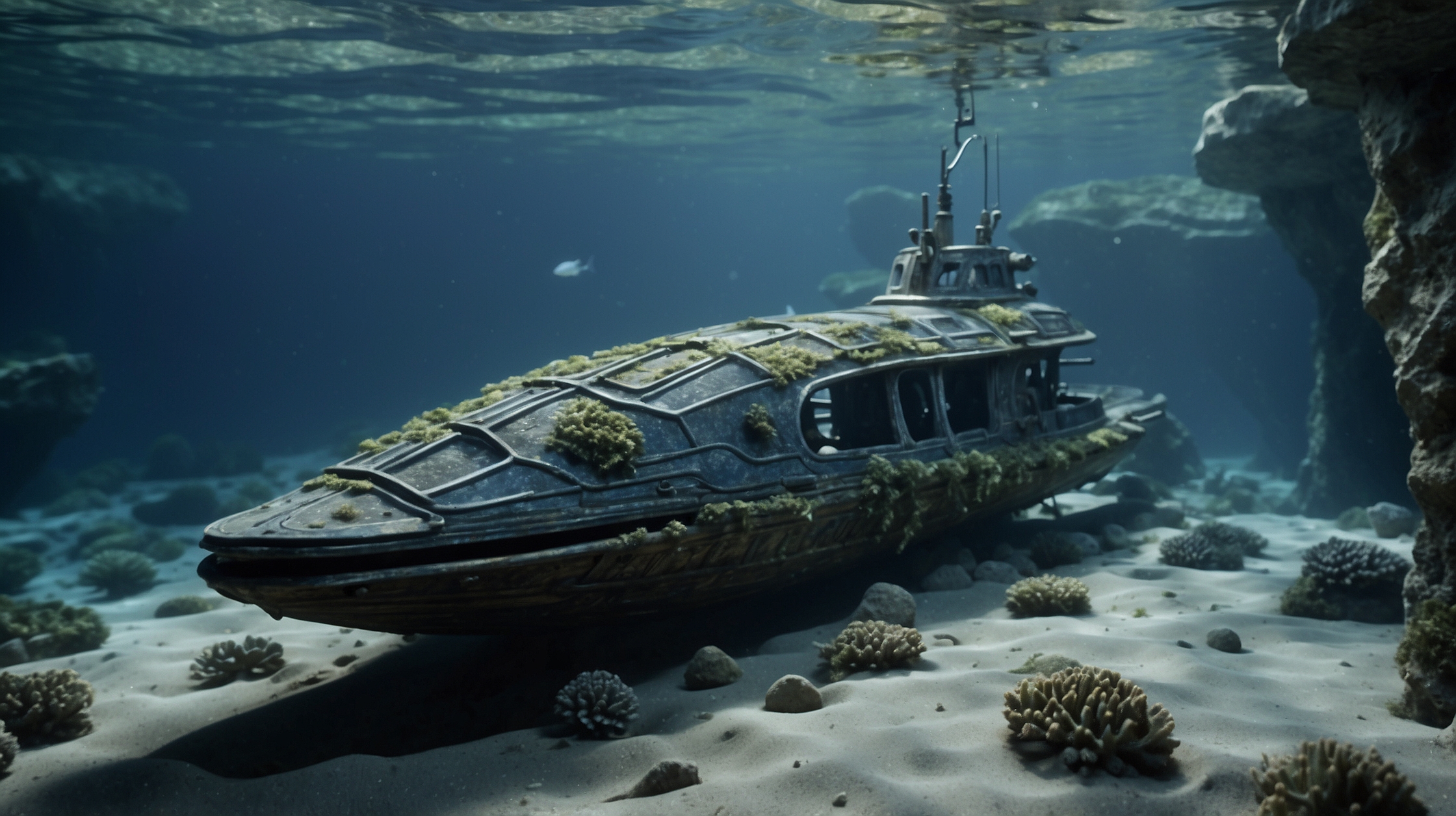
One of the most striking revelations in recent years is the **remarkable preservation** of deep-sea shipwrecks. Unlike shallow-water wrecks, which are exposed to currents, oxygen, scavengers, and marine activity, **deep-sea environments are isolated**, cold, and oxygen-starved—ideal conditions for preservation. Timbers, bronze fittings, and even cargo like amphorae, textiles, and foodstuffs have been found in an almost untouched state.
This preservation provides researchers with not only historical artifacts but also untouched ecosystems. Studying these wrecks offers snapshots of ancient life at the moment of catastrophe—be it a Roman merchant ship felled by a storm or a WWII submarine caught in a minefield.
Rewriting trade and migration routes of ancient civilizations
One of the most significant implications of deep-sea archaeology is its impact on our understanding of ancient trade. Discoveries of ships carrying **olive oil, wine, ceramics, precious metals**, and even livestock reveal extensive trade routes that stretched far beyond what historians previously assumed.

Recent finds in the eastern Mediterranean and Black Sea suggest that Bronze Age civilizations were navigating routes far into the open ocean, not merely hugging coastlines as once believed. These discoveries are compelling researchers to rethink early maritime infrastructure and technologies.
“Our latest finds suggest that trade in the ancient world was far more interconnected and maritime-oriented than previously believed.”
— Dr. Lena Martel, Maritime Archaeologist
The rise of interdisciplinary exploration
The development of deep-sea archaeology has fostered collaboration across a spectrum of disciplines—from **marine biology and ocean engineering** to **paleoclimatology and materials science**. These teams work together on long-term missions, sometimes mapping entire sections of the seabed looking for cultural remains.
One such interdisciplinary team recently discovered a 2,000-year-old Roman ship off the coast of Sicily, containing not only trade goods but scientific instruments presumed to be used for navigation and measurement—providing rare insight into early scientific knowledge.
The role of AI and machine learning in deciphering data
Each wreck site can produce dozens of terabytes of visual and sonar data. Manual review would take years—but **machine learning algorithms** are revolutionizing the speed and accuracy of analysis. AI helps classify materials, recognize ship structures, and even differentiate between cargo and ship fittings.
This technological boost means more discoveries in less time, propelling the field forward at a breathtaking pace. AI is also used in simulating how currents and tectonics might have moved sunken ships from their original resting points.
Risks and controversies in deep-sea archaeology
Despite its promise, deep-sea archaeology isn’t without challenges. Salvage rights, jurisdictional disputes, and the ethics of artifact retrieval are constant concerns. Many wrecks lie in **international waters**, complicating ownership and heritage claims. Additionally, some scholars worry that commercial pressures to monetize discoveries may undermine scientific integrity.
“We must tread carefully. Each relic is a cultural ambassador, not a commercial product.”
— Prof. Arvind Nair, Ethnoarchaeologist
There’s also environmental risk. The same technologies that can locate a shipwreck could inadvertently damage fragile ecosystems during exploration or recovery.
The future of underwater cultural exploration
As technology becomes more affordable and global interest grows, more nations are investing in deep-water missions to uncover their submerged heritage. UNESCO and other international bodies are beginning to draft regulations aimed at balancing **discovery with preservation**.
In the coming decade, we can expect an explosion of deep-sea finds—not only ships but also submerged settlements and harbors, long buried beneath rising sea levels and tectonic shifts. These will offer unparalleled insights into ancient coastlines, urban planning, and population dynamics.
FAQ: Deep-sea archaeology explained
What is deep-sea archaeology?
Deep-sea archaeology involves the exploration and analysis of human activity through remains located on the seafloor, especially at great depths beyond standard diving limits.
How deep do archaeologists go?
Modern missions can explore shipwrecks at depths of up to 6,000 meters using remotely operated vehicles and high-tech sonar.
Why are some shipwrecks so well preserved?
Low temperatures, lack of oxygen, and minimal human or biological interference in deep waters create ideal conditions for preservation.
What kind of artifacts are discovered?
Finds can include amphorae, coins, tools, weapons, ship hulls, textiles, and even organic materials like food and wood.
Are these shipwrecks protected by law?
In many regions, maritime heritage laws and international agreements regulate the excavation and conservation of underwater sites.
What are the biggest threats to deep-sea sites?
Natural degradation, illegal looting, commercial salvage operations, and environmental damage from exploration gear.
Can the public view these discoveries?
Some recovered artifacts are displayed in museums, and digital recreations are increasingly made available through virtual platforms.
What role does AI play in underwater discoveries?
AI assists in processing sonar and video data, identifying wreck sites, and even predicting possible ship locations based on ocean currents and trade patterns.
About the Author