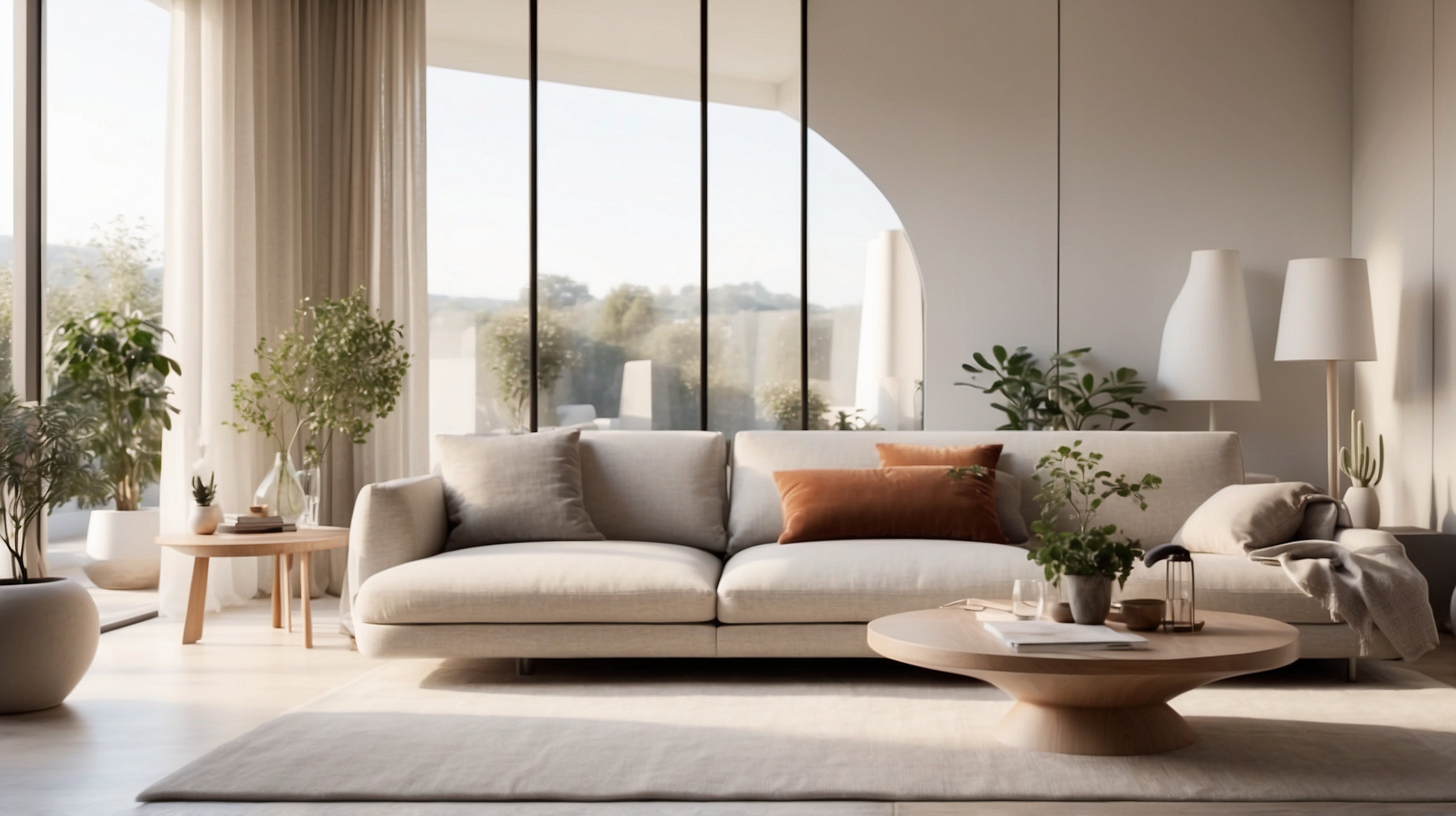

Small living rooms can often feel cramped, cluttered, and limiting — but the secret to creating the illusion of more space isn’t always found in square footage. It lies in smart and subtle design choices. One decorator-favorite trick stands out as a timeless strategy that instantly makes a small living room feel significantly bigger without knocking down any walls or moving house. This space-enhancing technique is not only simple and affordable but also surprisingly transformative.

The solution? Using an oversized rug that stretches across the majority of the room’s floor. While it may sound counterintuitive at first, placing a large area rug in a small living space anchors the room, reduces visual clutter, and creates a continuous canvas that draws the eye outward instead of inward. This trick, long favored by interior designers, instantly alters the room’s perceived proportions and adds a surprising sense of openness.

Smart design hacks that visually expand any small living room
| Design Tip | Purpose | Visual Impact |
|---|---|---|
| Using an oversized area rug | Creates continuity and anchors furniture | Makes the room feel more expansive |
| Choosing light or neutral colors | Reflects light and opens up space | Creates a brighter, airier feel |
| Mounted or floating furniture | Shows more floor space | Makes the room appear less crowded |
| Mirrors on focal walls | Amplifies light and depth | Illusion of more square footage |
| Adding vertical decor elements | Draws the eye upward | Emphasizes height over width |
Why big rugs work so well in tiny spaces
The instinct in a small living room might be to scale everything down — small couch, small coffee table, small rug — but this often results in a “dollhouse effect,” making the space look even tinier. Instead, designers recommend using a large rug that extends nearly wall to wall or at the very least, goes under all your main furniture pieces — the sofa, chairs, and coffee table.
Why? Because a bigger rug helps define the boundaries of the living zone without breaking up the floor visually. The fewer cuts the eye encounters, the more seamless and open the room feels. A rug that connects all furniture pieces also creates a sense of unity and proportion. Without visual breaks between pieces, your mind interprets the area as one cohesive and larger space.

When you’re working with a small room, take a bold leap with a large rug—it pulls everything together and fools the eye into seeing more space.
— Emily Rhodes, Interior Designer

The best type of rug to use in a small living room
If you’re considering using this decorator trick, it’s important to choose the right type of rug for maximum effect. Go for **light-colored or neutral rugs** to reflect light and make the room feel brighter. Avoid busy patterns that might feel overwhelming in tight quarters. Soft textures with a low-pile or flat weave work best as they don’t add unwanted volume underfoot.
A good rule of thumb: select a rug that is large enough to sit under at least the front legs of all major furniture. Ideally, it should be big enough so your coffee table rests fully on it, and the sofa and chairs connect at least partially on its borders. This helps unify all pieces and avoids the ‘floating rug’ look that can make the room feel smaller and disjointed.
A large, clean rug acts like a canvas, grounding your living room while maximizing the illusion of space.
— Clarissa Yeung, Home Stylist
Other space-expanding strategies decorators swear by
While the oversized rug is a standout trick, interior designers often recommend combining several smart choices to get the best results in small living areas. Consider these layered design strategies to amplify the effect:
- Use leggy furniture – Choosing pieces with exposed legs gives a visual sense of openness beneath and around the furniture, unlike bulky bases that block sightlines.
- Mount your TV and shelves – Floating elements remove unnecessary bulk from the floor and draw the eye upward.
- Mirror placement – Placing a large wall mirror opposite a window reflects light and space, doubling the perceived depth of the room.
- Match curtain color to the wall – This softens visual boundaries and avoids attention-grabbing breaks in space around windows.
How scale and proportion change a room’s perception
Designers understand that scale and proportion are fundamental when decorating small spaces. One of the reasons large rugs work so well is because they respect the correct proportions of the space. In contrast, small, scatter rugs or ones that only sit underneath a coffee table tend to overemphasize how little room there is. Opting for a large rug balances out disproportions in furniture size and gives the whole room a more considered and luxurious vibe.
This technique also plays into the broader design principle called ‘visual weight.’ A large floor covering reduces fragmentation of space. Spreading one cohesive color or pattern over a broad area calms the eye and helps improve flow throughout the room. When floors feel continuous and grounded, the walls feel further apart — a subtle psychological trick good decorators repeatedly rely on.
Creating balance with décor and accessories
A large area rug opens a new layer of opportunity to decorate with contrast and balance. You can pair a serene-toned rug with bold-colored furniture or patterned throw pillows for texture without overwhelming the space. Keep in mind, simplicity is key; clutter makes small rooms feel tighter. Strategically placed accessories, like a single oversized vase or a tall floor lamp near a corner, help frame the new visual perimeter created by your rug and emphasize additional height or width.
One oversized item—be it a rug, mirror, or artwork—makes more impact and brings balance than many small décor pieces competing for attention.
— Sarah Koenig, Home Decor Blogger
Before and after: rug trick in real-life transformations
Real-world makeovers show just how powerful this technique can be. In several small apartment transformations, switching out a small rug for a larger one resulted in what clients described as a “change in breathing room.” Rooms felt brighter, fresher, and better put together. Visual clutter was significantly reduced, and people reported using the living space more comfortably after this single change.
This design move isn’t just about looks — it often creates functional enhancements, too. A larger rug absorbs sound better, which helps combat echo in tiny rooms, and creates a soft, cozy walking surface that enhances comfort and livability.
Final takeaways for maximizing small spaces
If you’re struggling to style a small living room, think larger, not smaller. Using a generously sized rug that extends across the main flooring area changes how the space feels, functions, and flows. Pair this trick with well-scaled furniture, vertical storage, limited décor, and light-reflecting elements to unlock the full potential of even the tiniest room. With the right touches, your small space can feel stylish, spacious, and serene.
Frequently asked questions
What size rug is best for a small living room?
A rug that extends under all major furniture pieces — at least the front legs of sofas and chairs — is typically best. Aim for something 6×9 feet or larger depending on room size.
Do dark rugs make a small room look smaller?
Yes, dark rugs can absorb light and make a small space feel more closed in. Light-colored or neutral rugs work better to reflect light and create openness.
Can layering rugs help in small rooms?
While layering can be stylish, it may add visual clutter in very small rooms. It’s generally more effective to choose one large, cohesive rug instead of layering multiples.
What rug pattern is best for expanding space?
Subtle patterns, toned-down textures, or solid light colors work best. Avoid overly busy patterns that can shrink the perception of space.
How do I place furniture on a large rug in a small room?
Arrange furniture so that the front legs are on the rug. This creates flow and visual connection between pieces.
Can rugs help with noise in small living areas?
Yes, rugs add soft surfaces that help absorb sound, reducing echo especially in small rooms with hard floors.
Is a round or rectangular rug better in a small space?
Rectangular rugs often fit better in small living rooms since they mimic the room’s shape and align well with sofas and tables. Round rugs can work in unique layouts.
About the Author