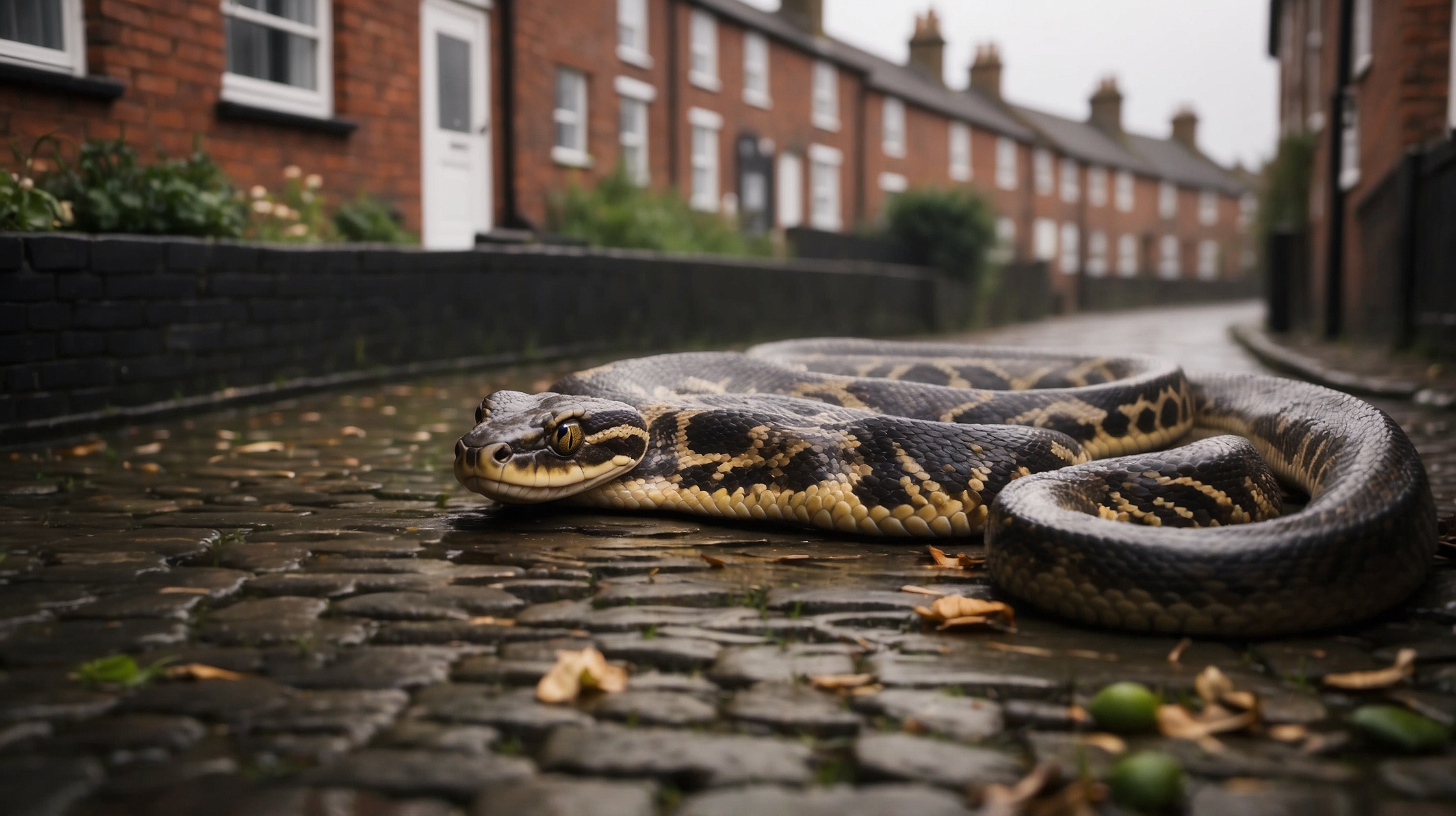

In a story equally bizarre and fascinating, a giant African python recently made unexpected headlines after being discovered in a quiet corner of the United Kingdom. When wildlife authorities were alerted to the mysterious appearance of a large reptile in the garden of a suburban Essex home, few could imagine they were about to capture one of the continent’s largest snakes. This was not just any exotic pet that had slithered its way out of confinement—it was a full-grown African rock python, a species native to sub-Saharan Africa known for its immense size and adaptive survival instincts.

The situation unfolded with numerous questions surrounding how such an animal made its way to the UK in the first place. Authorities, conservationists, and exotic pet experts are now piecing together a broader picture of cross-continental pet ownership, lax enforcement regulations, and the growing popularity of exotic species kept in non-native climates. For residents and environmentalists alike, this unexpected sighting has reignited important conversations about animal welfare, invasive species regulation, and public safety.
Giant African python found in Essex: Quick Facts
| Species | African Rock Python (Python sebae) |
| Length | Over 14 feet (approx. 4.3 meters) |
| Location found | Essex garden, United Kingdom |
| Status in UK | Exotic, non-native species |
| Native habitat | Sub-Saharan Africa |
| Conservation status | Least Concern (IUCN) |
How a tropical giant ended up in the UK
The African rock python is a formidable species, both feared and revered for its unparalleled size—second only to the reticulated python. Native to sub-Saharan Africa, these snakes typically thrive in savannas, forests, and rocky outcrops. They are known to feed on animals as large as antelope, using powerful constriction to subdue prey. In their native environment, these reptiles are apex predators with few natural enemies. But in the Essex countryside? That’s a very different story.

Initial investigations suggest the python was likely an escaped or illegally released exotic pet. The UK has witnessed a surge in exotic animal ownership, fueled by social media trends and a desire for unique pets. While some python species are legally permitted with proper licensing, the lack of consistent enforcement results in many owners bypassing these regulations. For this python, the escape into a residential neighborhood created not only logistical challenges for wildlife officials but also immense concern among nearby residents.
Species profile: Understanding the African rock python
The African rock python is one of the largest snake species globally, commonly growing up to 15 feet or more. They are non-venomous constrictors, suffocating their prey in muscular coils. Despite their rugged appearance and intimidating size, they are typically shy unless provoked or hungry. Their adaptability lets them thrive in both dry and humid climates, which likely aided in its survival after escaping in England’s cooler climate.

The snake’s diet includes rodents, birds, reptiles, and larger mammals—posing risks not only to household pets but potentially to small livestock. While attacks on humans are extremely rare, their presence can understandably spark fear.
Insight into UK’s exotic pet regulations
Exotic pet ownership in the United Kingdom falls under the Dangerous Wild Animals Act 1976. Under this legislation, owners must acquire a special license to keep certain animals, including giant pythons. Licenses require proof of secure housing, veterinary care, and that the animal does not pose a public threat.

However, compliance is not universal. Enforcement can be inconsistent, and local councils often lack the resources to perform comprehensive checks. This creates loopholes that allow undocumented and unregistered exotic species to be kept in suboptimal conditions.
This incident highlights the urgent need for stricter regulatory oversight on exotic pet ownership in the UK.
— Dr. Elaine Morris, Wildlife Conservation Specialist
Public and environmental risks of non-native species
The sudden introduction of a non-native predator such as the African python could pose serious implications for local biodiversity. Should such snakes reproduce, or multiple individuals be released or escape, the balance of local ecosystems could be threatened. Cases in the United States, particularly in Florida with Burmese pythons, highlight how quickly invasive species can take hold in a new environment.
Furthermore, the release or escape of exotic animals presents ethical conundrums around pet ownership, public safety, and animal welfare. Animals not equipped to survive in non-native conditions often suffer, while humans are placed at risk as authorities attempt containment and rescue operations.
From alarming to educational: How the discovery is reshaping policy
Animal welfare agencies and lawmakers are now reviewing policy changes to tighten restrictions on exotic species. A potential increase in licensing fees, mandatory surprise inspections, and digital registration databases are being considered. Furthermore, public campaigns are being developed to educate current and prospective exotic pet owners about their legal and moral responsibilities.
We need to strike a balance between allowing diversity in pet ownership and ensuring public and animal safety. Education is key.
— Barry Underwood, Exotic Animal Welfare Consultant
The role of wildlife rescuers and conservationists
The Essex python case was resolved when a local wildlife rescue center successfully captured and temporarily homed the snake. The staff carefully monitored the python for stress, malnutrition, and other health issues. A veterinary evaluation determined the reptile was underweight, supporting theories that it had been loose for several weeks or longer.
The python has since been transferred to a secure reptile sanctuary pending legal investigations into its origin. Animal protection organizations are now calling for enhanced support programs for rescuers dealing with exotic species emergencies.
What’s next for exotic pet policy in the UK?
Governmental bodies are facing increasing pressure to regulate the import, sale, and care of wild-caught and captive-bred exotic animals. Measures such as licensing reform, import restriction, and improved traceability through microchipping may soon become standard. Advocacy for third-party audits and whistleblower protections within the exotic pet industry is also mounting.
This case is a wake-up call. Not only for pet owners but for policymakers to re-evaluate the intersection between human fascination and animal rights.
— Lydia Banks, Animal Ethics Researcher
Frequently Asked Questions (FAQs)
How large can African rock pythons grow?
They can reach lengths of 16–20 feet, although 12–15 feet is more common in the wild.
Are African rock pythons dangerous to humans?
While they are not naturally aggressive, they can become dangerous if cornered or hungry, especially when handled improperly.
Is it legal to own a python in the UK?
Yes, but only with proper licensing under the Dangerous Wild Animals Act 1976 and adherence to strict housing and welfare standards.
What does the African rock python eat?
Their diet includes birds, rodents, monkeys, and sometimes larger animals such as goats or antelope.
What should someone do if they spot an exotic animal in a residential area?
Contact local wildlife or animal rescue authorities immediately and avoid approaching or disturbing the animal.
Can African rock pythons survive in UK climate long-term?
They may survive short periods in milder seasons but are unlikely to thrive long-term in UK climates without artificial heat.
Why are exotic pets like pythons becoming more popular?
Influences include social media, novelty appeal, and ease of online purchases—despite the ethical and legal complexities.
What happens to rescued exotic animals in the UK?
They are typically relocated to specialized sanctuaries or zoos while legal investigations determine ownership and welfare status.
About the Author