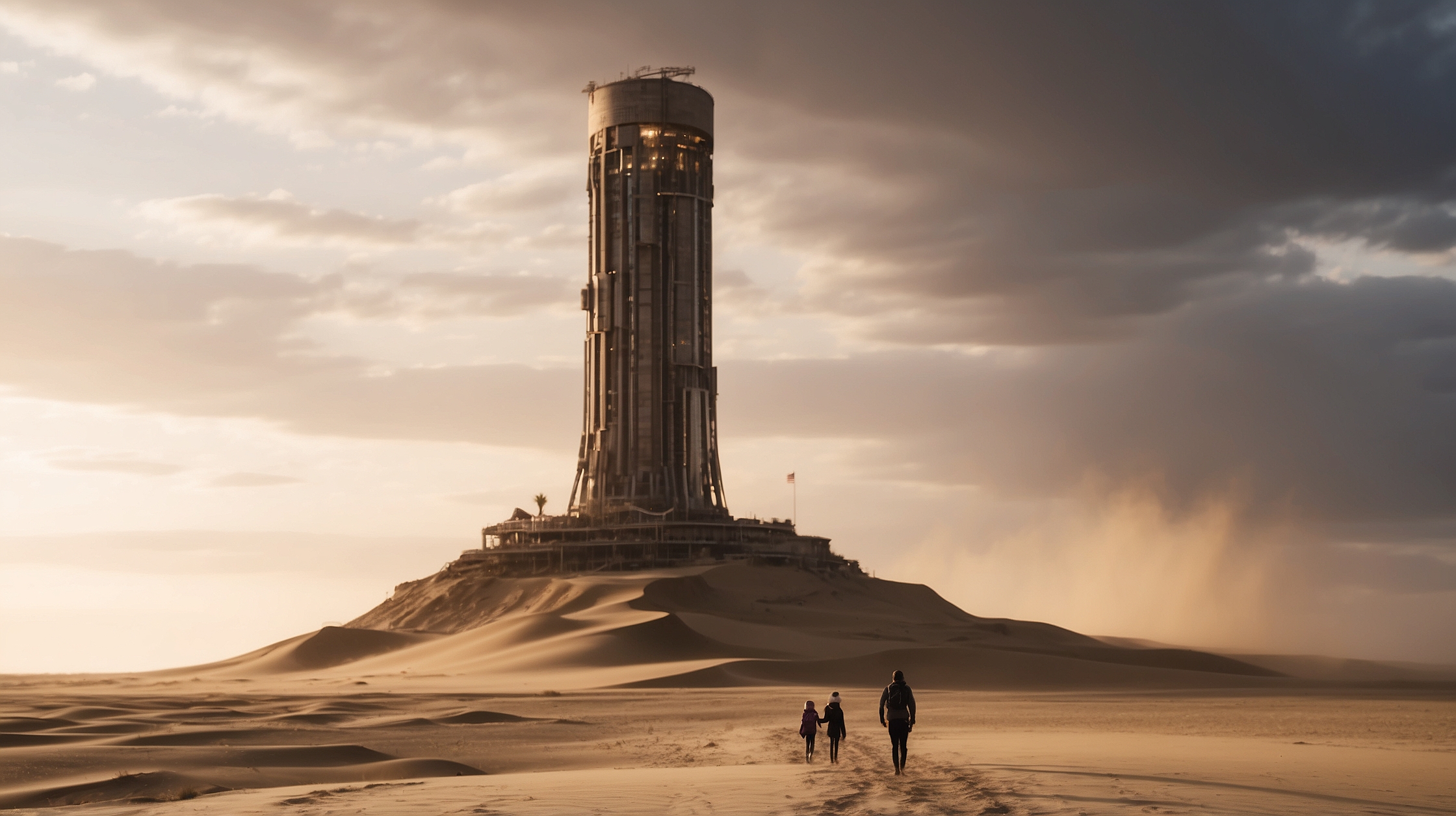

In the heart of the Saudi Arabian desert, a bold project is rising where no skyscraper has ever dared to stretch: a 1-kilometer-tall tower that hopes to redefine what progress looks like in the 21st century. The Jeddah Tower — once known as Kingdom Tower — is not just a bid to break world records; it’s an audacious statement of technological ambition, urban reinvention, and economic diversification. Yet, nestled behind the sleek renderings lies a lingering question: is this futuristic behemoth a symbol of forward motion, or does it reflect a real estate arms race detached from pressing climate and sustainability concerns?

As nations and developers race to etch their legacies into skylines, the question of “how high is too high?” becomes not just symbolic but existential. A skyscraper in the desert that will pierce the clouds is certainly awe-inspiring, but in an era of environmental reckoning and rising energy costs, the viability of such architectural grandeur is increasingly scrutinized. Will the Jeddah Tower serve its lofty intentions or become a monument to misplaced priorities? The answers lie at the intersection of urban dreams, climate realities, and human ambition.
Project overview and current status
| Project Name | Jeddah Tower |
| Location | Jeddah, Saudi Arabia |
| Planned Height | 1,000 meters (3,281 feet) |
| Estimated Completion | TBD (project faced multiple delays) |
| Main Contractor | Saudi Binladin Group (initially) |
| Key Feature | World’s tallest building upon completion |
| Cost Estimate | $1.2+ billion |
A race for sky dominance driven by ambition
The competition for the world’s tallest building has grown increasingly fierce over the past two decades. Dubai’s Burj Khalifa currently holds the title at 828 meters tall. Jeddah Tower aims to surpass that benchmark by more than 170 meters. Its planned design features over 200 floors and panoramic observation decks offering views stretching across the Red Sea horizon — assuming perfect desert weather.
But this project is not merely about height. For Saudi Arabia, it represents a cornerstone of the country’s broader Vision 2030 campaign — a movement aimed at reducing reliance on oil by investing in tourism, real estate, and infrastructure. In theory, a glittering spire on the desert coast functions as both a visual metaphor for progress and an anchor for Jeddah’s transformation into a global urban center.
Construction delays and cautious optimism
Originally conceived in 2008 and breaking ground in 2013, the project has been plagued by delays, largely as a result of financial, logistical, and political factors. After decades of ambition, the momentum slowed during regional upheavals and contractor disputes. The COVID-19 pandemic further stalled construction, pushing back timetables without a clear new end date.
Still, in 2023, new updates suggested that efforts to resume construction were intensifying. Some reports cite contract re-negotiations and talks with international builders, signaling cautious optimism that the tower may yet rise — albeit slower than planned. Whether these renewed ambitions reflect a genuine resurgence or just desert mirage remains to be seen.
Environmental and urban stakes are high
Building a 1km tall mega-structure in a region known for extreme heat, scarce water, and sandstorms inevitably raises environmental concerns. Critics argue that such towers consume disproportionate energy for air conditioning, structural integrity, and elevator systems. Even more pressing is the question of whether these high rises promote ecological efficiency or exemplify urban extravagance in an arid climate ill-suited for mega-skyscrapers.
Experts suggest a need to balance national ambition with ecological mindfulness. While innovative designs can include sustainable technologies — such as solar panels, energy-efficient HVAC systems, and smart glass that reduces glare and heat — none can entirely eliminate the environmental footprint of such massive developments.
“These architectural feats often make the headlines, but they rarely offer sustainable solutions for regional housing or climate resilience.”
— Dr. Leila Harb, Urban Planning Specialist
Who benefits and who gets left behind
| Winners | Losers |
|---|---|
| Real estate developers with luxury property investments | Middle- and lower-income residents priced out of transformative developments |
| Tourism sector seeking global attention | Environmental conservationists concerned about resource strain |
| High-net-worth individuals and foreign investors | Local job markets lacking long-term employment guarantees |
| Government image in diversifying economy | Urban planners advocating inclusive growth |
A symbol or a signal: What this skyscraper really means
The symbolism of building the world’s tallest structure in a desert goes beyond design and engineering; it becomes a geopolitical demonstration. By claiming a vertical superlative, Saudi Arabia hopes to shine an international spotlight on its reformative narrative. But this raises ethical and practical dilemmas. What message are countries sending when “tallest” becomes tantamount to “best”?
Some urban studies scholars warn against interpreting hyper-skyscrapers as progress. They suggest that sustainable urbanism may not lie in reaching higher, but in building smarter: walkable cities, green infrastructure, affordable housing, and public transit. Without these elements, towers risk becoming isolated monuments rather than catalysts for enduring development.
“The future of modern cities relies not on breaking records, but on breaking habits — especially those that prioritize image over impact.”
— Omar Khalidi, Sustainable Development Consultant
The tall order for integrated planning
Skyscrapers like Jeddah Tower are often built as part of master-planned communities. In this case, the tower will be the centerpiece of the Jeddah Economic City, a 57-million-square-foot urban development featuring residences, hotels, and business districts. Cities within cities, these planned metropolises promise self-contained living — but they often struggle to integrate workers, families, and support systems organically.
Transportation, access to public services, and inclusive community planning are all important elements that can get lost in the focus on vertical achievement. Success will ultimately depend on whether the surrounding infrastructure can support both the physical and metaphorical weight of the tower.
Will it stand the test of time?
Assuming the Jeddah Tower eventually completes construction, questions of longevity and legacy will dominate the narrative. What happens to a record-setting skyscraper decades after it no longer holds the record? Burj Khalifa once turned heads, but even it now grapples with under-occupied commercial space and maintenance dilemmas.
A 1km-high building is a technical marvel, but prone to outdated functionality if not purposefully updated. Designing for long-term adaptability — not just immediate badge-of-honor status — must be central to the conversation.
“When ambition outpaces sustainability, architecture becomes artifact rather than asset.”
— Farzana Rizvi, Architectural Historian
Frequently asked questions about the Jeddah Tower
What is the expected height of the Jeddah Tower?
The Jeddah Tower is projected to rise at least 1,000 meters, making it the tallest building in the world upon completion.
Why is it being built in the desert?
The tower is part of Saudi Arabia’s Vision 2030 strategy, aimed at economic diversification beyond oil. The desert location is intended to draw global attention and kickstart regional urban development.
Is the project currently active?
The project has faced repeated delays. As of late 2023, there are renewed efforts to resume construction, although no official timeline exists for completion.
How much will the Jeddah Tower cost?
The cost is estimated at more than $1.2 billion, excluding surrounding city development expenses.
What are the main criticisms of this tower?
Key criticisms include environmental impact, high energy consumption, widening social inequality, and questions about long-term sustainability.
Who designed the Jeddah Tower?
The architectural design was led by Adrian Smith, also known for the Burj Khalifa, through his firm Adrian Smith + Gordon Gill Architecture.
How many floors will the tower have?
Jeddah Tower is expected to comprise around 200 floors dedicated to residential, commercial, and hospitality functions.
Will the tower be open to tourists?
Yes, it is expected to have observation decks and luxury amenities intended for both tourists and high-net-worth visitors.
About the Author