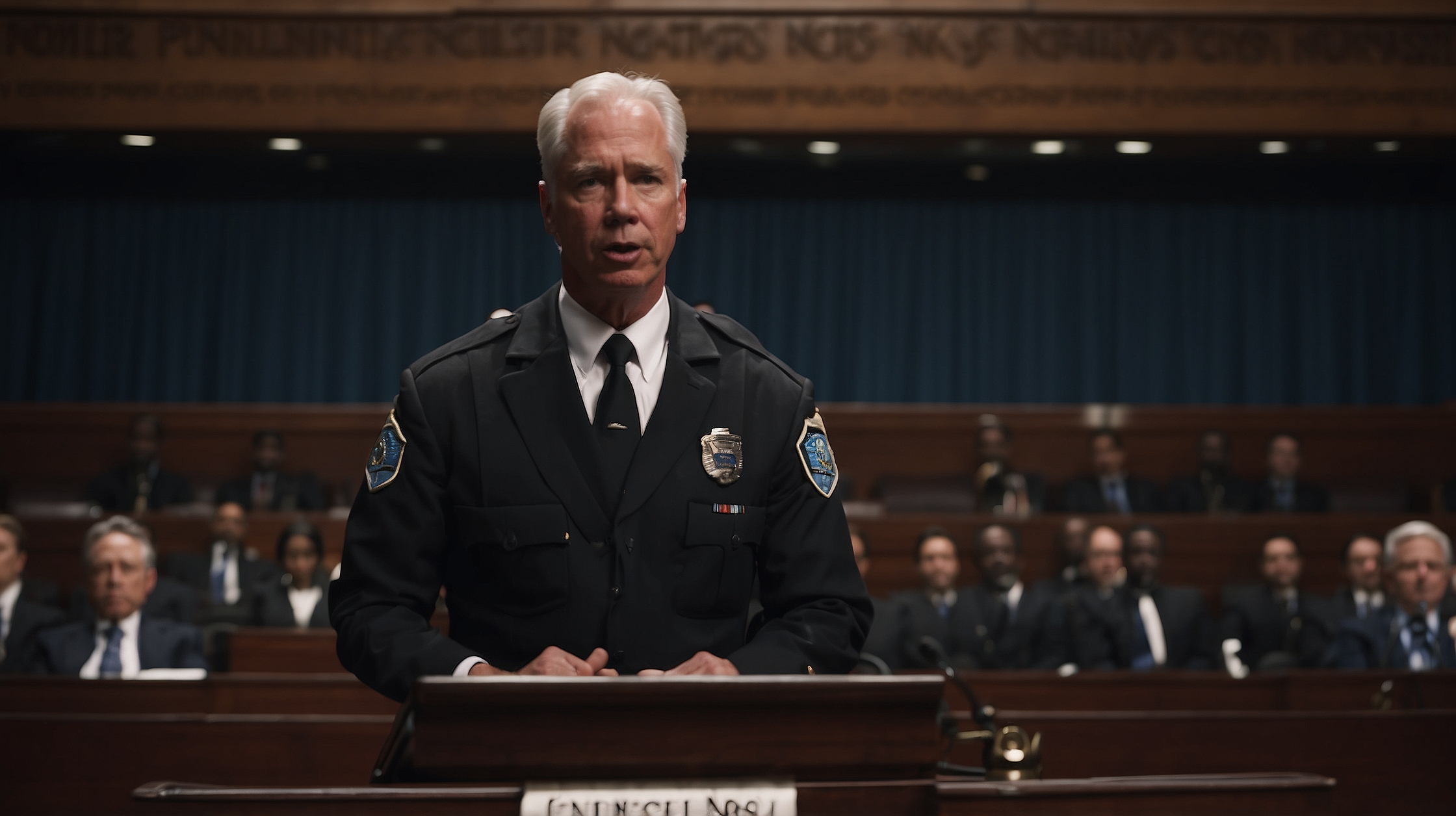

Senator Ron Johnson is reigniting a pivotal debate over American policing transparency. The Wisconsin Republican recently introduced a bill aimed at ending what he calls “unnecessary and obstructive limitations” on the release of police body camera footage. His proposed legislation, titled the “Public Servant Transparency Act,” would dramatically alter when, how, and to whom such footage is made accessible. The bill is already sparking intense public conversation over accountability, privacy rights, and law enforcement transparency across the country.

At the heart of the proposal is one clear goal: to increase public access to law enforcement recordings, particularly in the aftermath of controversial incidents involving police use of force. “Facts matter,” Johnson stated during a press briefing. “The public deserves to see for themselves what happened rather than rely on selective narratives.” Supporters see the bill as a step toward justice and clarity. Critics, however, raise alarms about privacy, potential legal complications, and the risks of rushed or one-sided interpretations of footage.
Key aspects of Ron Johnson’s proposed body camera reform
| Feature | Details |
|---|---|
| Bill Name | Public Servant Transparency Act |
| Proposed By | Senator Ron Johnson (R-WI) |
| Purpose | To remove limitations on public access to police body camera footage |
| Main Changes | Allows near-immediate release of footage after incidents; limits redaction powers |
| Impact Scope | National — affects federal and local agencies receiving federal funding |
| Privacy Concerns | Critics worry about identifying minors, victims, and sensitive circumstances |
| Intended Effect | Enhance transparency and public trust in law enforcement |
What existing laws currently require and why they’re under scrutiny
Across many U.S. jurisdictions, police departments are guided by a patchwork of rules governing how body camera footage is handled. These rules vary significantly — some states require footage to be released within a certain time frame after an incident, while others leave it entirely up to agency discretion. In numerous scenarios, footage is withheld for weeks, months, or indefinitely, often citing “ongoing investigations.” Senator Johnson argues this practice breeds public suspicion and reduces transparency in moments where trust in law enforcement is already strained.

Currently, law enforcement can delay the release of body cam video due to concerns over due process, the identities of involved officers or civilians, and departmental policies that prioritize internal reviews before public disclosure. Johnson’s bill would override many of these constraints, particularly for agencies that rely on federal law enforcement grants. The senator believes the public has a fundamental right to see evidence from publicly funded policing tools immediately — especially in situations involving serious allegations of misconduct.
What would change if the bill is passed
Under the Public Servant Transparency Act, federal and local police agencies receiving certain federal funds would be mandated to release unredacted body camera recordings within five business days of any “critical incident” — including use of force, loss of life, or allegations of misconduct. The bill would also limit agencies’ ability to delay publication on the grounds of internal reviews or disciplinary proceedings. Agencies would face penalties — including potential loss of funding — for failure to comply with these mandates.

The legislation would also narrow the ability to blur faces or redact audio, except in cases where minors or victims of sexual assault are involved. Privacy activists have expressed concern that these measures could lead to public exposure of traumatized individuals, especially victims or witnesses caught inadvertently on camera. Despite these concerns, Johnson’s supporters argue that carefully written exceptions can prevent harm while still allowing broad public oversight.
Winners and losers if this proposal becomes law
| Winners | Losers |
|---|---|
| General public and transparency advocates | Law enforcement agencies with strict internal protocols |
| Journalists and civil rights groups | Privacy and legal rights advocates |
| Victims’ families demanding accountability | Police unions concerned about unfair scrutiny |
Support and opposition: who’s saying what
“Senator Johnson’s bill strikes at the heart of what the public has been demanding for years — transparency and accountability in law enforcement.”
— Angela Kent, Civil Rights AttorneyAlso Read BBC and Met Office Forecast: When the UK Will Warm Up Again After the Recent Chill
“We understand the intent, but releasing raw footage without adequate context or privacy protection can create traumatic ripple effects for the innocent.”
— Lt. Ronald Medrano, National Police Chiefs Association (placeholder)
“This is about restoring trust. The more footage is kept out of sight, the more people assume guilt or corruption.”
— Marcus Thomas, Community Policing Expert
Senator Johnson has also found support from several transparency-focused nonprofits, who argue that body camera footage is funded by taxpayer money and should be treated as a public record by default. Police unions and state attorney general offices, meanwhile, remain divided — with some arguing that the bill strikes a dangerous balance between justice and due process.
How other states handle body cam footage now
While the federal bill would have nationwide implications, it’s important to examine how individual states manage these challenges today. For instance, North Carolina law requires a court order to release most body camera footage. On the other hand, states like Illinois and California allow more discretion but retain broad language that enables delays. Johnson’s bill would create a standardized model, effectively overriding state-level discretion where federal funding is involved.
This approach, however, risks triggering lawsuits over federal overreach. State representatives from various regions have raised red flags about Washington dictating video evidence procedures. If passed, the law would become one of the most aggressive national mandates on law enforcement transparency to date.
The political future of Johnson’s proposal
Despite Republican leadership in the Senate, Johnson’s bill faces an uphill climb. Some GOP senators — especially those with close ties to law enforcement groups — have been hesitant to weigh in. Democrats, while often the champions of policing reform, may object to limited privacy protections in the current draft. Compromises may be required, particularly around redaction rules and the exact time frame for releasing video.
Still, as public opinion continues to demand greater police accountability, Johnson is betting on a groundswell of bipartisan support. If momentum builds in the coming months, the bill could serve as a blueprint for future reforms — or at the very least, trigger valuable updates to state-level body cam release law.
What comes next for law enforcement transparency
The Public Servant Transparency Act might not pass this Congress in its original form, but it is sending a clear signal: elected officials are aware that public patience has worn thin when it comes to police oversight. Whether or not it succeeds legislatively, Johnson’s bill adds urgency to existing conversations about privacy vs. accountability in the digital surveillance age.
Pressure will now mount on local and federal agencies to reassess their body camera policies. Some may preemptively act to expand access to avoid federal mandates later. Others might harden their positions, waiting for legal battles to shape this evolving sector of justice reform.
Frequently Asked Questions
What is the Public Servant Transparency Act?
It is a bill introduced by Senator Ron Johnson that aims to mandate faster, broader public access to police body camera footage, especially after critical incidents.
Why does Senator Johnson want this change?
Johnson believes current delays in footage release erode public trust, and that transparency is essential for justice and accountability in policing.
Does the bill override state-level laws?
Not directly, but it would apply to any local or federal agency that receives certain federal funding, thereby incentivizing compliance over time.
When would footage have to be released?
The bill mandates that footage of critical incidents be released to the public within five business days, barring limited exceptions.
Are there any privacy protections?
Yes, but critics argue they are insufficient. There are provisions for redacting content involving minors or victims of sexual violence.
Could this lead to more lawsuits?
Possibly. Privacy advocates worry about misuses and legal consequences if sensitive footage is released without appropriate safeguards.
How likely is this bill to pass?
The bill faces a divided Congress and uncertain bipartisan support. Its long-term effect may be to influence future legislation rather than pass immediately.
About the Author