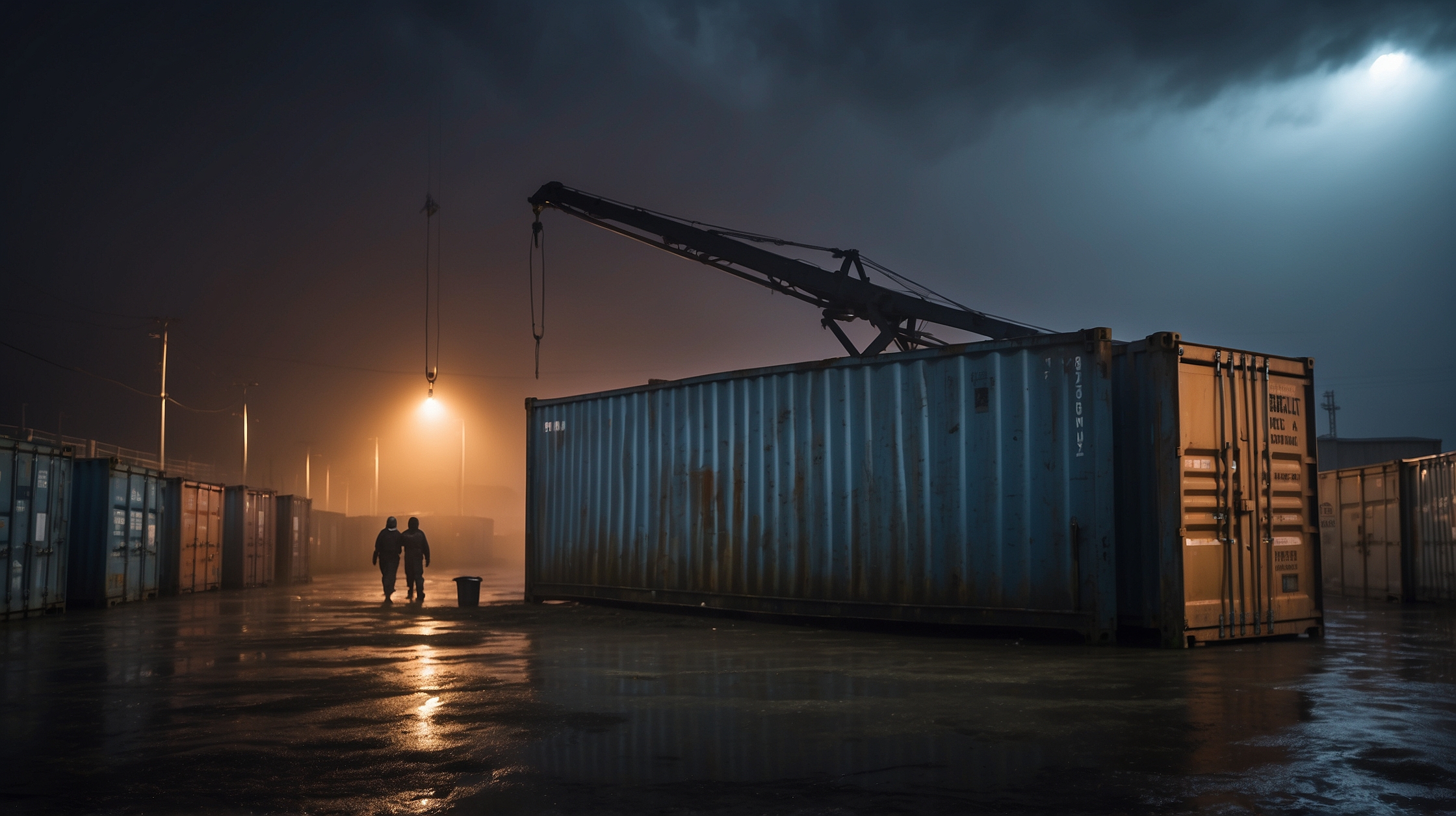

In a dramatic turn of events reflecting the intensity of Ecuador’s security crisis, authorities have begun deploying **shipping containers as emergency prison infrastructure**. With overcrowding, violent gang takeovers, and riots plaguing the South American nation’s correctional system, this controversial move underscores how deeply the state is struggling to wrest back control. Located in or near maximum-security compounds, these containers are intended as temporary holding cells while officials attempt to overhaul a prison system handcuffed by decades of neglect and corruption.

The initiative comes as Ecuador confronts a wave of violence rarely seen in its modern history. More than 400 inmates have been killed inside the country’s prisons since 2021, including gruesome massacres involving beheadings and gang executions. With the prison system stretched far beyond its capacity, President Daniel Noboa’s administration is turning to drastic measures—including the use of shipping containers—to quarantine the most dangerous criminals and segregate warring factions.
Overview of Ecuador’s Shipping Container Prisons
| Initiative | Use of shipping containers as emergency prison cells |
| Led by | President Daniel Noboa’s administration |
| First deployed | Early 2024 |
| Purpose | Separating high-risk inmates and reducing overcrowding |
| Constraints | Human rights concerns, infrastructure challenges |
| Locations | Near existing prisons in Guayaquil, Quito, and Cuenca |
Why Ecuador’s prisons became war zones
Ecuador was once considered a relatively safe haven surrounded by unstable neighbors, but its fortunes changed dramatically in recent years. The nation’s **strategic location between Colombia and Peru**—the world’s top cocaine producers—made it ripe territory for cartel infiltration. As transnational criminal groups expanded their operations into Ecuador, local gangs allied themselves with some of the most notorious cartels, including Mexico’s Sinaloa and Jalisco New Generation Cartel.

This alignment supercharged gang violence, not only on the streets of Guayaquil and Quito but also behind bars. Prisons became staging grounds for drug trafficking networks, recruitment centers, and sometimes even command posts. With minimal oversight and rampant corruption within the penitentiary system, gang warfare quickly spiraled into mass killings that turned modular prison wings into blood-stained battlegrounds.
“Prisons in Ecuador have ceased to be facilities for rehabilitation and are now operational bases for criminal enterprises.”
— María Paula Romo, former Interior MinisterAlso Read Retirees beware: How a hidden Medicare surcharge (IRMAA) can cut your Social Security check in 2026
What changed this year
2024 marked a pivotal year when President Noboa declared a **state of emergency**, taking the extraordinary step of militarizing prisons and authorizing the use of temporary shipping container facilities. This intensified response was prompted by an alarming sequence of jailbreaks, hostage situations, and public executions tied to criminal groups. Government forces raided multiple prisons in a show of strength, unearthing weapons, cellphones, even luxury items used by imprisoned gang bosses.

But these raids also highlighted Ecuador’s Achilles’ heel: prison overpopulation and inadequate isolation mechanisms. With over 33,000 inmates crowded into facilities designed for fewer than 30,000, there was simply nowhere to safely house newly captured suspects or violent gang leaders. The administration’s answer? **Steel shipping containers retrofitted with ventilation, lighting, bedding, and minimal provisions.**
“Transport containers are not a perfect solution, but they buy us time to regain control and build safer, permanent infrastructure.”
— Pablo Ramírez, Ecuador’s Deputy Minister for Prisons
Are container prisons effective and safe?
The decision has sparked fierce debate within Ecuador and abroad. Supporters claim these make-shift prisons are cheaper and faster to deploy, potentially serving as a deterrent to would-be cell commanders. They also allow for rapid separation of rival affiliates, which is crucial given the prevalence of gang labels like “Los Choneros,” “Los Lobos,” and smaller factions with deadly loyalties.
Critics argue the use of shipping containers could violate **international human rights standards**, especially if the conditions inside fall below accepted norms. Rights groups warn that poor ventilation, heat exposure, or lack of medical attention could make these temporary blocks hazardous, not just punitive. Government officials insist that human dignity remains a priority, but with Ecuador’s finances severely limited, oversight remains a challenge.
“Temporary detention units must never become a permanent excuse for neglecting human rights obligations.”
— Sofia Andrade, Legal Advocate for Latin Prison Reform
Winners and losers of the container strategy
| Winners | Losers |
|---|---|
| Government forces regaining prison control | Inmates facing precarious living conditions |
| Communities once terrorized by prison-led gangs | International reputation on human rights |
| Anti-gang intelligence operations | Opposition parties and prison watchdog groups |
Could this become a long-term policy?
While shipping container cells are billed as temporary, **their increasing scale and tactical effectiveness** suggest they may play a long-term role in Ecuador’s carceral strategy. Construction plans under President Noboa’s emergency security budget include the commissioning of several new high-security units, possibly modeled after similar efforts in El Salvador under President Nayib Bukele.
Still, human rights experts caution that the normalization of alternative detention structures could result in an informal shadow prison system—with limited review, technical standards, or transparency. Ensuring regular inspections and third-party audits will be key in preventing potential abuses and safeguarding inmate dignity.
How other countries have approached prison crises
Ecuador’s gambit mirrors moves in countries like El Salvador and the Philippines, both notorious for **hardline anti-gang crackdowns**. El Salvador, for instance, built a mega-prison for over 40,000 inmates and imposed brutal curfews to break cartel influence. While crime rates dropped dramatically, critics argue that such mass-detentions sideline civil liberties and foster systemic abuse.
Ecuador faces narrower economic margins and a different legal structure, so its ability to enforce large-scale reforms without foreign aid or structural adjustment may be limited. Still, with careful planning, transparency, and public oversight, shipping containers could serve as a stopgap on a longer path toward real reform.
“We need to dismantle the economic, logistical, and psychological hold that gangs have amassed—not just lock them in metal boxes.”
— Diego Velasco, Criminologist and Public Security Analyst
Public response and political stakes
Initial polling suggests the Ecuadorian public largely supports bold prison measures, driven by fatigue over rising crime and daily security fears. President Noboa has leveraged this sentiment to push forward controversial policies that might otherwise stall in Congress. However, the deeper question of **criminal justice reform** remains unresolved. Without investments in education, employment, and rehabilitation, experts warn the country runs the risk of merely containing—rather than correcting—criminal behavior.
What comes next for Ecuador’s penitentiary system
The road ahead is steep. Ecuador must invest substantially in modern correctional facilities, retrain prison personnel, and break corrupt ties between guards and gang chiefs. Meanwhile, the National Assembly will soon evaluate proposed reforms that could provide funding for long-term solutions, including a new **high-security prison complex in the Amazon region**. The government also announced a plan to expand psychological counseling and vocational training for non-violent offenders, signaling a potential shift toward more holistic corrections policy.
Short FAQs on shipping container prisons in Ecuador
Why is Ecuador using shipping containers for prisons?
To manage severe overcrowding and isolate violent gang leaders during an unprecedented prison violence crisis.
Are these container prisons permanent structures?
No, they’re described as temporary emergency units until more secure and humane facilities are built.
Where are these containers being used?
Near major prisons in Guayaquil, Quito, and Cuenca—with more planned in remote areas for high-risk inmates.
How many people can live inside one container?
Container units can house 8–12 inmates, depending on modifications such as bunk beds and partitioning.
Is this approach legal under Ecuadorian law?
Yes, under the emergency decree, though long-term detainment in such conditions raises legal and ethical concerns.
Has this method reduced prison violence?
Early data suggests improved control inside some facilities, but comprehensive impacts will take time to measure.
What does the international community think?
There’s cautious concern from human rights groups, especially if conditions and oversight are inadequate.
What other reforms are planned?
The government plans to build high-tech prison facilities and offer expanded social programs for reintegration.
About the Author