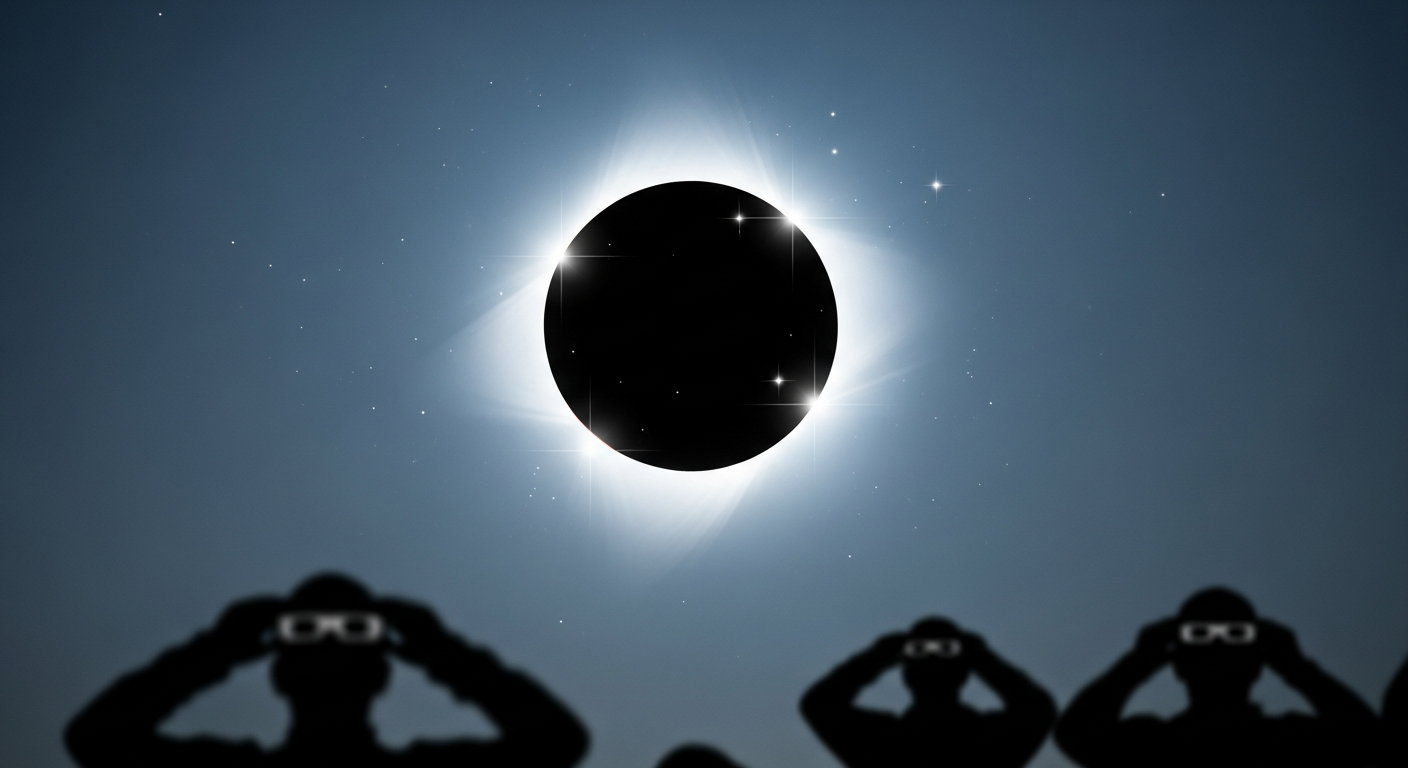
On August 12, 2026, skywatchers across parts of North America and Europe will witness one of nature’s greatest spectacles—a total solar eclipse. It’s a cosmic event that turns day into night for just a few precious minutes, casting a spell over cities, countrysides, and coastal towns. With the promise of breathtaking visuals and awe-filled moments, the 2026 eclipse has already sparked eager travel plans and scientific excitement.

This isn’t your average solar event. It’s a minute-by-minute celestial drama featuring a darkened sky, plunging temperatures, and an unforgettable dance between the sun and moon. As millions prepare for this rare alignment, understanding when, where, and how to experience it can make the difference between a fleeting glimpse and a truly transformative view. Whether you’re a seasoned eclipse chaser or a curious first-timer, knowing the exact timing and prime viewing locales is crucial.
Key details about the 2026 total solar eclipse
| Event | Total Solar Eclipse |
|---|---|
| Date | August 12, 2026 |
| Maximum Duration of Totality | 2 minutes and 18 seconds |
| Path of Totality | Greenland → Iceland → Northern Spain |
| First Location of Totality | Western Greenland |
| Last Location of Totality | Northeastern Spain |
| Time of Max Eclipse (UTC) | 18:18 UTC |
What makes the 2026 eclipse so special
Unlike partial eclipses, which merely dim sunlight, a total solar eclipse allows viewers located inside the path of totality to experience complete darkness during peak daytime. The sun’s corona—its glowing outer atmosphere—becomes visible, offering a haunting yet beautiful ring around the moon’s silhouette.
What sets the 2026 eclipse apart is both its geographical reach and duration. Unlike previous eclipses confined to narrow or less accessible corridors, this one cuts across a wide swath of the Northern Hemisphere, from the icy terrains of Greenland to the sun-soaked provinces of Spain. Thousands of towns and small cities will find themselves plunged into an eerie twilight, with temperatures dropping and wildlife reacting in real-time.
High-visibility regions to watch from
If you’re planning to view the eclipse in person, location is everything. The most optimal regions for a full view of totality span a diagonal arc stretching from western Greenland, crossing Iceland, and ending in northeastern Spain. Here’s a look at key hotspots along the path:
- Nuuk, Greenland – one of the first places to see total darkness.
- Reykjavik, Iceland – will experience over a minute of totality with partial phases lasting longer than an hour.
- Bilbao and Zaragoza, Spain – major cities that lie near the southern end of the path, offering both accessibility and exceptional weather odds.
For those outside the path, a partial eclipse will still be visible across much of Europe, the eastern United States, and parts of North Africa. But they won’t get the complete blackout that characterizes totality.

Minute-by-minute timeline of totality
Timing is crucial when witnessing a total eclipse. Here’s a breakdown of how the event unfolds across various key regions (in local time):
- Greenland (Nuuk): Partial starts at 15:28, totality at 16:42, ends at 16:44.
- Iceland (Reykjavik): Partial starts at 17:10, totality at 18:24, ends at 18:25:30.
- Spain (Bilbao): Partial starts at 19:20, totality at 20:33, ends at 20:35.
The entire eclipse—from first partial contact to the last—will last almost three hours in any given viewing area. Viewers should be ready for the exact moments of totality with proper safety gear and clear skies.
What to bring and how to prepare
Proper preparation enhances safety and enjoyment. Here’s a checklist for eclipse readiness:
- ISO-compliant eclipse glasses – Never look at a solar eclipse without certified protection.
- Camera with solar filter – To capture quality shots without damaging equipment.
- Portable seating and sunscreen – Hour-long waiting can feel tedious without comfort.
- Clear viewing zone – Avoid areas with low horizons or light pollution.
The most mesmerizing part is when the temperature drops, birds go silent, and for a brief moment, the world feels like it stopped breathing.
— Dr. Alina D’Souza, Astrophysicist
Weather patterns and best odds for clear skies
Clear skies are essential for a good view. Historically, northern Spain offers the highest odds of cloud-free visibility in August, making it a top target for travelers. In contrast, coastal Iceland and Greenland may experience more unpredictable weather conditions. Meteorologists advise planning alternate locations within driving distance in case of sudden cloud formation.
Impact on travel and tourism
Several regions along the eclipse path are anticipating a surge in tourism. Hotels in cities like Bilbao and Zaragoza report up to 80% occupancy months in advance. Local governments are boosting infrastructure, from mobile observation points to transportation hubs for eclipse chasers. Iceland is preparing dedicated viewing zones with safety tents and live commentary.
Demand for eclipse tours is unlike anything I’ve seen before. We’re seeing sold-out packages a year in advance.
— Miguel Herrera, Solar Tour Operator
Scientific importance of the event
Total solar eclipses give researchers a rare chance to study the sun’s corona, magnetic fields, and planetary alignments. Several space agencies plan to coordinate balloon and drone launches to gather atmospheric data during the brief seconds of totality. It’s also a golden opportunity for educational outreach and amateur astronomers to contribute observations.
Best viewing methods for those outside the path
If you’re located outside the totality path, don’t fret. A partial eclipse is still worth observing with proper solar filters or pinhole projectors. Local planetariums and observatories will offer live feeds. Some cities will host public watch parties made festive with educational exhibits, telescopes, and expert commentary.
How to photograph the eclipse safely
Capturing an eclipse requires care and equipment. Use cameras equipped with solar filters and high-contrast ISO. Remote shutter systems and telescopic lenses help achieve crisp shots without eye strain. DSLRs, mirrorless cameras, and even smartphones can produce stunning images with the right setup.
Photographing an eclipse is not just a picture—it’s recording the collision of space and time, witnessed by human eyes.
— Eva Lin, Astro Photographer
Frequently Asked Questions About the 2026 Eclipse
Where will the total eclipse be visible?
The eclipse will be visible in totality across Greenland, Iceland, and parts of northern Spain. Other parts of Europe and eastern North America will see a partial eclipse.
What time will the eclipse reach its peak?
The maximum point of the eclipse will occur at approximately 18:18 UTC over central Iceland.
How long will totality last?
The maximum duration is about 2 minutes and 18 seconds depending on the location within the path of totality.
Is it safe to look at the eclipse directly?
No, never look at the sun without ISO-12312-2 compliant eclipse glasses or filters, except during totality which lasts just a couple of minutes.
Will the eclipse affect temperatures?
Yes, temperatures can drop by several degrees during the brief period of totality due to the sun’s light being entirely blocked.
Can I photograph the eclipse with a smartphone?
Yes, but you need a solar filter and ideally a tripod for stability. Manual exposure settings are recommended to prevent overexposure.
What should I do if the skies are cloudy?
Have a backup location in mind or tune into a live feed hosted by local observatories for the virtual experience.
When is the next eclipse after 2026?
The next major solar eclipse will occur in 2027, with a total eclipse visible in parts of North Africa and the Middle East.
About the Author