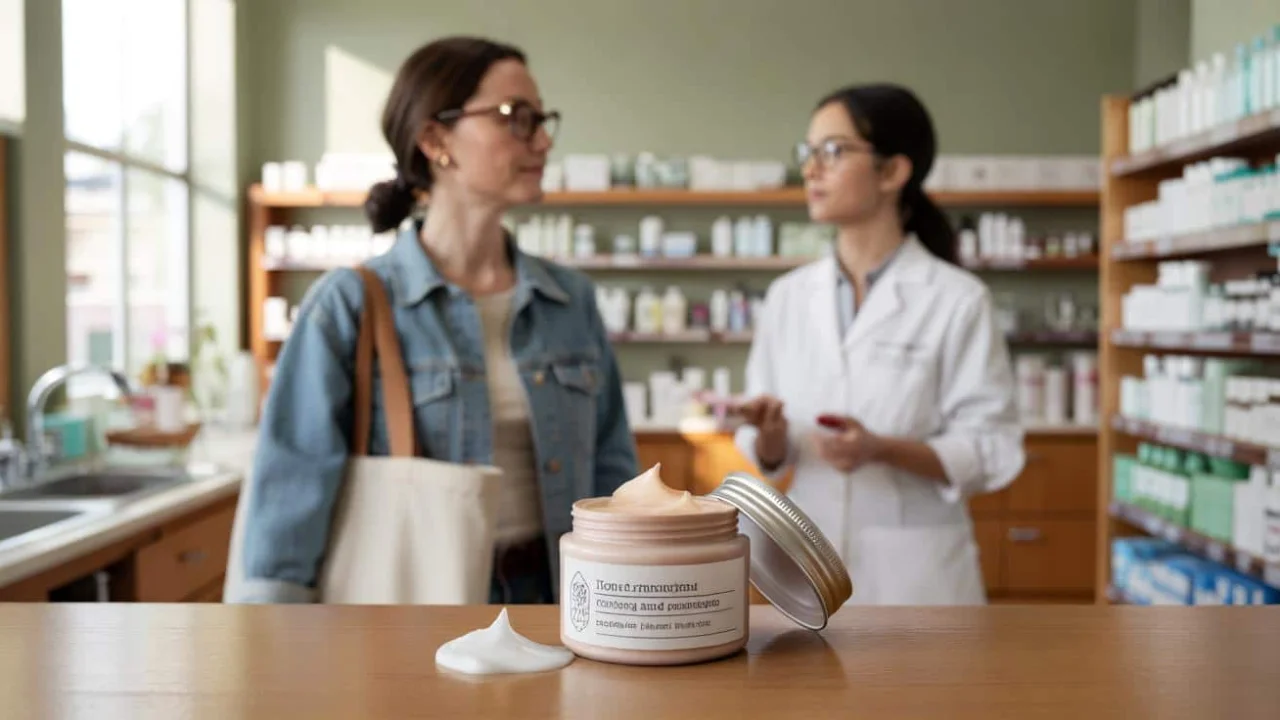
Sarah stared at the pharmacy shelf, overwhelmed by rows of sleek bottles promising “revolutionary anti-aging technology” and “clinically proven peptide complexes.” Her grandmother’s voice echoed in her head: “Honey, I’ve used the same cream for forty years, and look at my skin.” At 85, her grandmother’s face was softer than most women half her age.

The pharmacist noticed Sarah’s confusion and walked over. “Looking for something specific?” he asked. Sarah mentioned her grandmother’s old moisturizer – a plain jar with a simple name she barely remembered. His eyes lit up. “Ah, you mean the one dermatologists keep recommending now. Funny how the old stuff comes back around.”
He reached behind the counter and pulled out a modest container that looked nothing like the Instagram-worthy products surrounding it. “This oldschool moisturizer is suddenly everywhere in medical circles,” he said. “Doctors are calling it their top pick.”

Why Simple Ingredients Are Winning Against Complex Formulas
The beauty industry spent decades convincing us that more ingredients meant better results. Twenty-step routines became normal. Serums with unpronounceable names lined bathroom counters. But dermatologists are pushing back with surprising news: the most effective moisturizers often have the shortest ingredient lists.
“I see patients spending hundreds on complex formulations, then their skin improves dramatically when they switch to a basic cream their grandmother might have used,” explains Dr. Jennifer Martinez, a board-certified dermatologist in Chicago.

This shift isn’t just about nostalgia. Clinical studies are backing up what older generations knew instinctively – that simple, proven ingredients often outperform trendy new compounds.
The oldschool moisturizer making headlines contains just a handful of ingredients: petrolatum, mineral oil, glycerin, and ceramides. No exotic plant extracts, no peptides with scientific-sounding names, no fragrance to mask the simplicity.

What Makes These Classic Formulas So Effective
The secret lies in what these traditional moisturizers don’t try to do. Instead of promising to reverse aging, brighten skin, and fight acne simultaneously, they focus on one job: keeping moisture locked in your skin.
Here’s what sets oldschool moisturizers apart from modern alternatives:

- Proven occlusive agents that create an effective moisture barrier
- Minimal ingredients reduce the risk of irritation and allergic reactions
- No added fragrances or dyes that can sensitize skin over time
- Affordable pricing allows consistent, long-term use
- Stable formulations that don’t break down quickly
“The most important function of any moisturizer is to prevent water loss from the skin,” notes Dr. Robert Chen, a dermatologist who has practiced for over twenty years. “These classic formulas excel at that basic but crucial task.”
| Feature | Oldschool Moisturizer | Modern Premium Brands |
|---|---|---|
| Ingredient Count | 5-8 ingredients | 15-30+ ingredients |
| Average Price | $8-15 | $50-200+ |
| Fragrance | None or minimal | Often heavily fragranced |
| Shelf Stability | 2-3 years | 6-12 months after opening |
| Clinical Backing | Decades of use data | Limited long-term studies |
Real People Are Noticing the Difference
The recommendations aren’t just coming from doctors’ offices. Social media users are sharing before-and-after photos, crediting simple drugstore creams with transforming their skin after years of expensive treatments failed.
Maria Rodriguez, a 34-year-old teacher from Phoenix, tried switching to an oldschool moisturizer after her dermatologist’s suggestion. “I was skeptical because it cost twelve dollars and looked so plain,” she says. “But within two weeks, my skin felt better than it had in years of using luxury brands.”
The trend is especially strong among people with sensitive skin conditions like eczema and rosacea. These individuals often struggle with reactions to modern formulations packed with active ingredients.
“Patients with compromised skin barriers do better with gentle, occlusive moisturizers,” explains Dr. Lisa Park, a dermatologist specializing in sensitive skin conditions. “The fancy ingredients that promise dramatic results often irritate rather than heal.”
Parents are also turning to these traditional formulas for their children. Pediatric dermatologists frequently recommend the same simple moisturizers that previous generations used, citing their safety profile and effectiveness.
The psychological impact shouldn’t be underestimated either. Many users report feeling relief at simplifying their skincare routine. Instead of layering multiple products twice daily, they’re finding success with one reliable cream.
Pharmacists across the country notice the shift. “We’re selling more of these basic moisturizers than ever,” reports Tom Wilson, who has worked at an independent pharmacy for fifteen years. “Customers come in asking for the ‘boring’ cream their doctor recommended instead of the flashy stuff.”
This isn’t just an American phenomenon. European and Asian dermatologists are also returning to time-tested formulations, suggesting this represents a global shift toward evidence-based skincare rather than marketing-driven products.
The environmental angle adds another layer of appeal. Oldschool moisturizers typically come in simple packaging without excessive plastics or components that make recycling difficult. Their stable formulations also mean less waste from products that spoil quickly.
Cost savings compound over time. A jar that costs fifteen dollars and lasts three months represents significant savings compared to premium brands that require frequent repurchasing due to smaller sizes and shorter shelf lives.
FAQs
Which oldschool moisturizer do dermatologists recommend most?
Petroleum-based formulations like Vaseline, CeraVe, and Eucerin consistently receive top recommendations for their proven effectiveness and minimal ingredients.
Are these simple moisturizers suitable for all skin types?
Most people benefit from basic formulations, but those with very oily skin might prefer lighter textures while maintaining simple ingredient profiles.
Can oldschool moisturizers replace anti-aging products?
Proper hydration is the most important anti-aging step, though some people may want to add specific treatments like retinoids under dermatological guidance.
Why are dermatologists recommending these now?
Years of clinical experience show that basic moisturizers often outperform complex formulations, with fewer side effects and better long-term results.
Where can I find these recommended moisturizers?
Most drugstores and pharmacies carry the brands dermatologists recommend, usually in the basic skincare aisles rather than premium sections.
How long does it take to see results?
Most people notice improved skin texture and comfort within 1-2 weeks of consistent use with a quality oldschool moisturizer.
About the Author