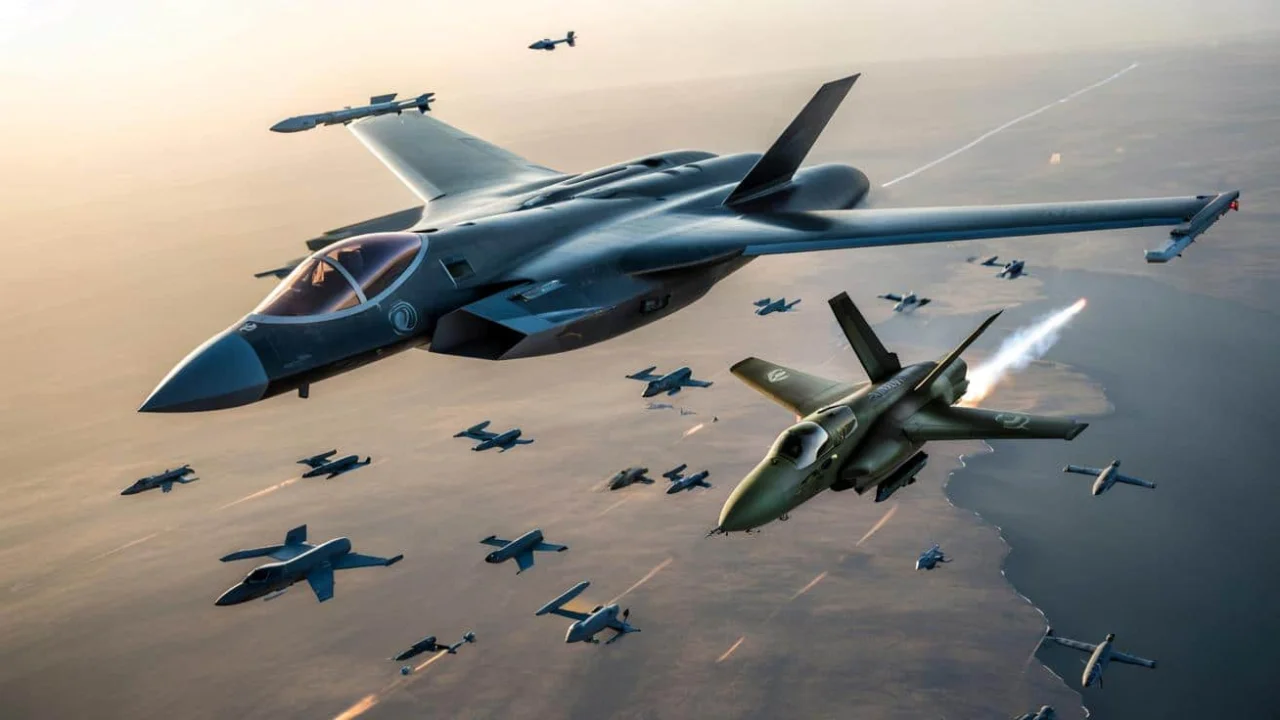
Maria Lindström still remembers the excitement in her hometown of Linköping when Saab announced another major aircraft contract. Her father worked at the factory for thirty years, building the legendary Gripen fighters that made Sweden punch above its weight in global defense markets. Now, as whispers spread through the aerospace community about a potential Airbus Saab partnership, Maria wonders if her teenage son might one day work on jets that could reshape Europe’s entire military landscape.
The coffee shops around Saab’s headquarters buzz with speculation these days. Engineers swap theories about secret meetings, while defense analysts debate what this could mean for Sweden’s traditional neutrality. What started as industry rumors is quickly becoming the most significant shift in European aerospace partnerships in decades.
For families like Maria’s, whose livelihoods depend on defense manufacturing, the implications go far beyond corporate boardrooms and government contracts.
When giants quietly shake hands
The Airbus Saab partnership represents more than just another corporate deal. Behind closed doors in Munich and Stockholm, negotiators are sketching out plans that could fundamentally alter how Europe builds its next generation of warplanes.
While most attention focused on the established camps – France, Germany, and Spain working on their Future Combat Air System (FCAS), and Britain, Italy, and Japan developing the Global Combat Air Programme (GCAP) – Sweden has been quietly weighing its options.
“Sweden was always the wildcard everyone wanted but nobody could quite pin down,” explains Dr. Hans Weber, a former NATO defense analyst. “Their decision could tip the entire European fighter market one way or another.”
The partnership discussions center on two revolutionary concepts. First, a manned next-generation fighter that would incorporate Sweden’s advanced radar technology with Airbus’s manufacturing scale. Second, and perhaps more intriguingly, swarms of AI-enabled drones designed to fly alongside crewed aircraft.
These Collaborative Combat Aircraft represent the future of air warfare – unmanned systems that can scout ahead, confuse enemy defenses, or even sacrifice themselves to protect the main fighter jet.
What’s really at stake for Europe
The numbers tell a compelling story about why this partnership matters so much:
| Project | Countries | Estimated Cost | Timeline | Current Status |
|---|---|---|---|---|
| FCAS | France, Germany, Spain | €100+ billion | 2040 | Development phase |
| GCAP/Tempest | UK, Italy, Japan | £25+ billion | 2035 | Design phase |
| Potential Airbus-Saab | FCAS nations + Sweden | €120+ billion | 2038-2042 | Negotiation phase |
Sweden brings unique advantages to any partnership:
- Advanced AESA radar technology proven in the Gripen E
- Expertise in electronic warfare systems
- Innovative approach to cost-effective aircraft design
- Strong relationships with neutral and NATO-aligned nations
- Established production facilities and supply chains
“Saab’s involvement would give FCAS access to some of the most sophisticated sensor technology in the world,” notes Sarah Mitchell, defense industry consultant. “Their radar systems are genuinely world-class.”
But the implications extend far beyond technology transfer. An Airbus Saab partnership would potentially deny GCAP access to Swedish expertise, funding, and political support that many considered almost guaranteed.
The UK has long courted Sweden as a natural partner for Tempest, banking on shared values around technological sovereignty and industrial cooperation. Losing that partnership would force Britain to rely more heavily on Italian and Japanese capabilities.
The ripple effects across European defense
For ordinary Europeans, the consequences of this partnership extend well beyond military hardware. Defense spending represents hundreds of thousands of jobs across the continent, from high-tech engineering positions to manufacturing roles in smaller communities.
The Airbus Saab partnership could trigger several significant changes:
Industrial consolidation: Smaller defense companies might find themselves forced to choose sides, potentially leading to mergers or acquisitions as supply chains reorganize around the two major projects.
Technology sharing: European nations would need to decide how much sensitive military technology they’re willing to share with partners, particularly as AI and autonomous systems become central to future warfare.
Budget pressures: Countries involved in these projects face enormous financial commitments stretching decades into the future, potentially crowding out other defense priorities.
“We’re looking at a decision that will shape European defense capabilities for the next fifty years,” explains Professor James Harrison from King’s College London. “The industrial base, the technology pathways, even the geopolitical alignments – everything flows from these partnership decisions.”
Sweden’s choice also reflects broader questions about European strategic autonomy. Can the continent develop truly independent defense capabilities, or will it remain dependent on American technology and systems?
The partnership discussions come at a time when European defense spending is reaching levels not seen since the Cold War. Ukraine has demonstrated the critical importance of advanced air defense and precision strike capabilities, making next-generation fighters more relevant than ever.
For countries like Poland, Finland, and the Baltic states, the choice between FCAS and GCAP could determine their future air capabilities and industrial partnerships. These nations watch the Airbus Saab negotiations closely, knowing their own procurement decisions will partly depend on which program offers the best combination of capability, cost, and political reliability.
“Everyone’s waiting to see which way Sweden jumps,” admits one Baltic defense official, speaking on condition of anonymity. “Their decision will influence ours.”
The coming months will likely determine whether Europe can maintain two competing fighter programs or if market forces will ultimately favor one over the other. Either way, the Airbus Saab partnership represents a pivotal moment in European defense cooperation – one that could reshape military aviation for generations to come.
FAQs
What is the Airbus Saab partnership about?
It’s a potential collaboration between European aerospace giant Airbus and Swedish defense company Saab to develop next-generation fighter aircraft and AI-enabled drone swarms.
How could this affect the GCAP/Tempest project?
If Sweden partners with Airbus instead of joining GCAP, it would deny the UK-Italy-Japan project access to advanced Swedish radar technology and reduce its political and financial support base.
What makes Swedish technology so valuable?
Saab has developed some of the world’s most advanced radar systems, proven electronic warfare capabilities, and innovative cost-effective aircraft design approaches that other partners want to access.
When will these new fighter jets actually fly?
Both major European fighter programs target the late 2030s to early 2040s for their first operational aircraft, making this a long-term strategic decision.
Why does this matter for ordinary Europeans?
Defense aerospace represents hundreds of thousands of jobs across Europe, and these partnership decisions will determine which communities benefit from decades of high-tech manufacturing and engineering work.
Could Europe end up with just one fighter program instead of two?
It’s possible – the enormous costs and technical complexity might eventually force consolidation, with the Airbus Saab partnership potentially tipping the balance toward FCAS over GCAP.
About the Author
