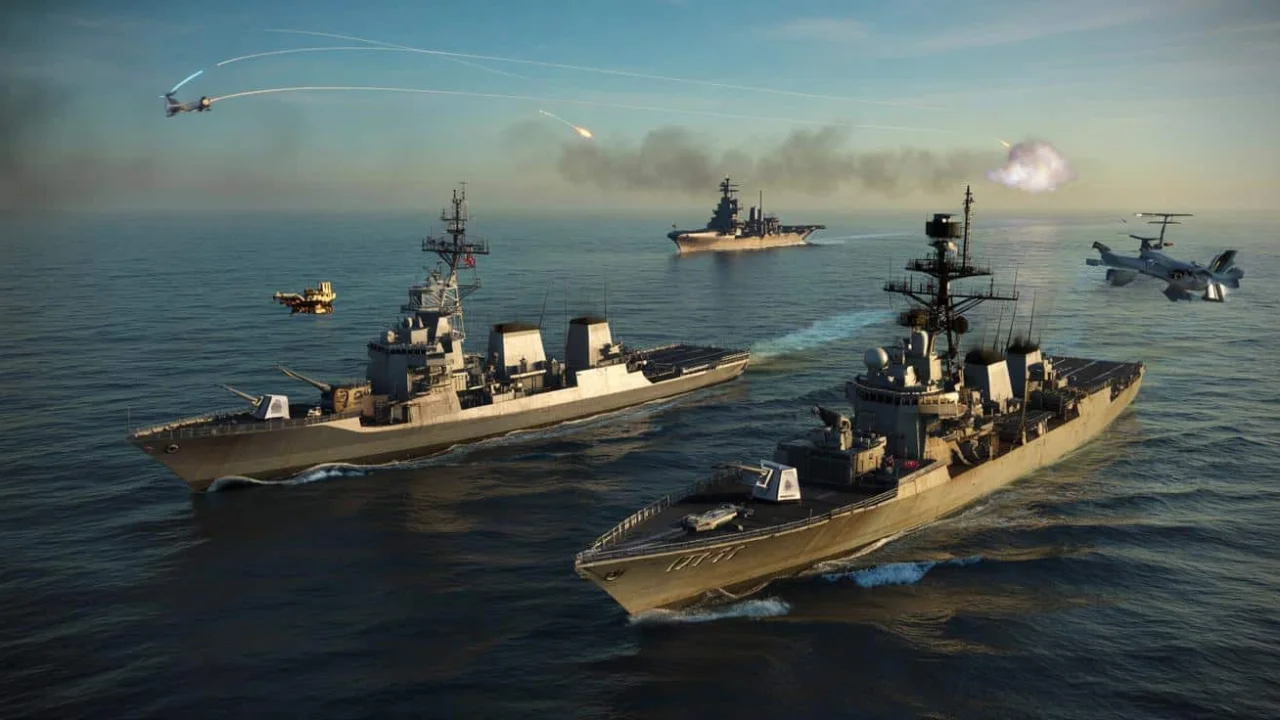
Captain Sarah Mitchell remembers the moment she realized something had to change. Standing on the bridge of her destroyer in the Persian Gulf last year, she watched as her crew prepared for their seventh month at sea—again. The sailors were exhausted, the ship’s systems needed maintenance, and back home, families were struggling with another extended separation.
“We were doing the job, but at what cost?” Mitchell recalls. “Every crisis seemed to demand the same response: send everything we’ve got, regardless of what was actually needed.”
Her experience reflects a growing challenge across the U.S. Navy, one that’s now driving the biggest shift in naval strategy in decades. The service’s top admiral wants to completely rethink how warship deployments work.

Why the Navy’s “Send Everything” Strategy Is Breaking Down
For generations, America’s answer to global crises has been the same: deploy a massive carrier strike group. These floating cities pack incredible firepower—a nuclear-powered aircraft carrier, dozens of fighter jets, guided-missile destroyers, submarines, and thousands of sailors.
But Admiral Daryl Caudle, the Navy’s top officer, says this one-size-fits-all approach is no longer sustainable. The demand from military commanders around the world far exceeds what the Navy can actually deliver without burning out ships and crews.

“We’re essentially trying to be everywhere at once with the same heavy hammer,” explains retired Admiral James Stavridis, former NATO Supreme Commander. “It’s like using a sledgehammer to hang a picture frame.”
The numbers tell the story clearly. Regional commanders request carrier strike groups for missions ranging from deterring China in the South China Sea to protecting shipping lanes from pirates. Yet the Navy only has 11 aircraft carriers, and keeping even half of them deployed simultaneously pushes the entire fleet to its breaking point.

Caudle’s solution? Tailor warship deployments to match specific missions rather than sending the same massive force package everywhere.
What Mission-Tailored Deployments Actually Look Like
The new approach focuses on sending only the ships and capabilities actually needed for each situation. Instead of defaulting to a full carrier strike group, commanders would choose from a menu of specialized force packages.

Here’s how different missions might be handled under the new system:
- Anti-submarine warfare: Destroyers with advanced sonar, maritime patrol aircraft, and attack submarines
- Ballistic missile defense: Aegis-equipped cruisers and destroyers positioned strategically
- Humanitarian assistance: Amphibious ships with medical facilities and supply capability
- Presence operations: Single destroyers or frigates for routine patrols
- High-intensity combat: Full carrier strike groups when maximum firepower is essential
Recent operations in the Red Sea provided a real-world test of this concept. When Houthi rebels began attacking commercial shipping, the Navy responded with a mix of destroyers and cruisers specifically chosen for their missile defense capabilities—not a full carrier group.
| Mission Type | Traditional Response | Tailored Response | Ships Saved |
|---|---|---|---|
| Missile Defense | Full Strike Group (6-8 ships) | 2-3 Aegis Ships | 4-5 ships |
| Presence Patrol | Full Strike Group | 1-2 Destroyers | 5-6 ships |
| Humanitarian Aid | Strike Group + Amphibious | Amphibious Ships Only | 6-8 ships |
| Anti-Submarine | Full Strike Group | Specialized ASW Group | 3-4 ships |
“The math is simple,” says defense analyst Dr. Rebecca Grant. “If you can handle three missions with specialized forces instead of one mission with everything you’ve got, you’re suddenly three times more effective.”
The Real Impact on Sailors and Their Families
Behind all the strategic planning are real people whose lives could dramatically improve under this new approach. Traditional carrier deployments stretch 6-9 months, with some extensions pushing past a year. Shorter, focused missions could bring many sailors home sooner.
Master Chief Petty Officer Rodriguez, whose destroyer spent 11 months deployed last year, sees the potential immediately. “My daughter learned to walk while I was gone. My wife handled our son’s first day of school alone. If we can do these missions faster and more efficiently, that’s a win for everyone.”
The benefits extend beyond family life:
- Reduced maintenance costs: Ships spend less time at sea, reducing wear and tear
- Better readiness: More time in port means more training and equipment updates
- Improved retention: Sailors are more likely to stay in the Navy with better work-life balance
- Enhanced capability: Specialized training for specific mission types
However, the transition won’t be simple. Regional commanders have grown accustomed to requesting massive force packages for every situation. Some worry that smaller, specialized forces might not handle unexpected situations as well as a full strike group.
“There’s definitely some skepticism,” admits Admiral Caudle. “Commanders want to know they have overwhelming capability available. But we have to balance that against the reality of what we can sustain.”
The timing of this shift reflects broader changes in global threats. China’s growing naval power means the U.S. can no longer assume it will face only smaller adversaries. Meanwhile, new technologies like hypersonic missiles and cyber warfare require different responses than traditional naval power.
Early results from Red Sea operations suggest the concept works. Navy ships successfully intercepted dozens of Houthi missiles and drones using precisely the kind of tailored force Caudle envisions—without requiring a full carrier strike group.
“We proved you can handle a real threat with the right ships in the right place,” says Captain Lisa Chen, who commanded a destroyer during the Red Sea campaign. “The question now is whether we have the courage to apply this thinking everywhere.”
FAQs
How many ships are typically in a carrier strike group?
A typical carrier strike group includes 6-8 ships: one aircraft carrier, 2-3 destroyers, 1-2 cruisers, and 1-2 submarines, plus support vessels.
Will this reduce America’s naval presence globally?
No, the goal is to maintain the same presence with more efficient use of ships, allowing the Navy to cover more areas simultaneously with specialized forces.
What happens if a small deployment faces a bigger threat than expected?
The Navy maintains rapid response capabilities and can quickly reinforce smaller deployments with additional ships or air support when needed.
How long do traditional naval deployments last?
Standard carrier deployments typically last 6-9 months, though some have been extended to nearly a year due to global demand.
When will these changes be fully implemented?
The Navy is already testing the concept in select operations, with broader implementation expected to roll out gradually over the next 2-3 years.
Does this mean fewer aircraft carriers will be built?
Not necessarily—carriers remain essential for major conflicts, but they may be used more selectively rather than as the default response to every situation.
About the Author