Imagine waking up on a quiet Sunday morning in a small Polish town near the Ukrainian border. You’re making coffee when a low humming sound cuts through the air—not a plane, not a helicopter, but something smaller, more menacing. Your neighbor calls out from across the fence: “Did you see that thing flying over? Looked like one of those drones on the news.”

This isn’t fiction anymore. It’s the reality facing millions of people living along NATO’s eastern frontier, where Russian drones have become unwelcome visitors in European skies.
That’s exactly why Poland just made one of the biggest defense investments in its modern history—a decision that could change how entire nations protect themselves from the drone age of warfare.

Poland’s $4.2 Billion Bet on the Future of Defense
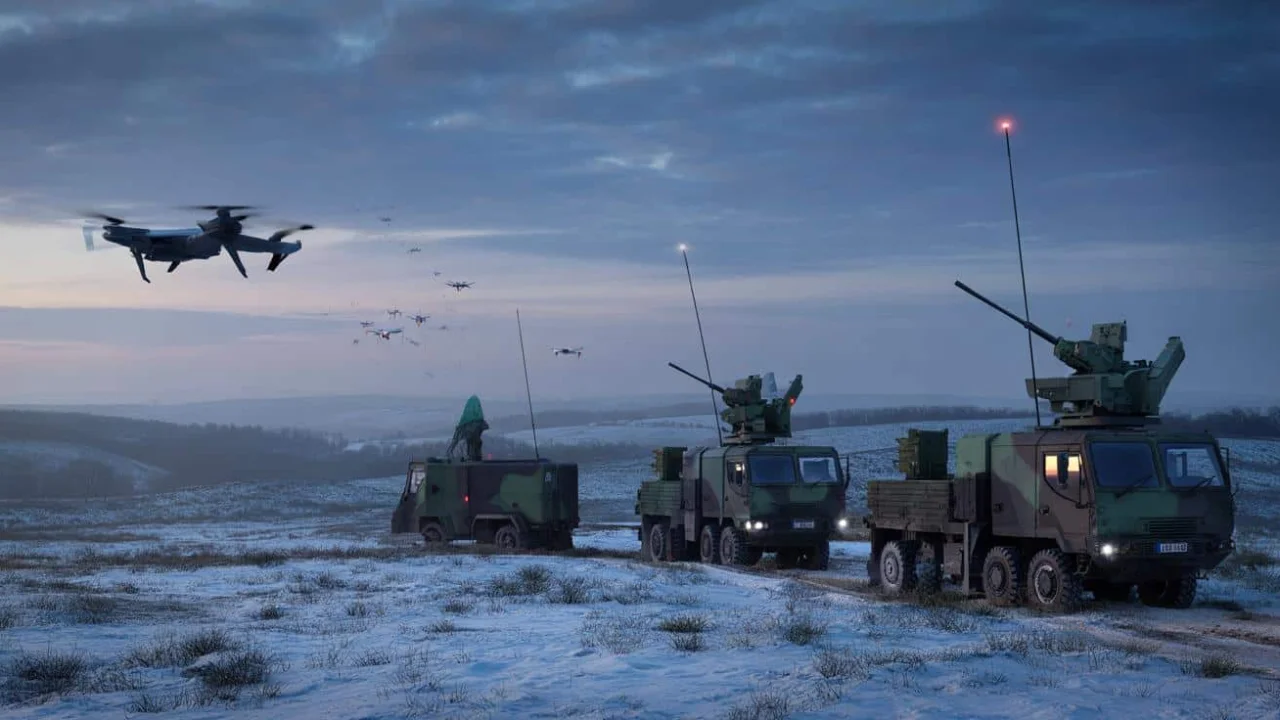
Poland’s Ministry of National Defence has officially signed a massive contract worth approximately $4.2 billion with a consortium led by Norway’s Kongsberg Defence & Aerospace and Polish defense giant Polska Grupa Zbrojeniowa (PGZ). The mission? Build a comprehensive anti-drone “wall” that can detect, track, and eliminate hostile unmanned aircraft before they reach critical targets.
The system, called “San” after the river in eastern Poland closest to Ukraine, represents a new kind of national defense strategy. Instead of waiting for threats to materialize, Poland is creating a proactive shield that can respond to drone incursions in real-time.

“We’re not just buying equipment—we’re investing in a completely new approach to airspace security,” said Defense Minister Władysław Kosiniak-Kamysz during the signing ceremony in Warsaw, attended by Prime Minister Donald Tusk.
The first components of Poland’s anti-drone wall are expected to be delivered in 2026, with the entire system scheduled for completion within two years of the contract signing.

What Makes This Anti-Drone System Different
The San program isn’t just another military purchase—it’s a comprehensive defense ecosystem designed to create continuous coverage across Poland’s most vulnerable areas. Here’s what makes this Poland anti-drone wall unique:
- Layered Detection: Multiple radar systems working together to spot drones at various altitudes and speeds
- Mobile Deployment: Units can be rapidly moved to respond to emerging threats
- Electronic Warfare Capabilities: Systems can jam or hijack drone communications
- Kinetic Interception: Physical destruction options for drones that can’t be electronically disabled
- Integrated Command: All systems connected through a central command structure

The technical specifications reveal the scope of Poland’s ambitions:
| System Component | Coverage Range | Primary Function |
|---|---|---|
| Ground-based Radar | Up to 25 km | Early detection and tracking |
| Electronic Warfare Units | 5-15 km | Signal jamming and control disruption |
| Kinetic Interceptors | 2-10 km | Physical drone destruction |
| Command Centers | Regional coordination | Real-time threat assessment |
“This isn’t just about shooting down drones,” explains a senior Polish defense official familiar with the program. “It’s about creating a network that can think, adapt, and respond faster than any human operator could manage alone.”
Why Poland Needed to Act Now
The decision to build this anti-drone wall didn’t happen in a vacuum. Since Russia’s full-scale invasion of Ukraine began, Polish airspace has experienced multiple unauthorized drone incursions—some accidental, others potentially deliberate.
Each incident creates a diplomatic crisis. When foreign drones cross your border, you face an impossible choice: shoot them down and risk escalation, or let them pass and appear weak. Poland’s anti-drone wall aims to eliminate that dilemma by creating clear, consistent responses.
The system addresses several critical vulnerabilities:
- Protection of critical infrastructure like power plants and airports
- Securing major population centers near the eastern border
- Safeguarding military installations and NATO assets
- Preventing reconnaissance missions by hostile actors
But the implications go far beyond Poland’s borders. Other NATO countries are watching closely to see if this approach could work for their own security challenges.
“What Poland is doing here could become the template for 21st-century border defense,” says Dr. Maria Kowalski, a defense analyst at the Warsaw Institute for Strategic Studies. “If it works, expect to see similar systems across Eastern Europe within five years.”
The human element remains crucial, even in this high-tech solution. The system will require hundreds of trained operators, maintenance crews, and analysts—creating jobs while building national defense capabilities.
For ordinary citizens living in border regions, the Poland anti-drone wall represents something more basic: peace of mind. No more wondering what that humming sound overhead might be. No more checking the news every time an unknown aircraft appears in the sky.
The Kongsberg-PGZ partnership brings together Norwegian technological expertise with Polish manufacturing capabilities, ensuring that a significant portion of the work stays within Poland’s borders while leveraging proven international systems.
As the first installations begin appearing across Poland’s landscape over the next two years, they’ll serve as a visible reminder that the age of drone warfare has arrived—and that some countries are ready to meet it head-on.
FAQs
How much is Poland spending on this anti-drone wall?
The contract with Kongsberg and PGZ is worth approximately $4.2 billion (15 billion zloty), making it one of Poland’s largest defense investments.
When will the anti-drone system be operational?
First components arrive in 2026, with the complete system expected to be fully operational within two years of contract signing.
What types of drones can this system stop?
The San system is designed to detect and neutralize various drone types, from small reconnaissance drones to larger military-grade unmanned aircraft.
Will this system cover all of Poland?
The initial focus is on eastern regions near Ukraine, but the system is designed to be expandable to cover additional areas as needed.
How does the anti-drone wall actually work?
It uses multiple layers of radar detection, electronic warfare jamming, and kinetic interception methods, all coordinated through centralized command centers.
Could other countries adopt similar systems?
Yes, defense experts believe Poland’s approach could serve as a model for other NATO countries facing similar drone-related security challenges.
About the Author