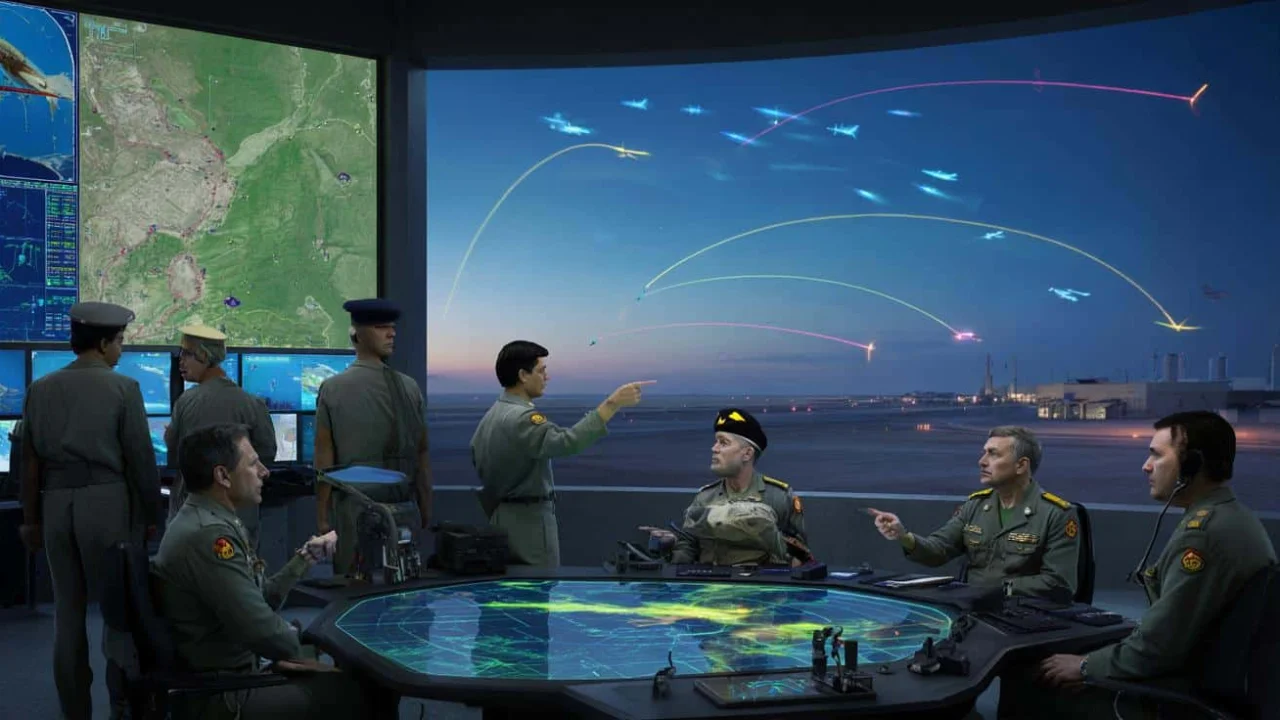
Captain Sarah Chen still remembers the moment her radar screen lit up with dozens of incoming threats last October. As an air defense officer stationed in the Gulf, she watched helplessly as different nations’ systems operated in isolation, each tracking the same drones but unable to share critical data in real-time. “We had all the pieces of the puzzle,” she recalls, “but no way to put them together fast enough.”

That frustrating reality is about to change. The United States has just launched a groundbreaking air defense operations cell in Qatar, bringing together Gulf state militaries under one coordinated shield against the growing threat of drones, missiles, and aerial attacks across the Middle East.
This isn’t just another military exercise or diplomatic gesture. It’s a direct response to the harsh lessons learned from recent conflicts, where fragmented defense systems left critical gaps that adversaries were quick to exploit.

Building the Ultimate Air Defense Network
The new Middle Eastern Air Defense Combined Defense Operations Cell, known as MEAD-CDOC, is now operational at Al Udeid Air Base in Qatar. Think of it as the air defense equivalent of air traffic control, but instead of managing commercial flights, it’s coordinating the protection of millions of people across multiple countries.
Located within the existing Combined Air Operations Center, this facility represents the largest US military coordination hub in the region. For the past two decades, this center has managed air missions across 17 partner nations, but now it’s taking on a much more defensive role.

“What we’re seeing is a fundamental shift from individual national responses to truly integrated air defense operations,” explains retired Air Force General Michael Torres, a former CENTCOM air operations specialist. “This changes everything about how we protect the region.”
The air defense operations cell works by fusing radar data, threat warnings, and engagement decisions from multiple countries into a single, real-time picture of the skies. Instead of each nation operating blindly within its own borders, military commanders can now see threats approaching from hundreds of miles away and coordinate responses across national boundaries.

The Technology Behind Regional Protection
Understanding how this air defense operations system works requires looking at the sophisticated technology and partnerships involved. The coordination isn’t just about sharing information—it’s about creating a seamless defensive network that can respond to threats in seconds, not minutes.
| Defense Component | Coverage Area | Primary Threats Addressed | Response Time |
|---|---|---|---|
| Radar Integration | Gulf Region | Ballistic missiles, cruise missiles | Under 30 seconds |
| Drone Detection | 300+ mile radius | Unmanned aerial vehicles | Real-time tracking |
| Missile Defense | Multi-national coverage | Short and medium-range missiles | Immediate intercept capability |
| Communication Networks | 17 partner nations | Coordination and intelligence | Instant data sharing |
The participating Gulf states are contributing their own advanced radar systems and missile batteries to this coordinated effort. Key capabilities include:

- Integrated early warning systems that can detect threats at extended ranges
- Shared target identification protocols to prevent friendly fire incidents
- Coordinated missile engagement zones to maximize defensive coverage
- Real-time intelligence sharing about emerging threats and attack patterns
- Joint training programs for air defense operations personnel
- Standardized communication protocols across all participating militaries
“The beauty of this system is that a threat detected by Saudi radar can be engaged by Qatari missiles, all coordinated through the US operations center,” notes defense analyst Rebecca Martinez. “It’s like having a single air defense system spread across multiple countries.”
What This Means for Regional Security
The launch of this air defense operations cell comes at a critical time for Middle Eastern stability. Recent attacks on shipping lanes, military installations, and civilian infrastructure have highlighted the vulnerability of individual nations trying to defend themselves alone.
For ordinary citizens living in the Gulf region, this development could mean significantly improved protection from aerial threats. The coordinated system is designed to address the full spectrum of modern warfare, from sophisticated ballistic missiles to small commercial drones that have been weaponized by militant groups.
The timing isn’t coincidental. Intelligence reports suggest that adversaries in the region have been developing more advanced missile capabilities and drone swarm technologies. Traditional air defense operations, which relied on individual nations protecting their own airspace, simply couldn’t keep pace with these evolving threats.
“We’re not just talking about protecting military bases anymore,” explains Colonel David Kim, a Pentagon air defense specialist. “This system is designed to protect ports, oil facilities, airports, and population centers across multiple countries simultaneously.”
The economic implications are equally significant. The Gulf region handles a substantial portion of global energy exports, and any disruption to these operations could have worldwide consequences. By creating a more robust air defense operations network, the participating nations are essentially protecting critical infrastructure that affects oil and gas prices around the world.
Regional allies have expressed strong support for the initiative, with several countries already committing additional resources to expand the program’s capabilities. The success of this air defense operations cell could serve as a model for similar cooperative defense arrangements in other volatile regions.
However, the system also faces significant challenges. Coordinating military operations across multiple sovereign nations requires unprecedented levels of trust and communication. Cultural differences, varying military protocols, and political sensitivities all need to be carefully managed to ensure the air defense operations remain effective.
“The technical integration is actually the easy part,” admits a senior Pentagon official who requested anonymity. “The real challenge is getting military commanders from different countries to work together seamlessly under pressure.”
FAQs
What exactly is the air defense operations cell in Qatar?
It’s a joint military facility where US forces and Gulf state partners coordinate their radar systems, missiles, and response protocols to create a unified shield against aerial threats across the region.
Which countries are participating in this air defense operations network?
While specific details remain classified, the system involves multiple Gulf Cooperation Council nations working alongside US forces, building on existing partnerships through the Combined Air Operations Center.
How does this change protection for civilians in the Gulf region?
The coordinated approach means threats can be detected and intercepted much earlier and more effectively than individual national systems operating alone, providing better protection for population centers and critical infrastructure.
Why is Qatar hosting this air defense operations facility?
Qatar’s Al Udeid Air Base is already the largest US military facility in the region and houses the existing air operations coordination center, making it the logical choice for expanding these capabilities.
How quickly can this air defense operations system respond to threats?
The integrated system is designed to provide real-time threat detection and response coordination, with engagement decisions possible within seconds rather than the minutes required by traditional separate national systems.
Could this air defense operations model be used in other regions?
Military analysts suggest that if successful, similar coordinated air defense operations could be implemented in other areas where US allies face common aerial threats, potentially including Eastern Europe and the Indo-Pacific region.
About the Author